A seeded bar is a good choice if you want to serve Dutch breakfast cake separately with your Sunday meal and the seeds are a priority. If your recipe for hachee or beef stew calls for Dutch breakfast cake, follow the recipe rather than automatically using a seeded bar as a substitute. If you’re serving it on its own, compare the ingredients and nutritional information for regular and wholemeal varieties too.
Who is this choice relevant to?
Anyone looking for seeds and texture
You want to serve Dutch breakfast cake on its own or take it with you, and are looking for seeds that are listed in the ingredients too. For example, the Peijnenburg Tussendoor+ bar described by Albert Heijn lists sunflower seeds.
Home cooks following a stew recipe
Your recipe calls for Dutch breakfast cake in hachee or beef stew. Jumbo suggests using it in these dishes, so the type of product specified in your recipe matters more than a label such as ‘with seeds’.
Label checkers
Before buying, you want to know which grains, sugars, fibre, sweeteners and allergens are listed on the pack of a regular, wholemeal or seeded variety.
What should you look for?
First decide whether you’ll eat the Dutch breakfast cake on its own or use it in a recipe. Then compare the ingredients and nutritional information of the varieties that suit your intended use.
| What to consider |
What should you check? |
Who is this important for? |
| Seeds and texture |
Check which seeds are listed in the ingredients and what proportion they make up, if this is stated. |
If I’m serving the cake on its own, I want to see recognisable seeds rather than rely on an appealing product name. Around 40% of consumers prioritise seeds and texture. |
| Using it in a stew |
Follow the type and quantity specified in the recipe; don’t automatically swap regular Dutch breakfast cake for a filled bar. |
For hachee or beef stew, I mainly want a type of Dutch breakfast cake that suits the recipe. This is the main concern for around 30% of consumers. |
| Nutritional information and ingredients |
Compare sugars and fibre per 100 g and per serving; also check the sweetener and allergen information. |
When eating it on its own, I want to know what’s in my serving and which ingredients I need to avoid. Around 30% of consumers prioritise this label information. |
Common mistakes
-
Assuming ‘with seeds’ tells you everything about its nutritional value
The seeds don’t tell you how much sugar, fibre or salt a product contains per serving. The Peijnenburg Tussendoor+ bar listed by Albert Heijn also contains xylitol; the packaging warns that excessive consumption may have a laxative effect.
Check the nutritional information per 100 g and per serving, as well as the ingredients and allergen information.
-
Using a seeded bar in a stew without checking the recipe
Jumbo lists Dutch breakfast cake as an ingredient for hachee and beef stew. That doesn’t mean a separately wrapped seeded bar will give the same result in every recipe.
Check which type of Dutch breakfast cake your recipe calls for before choosing a different variety.
-
Assuming a product contains iodine because of its category
Information from the Netherlands Food and Consumer Product Safety Authority about iodised baker’s salt does not confirm that every Dutch breakfast cake contains this salt.
If you want to know which salt has been used in a particular cake, check the packaging or ask the manufacturer.
-
Treating an online label as definitive
Ingredients and allergen information can change. This is particularly important if you need to avoid rye, oats, milk or nuts.
Check the current packaging before using the product.
Brands to consider
Peijnenburg
Peijnenburg makes regular and wholemeal Dutch breakfast cake, as well as a Tussendoor+ bar with grains, seeds and fruit. The bar is a different type of product from a regular Dutch breakfast cake.
- The product information at Albert Heijn lists 9% sunflower seeds and 15 g of fibre per 100 g for the Tussendoor+ bar.
- The same bar contains rye, oats and xylitol, and may contain milk and nuts. This information applies to the bar, not to all Peijnenburg products.
Jumbo
Jumbo offers several types of Dutch breakfast cake, including regular, wholemeal and raisin varieties. The retailer also suggests using it as an ingredient in hachee or beef stew.
- Distinguishing between eating it on its own and using it in a stew can help you choose the right type of product.
- For a specific Jumbo variety, check its ingredients and make sure it’s suitable for your recipe.
g'woon
g'woon makes regular and sliced wholemeal Dutch breakfast cake. These varieties are worth considering if you want to compare a regular or wholemeal cake with a seeded bar.
- The product information for the sliced wholemeal variety lists 43% wholemeal rye flour.
- If seeds are essential for you, check that they’re actually listed in the ingredients of your chosen variety.
Dutch breakfast cake on Joybuy
This sliced wholemeal Dutch breakfast cake is a good choice if you want to serve it on its own or enjoy it as a snack. For hachee or beef stew, the recipe remains your guide; if you’re specifically looking for seeds, check the ingredients list.
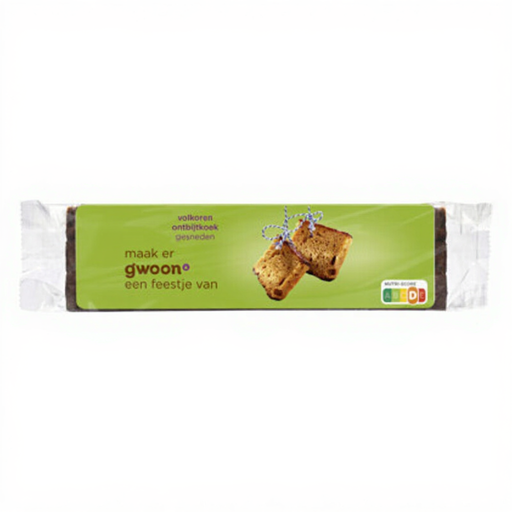 Image unavailable
g'woon sliced wholemeal Dutch breakfast cake, 485 g
For anyone looking for sliced wholemeal Dutch breakfast cake to serve on its own or enjoy as a snack.
485 g pack. The product information lists 43% wholemeal rye flour and glucose-fructose syrup as an ingredient.
Check the current ingredients list if seeds, gluten or other allergens are important to you. When comparing this cake with another variety, make sure you’re comparing nutritional information on the same basis.
View on Joybuy
Frequently asked questions
Is seeded Dutch breakfast cake automatically a better choice for a Sunday meal?
No: it depends on whether you’re serving the cake on its own or using it as an ingredient in a recipe. The Peijnenburg Tussendoor+ bar described by Albert Heijn contains 9% sunflower seeds; Jumbo lists Dutch breakfast cake in general as an ingredient for hachee and beef stew. When cooking, check which type of product your recipe calls for.
What should I compare in a seeded Dutch breakfast cake bar?
Start with the ingredients list: check which seeds it contains and what proportion is stated. Then compare sugars and fibre per 100 g and per serving, and check the allergen information. The Peijnenburg Tussendoor+ bar reviewed contains rye and oats, and may contain milk and nuts.
Does all Dutch breakfast cake contain iodine from baker’s salt?
No, you can’t tell from the product category. Information from the Netherlands Food and Consumer Product Safety Authority about baker’s salt doesn’t confirm which salt is used in an individual Dutch breakfast cake. Check the packaging or ask the manufacturer.


