
Fans of seeds and a satisfying crunch
You’re looking for crispbread where you can see the seeds, and want to choose your own toppings. Compare the ingredients: sunflower seeds, pumpkin seeds, linseeds and sesame vary from product to product.


Choose seeded crispbread for a late-night snack based on what you most want to compare: the types of seeds, a wholegrain base and fibre, or the nutritional information per serving. Seeds alone tell you little about the nutritional value, so check the salt content, allergens and how much you’ll actually eat, too.
You’re looking for crispbread where you can see the seeds, and want to choose your own toppings. Compare the ingredients: sunflower seeds, pumpkin seeds, linseeds and sesame vary from product to product.
You mainly want to know which grains are used and how much fibre a serving contains. Check the salt content, too; seeded crispbread isn’t necessarily wholegrain.
You might be comparing protein, fibre or carbohydrates. Check the energy per serving at the same time, so a standout figure per 100 g isn’t the only reason for your choice.
First decide what matters most in your late-night snack. Then compare the nutritional information per 100 g and per serving, as the size of each piece can vary, too.
| What to consider | What to check | Who it matters to |
|---|---|---|
| Texture and seeds | Check which seeds are listed in the ingredients and whether their proportions are given. | I mainly want a crunchy base with seeds and the freedom to choose my own toppings. For around 25% of consumers, the seeds and texture come first. |
| Wholegrains and fibre | Check whether wholemeal flour is listed as an ingredient and compare fibre per 100 g and per serving. | If I fancy something crunchy later in the evening, I mainly want a wholegrain base with a fibre content I can compare. For around 33% of consumers, this is the most important requirement. |
| Nutritional value per snack | Compare protein, carbohydrates and energy per 100 g and per piece; include any toppings if relevant. | If you’re watching your protein or carbohydrate intake with a late-night snack, you’ll also want to know what each piece contributes. For around 25% of consumers, this nutritional profile is a priority. |
| Allergens and labelling | Read the current allergen information and compare salt content; check the ingredients list if baker’s salt is relevant to your choice. | If I have an allergy or a specific question about salt or baker’s salt, I want to be able to check the label before buying. For around 17% of consumers, this is the first priority. |
The figures vary. Jumbo lists 5,5 g of fibre per 100 g for its Pumpkin Seed crispbread, while Leksands Seeds & Sea Salt contains 16 g per 100 g, according to Albert Heijn.
Look for wholegrains in the ingredients list and compare fibre per 100 g as well as per serving actually eaten.
Those words don’t tell you how much energy a piece with toppings provides. Jumbo lists 467 kcal per 100 g for its High Protein crackers and 474 kcal per 100 g for TastyBasics Pumpkin Seed.
Check the nutritional information per serving and decide how many pieces you’ll have and what you’ll top them with.
Seeded crispbread may contain cereals containing gluten or sesame. The Netherlands Food and Consumer Product Safety Authority says allergens must be clearly listed on the label.
If you have an allergy, read the current packaging, including any ‘may contain’ statements. Don’t rely on the product name or picture alone.
The Netherlands Nutrition Centre says that bread isn’t always baked with baker’s salt. So the product category won’t tell you whether a particular crispbread contains this ingredient.
Check the ingredients list if baker’s salt matters to your choice.
The range includes different grain and seed varieties to compare.
The own-brand range includes crispbread varieties with ingredients such as sunflower seeds, pumpkin seeds and sesame.
The own-brand range includes both seeded crispbread and a separate line of High Protein crackers.
Leksands Seeds & Sea Salt is a seeded crispbread made with wholegrain rye.
With TastyBasics Pumpkin Seed, you can compare details such as the proportion of seeds and the nutritional values.
These late-night snack options include two TastyBasics seeded varieties and a Wasa Cheese Sandwich with filling. The sandwich is different from a plain piece of crispbread that you top yourself.
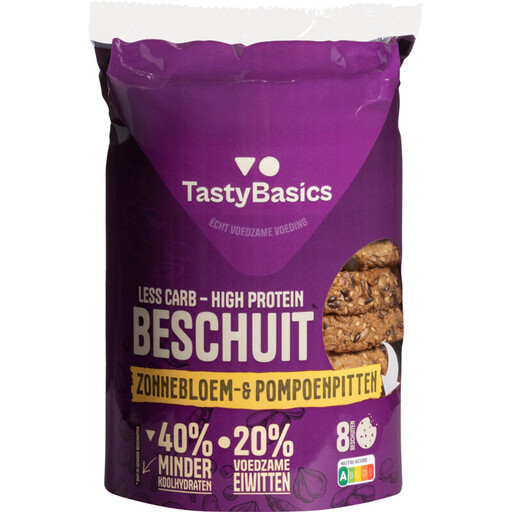 No image available
An option to consider if you fancy a seeded variety for a late-night snack. The pack contains 8 pieces; check the current ingredients and allergen information if they’re relevant to your choice.
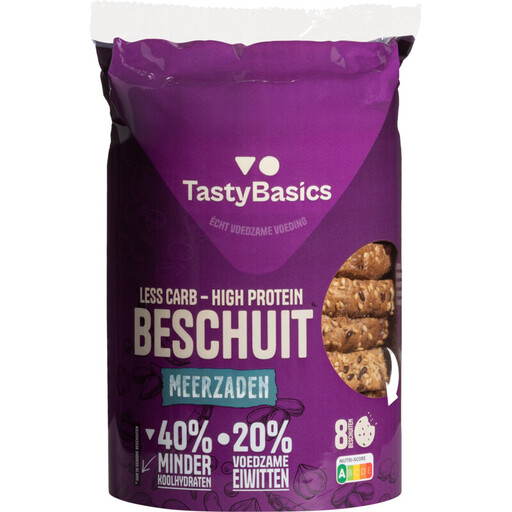 No image available
A good option if you’re after a mix of seeds for a late-night snack. The pack weighs 184 g; check the label for ingredients, allergens and the serving size per piece.
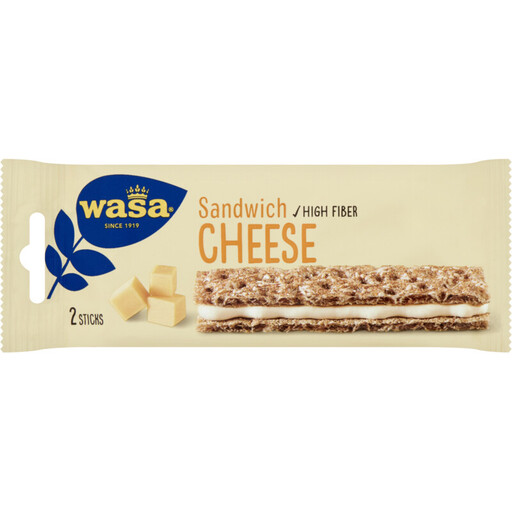 No image available
A filled sandwich option if you’d rather not top a plain piece of crispbread yourself. The pack contains 3 portions of 31 g; if you have an allergy, check the current packaging.
No, don’t assume that all crispbread contains baker’s salt. The Netherlands Nutrition Centre says that bread isn’t always baked with baker’s salt; check the ingredients list for the specific product.
Before buying, read the current allergen information, including any ‘may contain’ warnings. Seeded crispbread may contain sesame and cereals containing gluten; the Netherlands Food and Consumer Product Safety Authority says allergens must be clearly listed on the label.
No, the term ‘high protein’ doesn’t tell you how much energy your whole snack contains. Jumbo lists 467 kcal per 100 g for its High Protein crackers; compare the value per piece and include your toppings in the portion you eat.
Follow the storage instructions on the packaging and seal the product well after opening. For the crispbread varieties in question, Albert Heijn and Jumbo recommend storing them in a dry place and keeping the pack or tin tightly closed.