
If you’re making small nibbles
You’re looking for a crunchy base for your toppings. A thin cracker can work well with lighter toppings; if you want the cracker’s texture to stand out more, consider a sturdier option.


Choose thin seeded crispbread for small bites with light toppings. If you want the cracker itself to add more texture, look for a sturdier wholegrain option. Check the wholegrain claim on the pack, compare fibre and salt per 100 g, and read the allergen information if you’re serving guests with an allergy.
You’re looking for a crunchy base for your toppings. A thin cracker can work well with lighter toppings; if you want the cracker’s texture to stand out more, consider a sturdier option.
You want to know whether the crispbread is wholegrain, and compare fibre and salt per 100 g rather than judging it by the seeds on the packaging alone.
You’re serving someone with a relevant allergy, so you check the ingredients, declared allergens and any ‘may contain’ warnings on the pack you’re using.
First, think about what you need the cracker to do: provide a thin base for small nibbles, or add more texture of its own. Then compare the labels of the products that fit the bill.
| What to consider | What to check when buying | Who it matters to |
|---|---|---|
| Texture and toppings | Check whether the product is described as thin or robust, and choose one that suits your toppings. | If I’m putting together small nibbles, I want the cracker to suit the part the toppings play; around 36% of consumers prioritise texture and bite. |
| Wholegrain, fibre and salt | Check the wholegrain claim and compare fibre and salt per 100 g on the label. | If you see seeds on the packaging, you may also want to know what else is in the cracker. For around 36% of consumers, the ingredients are the top priority. |
| Allergens | Read the ingredients, declared allergens and any ‘may contain’ warnings on the current pack. | If I’m serving someone with an allergy, I don’t want to rely on the product name; around 28% of consumers prioritise allergen information. |
Seeds don’t tell you whether a cracker is made entirely from wholemeal flour. According to the Netherlands Nutrition Centre, a cracker can only be called ‘wholegrain’ if all the flour used is wholemeal.
Look for the wholegrain claim on the pack, then compare the nutritional information per 100 g, including fibre and salt.
Seeded crispbread may contain cereals containing gluten; sesame and warnings about possible traces vary by product. A name that includes ‘seeds’ doesn’t give you the full picture.
For every cracker you serve, check the ingredients and allergen information on the current pack.
Jumbo lists Wasa Crunchy Twist as containing 1.2 g of salt per 100 g; Albert Heijn also lists Leksands Zaden & zeezout as containing 1.2 g per 100 g. Toppings also contribute to the salt in a nibble.
Compare crackers per 100 g, and bear salty toppings such as cheese or smoked fish in mind when making your choice.
Wasa describes Crunchy Twist Poppy Seeds & Sea Salt as a thin crispbread made with wholegrain rye, linseed and poppy seeds.
Zaden & zeezout is a wholegrain crispbread for anyone who wants the cracker’s texture to stand out more on a drinks platter.
ALDI describes its own-brand Robuust crispbread as wholegrain crispbread with seeds and lists two varieties.
Albert Heijn includes AH Knäckebröd sesam in its crispbread range.
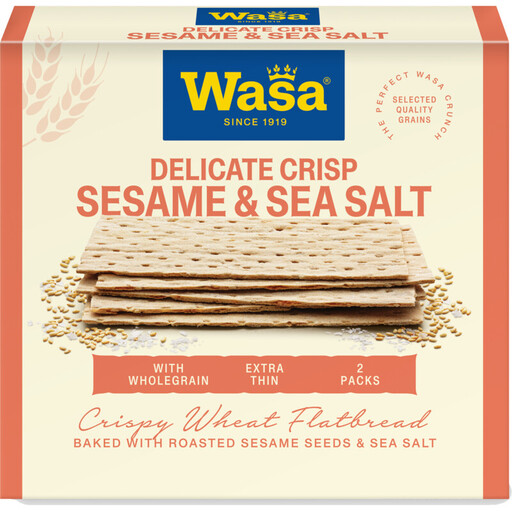
This sesame cracker is a good fit if you’re looking for a thin base for small nibbles. Check the label separately to see whether it also meets your requirements for wholegrain ingredients and allergens.
 No image available
For small nibbles when you’re looking for a thin sesame cracker as the base.
Pack size: 190 g. Check the wholegrain claim and allergen information on the pack before serving it to guests with specific requirements.
No. Seeds are ingredients, but they don’t in themselves tell you whether a product is wholegrain. Check the wholegrain claim and compare the nutritional information per 100 g for fibre and salt.
At the very least, check which cereals containing gluten and which seeds are in the specific product, and read the other allergen information and any ‘may contain’ warnings too. For example, Wasa Crunchy Twist and Leksands Zaden & zeezout contain rye; always check the current label on the pack you’re serving.
No. The wording ‘with seeds’ doesn’t tell you what type of salt has been used. If iodine is relevant to your choice, check the ingredients or product specifications for that particular crispbread.
Store it somewhere dry and seal the pack tightly after opening. Follow the storage instructions on the pack you’re using.