What should you look for when choosing?
First, check for any ingredients you need to avoid. Then compare the grain base, seeds, fibre and salt on the labels of the options that meet your requirements.
| What to look for |
What to check when buying |
Who is this important for? |
| Wholegrains and fibre |
Check the wholegrain claim and compare fibre per 100 g; also check the salt content. |
If I choose crispbread as the grain-based part of my breakfast, I mainly want to know whether it’s wholegrain and how much fibre it contains. This is the top priority for around 36% of consumers with this kind of buying question. |
| Seeds and texture |
Check which seeds are listed in the ingredients and what percentage is stated. |
On a busy morning, I’m mainly looking for the flavour of sesame or other seeds, and a texture I enjoy with my toppings. Around 29% of consumers put this first. |
| Comparing salt |
Compare salt and fibre per 100 g rather than looking only at the figures per serving. |
When choosing my regular breakfast, I mainly want to see how the salt content compares with other options. This is the most important comparison for an estimated 21% of consumers. |
| Allergens |
Read the full ingredients list, allergen information and any ‘may contain’ warnings. |
If I need to avoid gluten or a particular allergen, suitability comes before flavour or texture. For around 14% of consumers, checking this is the first requirement. |
Seeded crispbread at Joybuy
These two options suit different breakfast preferences: wholegrain crispbread from Bolletje and a thin sesame option from Wasa. Before buying, compare the nutrition information and ingredients on the pack you choose.
 No image available
Bolletje wholegrain crispbread 265 g
An option to consider if you’re looking for a wholegrain base for breakfast.
Compare the fibre and salt figures per 100 g on the current label. If you have an allergy, also check the ingredients and any warnings for sesame, cereals containing gluten and lupin.
View at Joybuy
 No image available
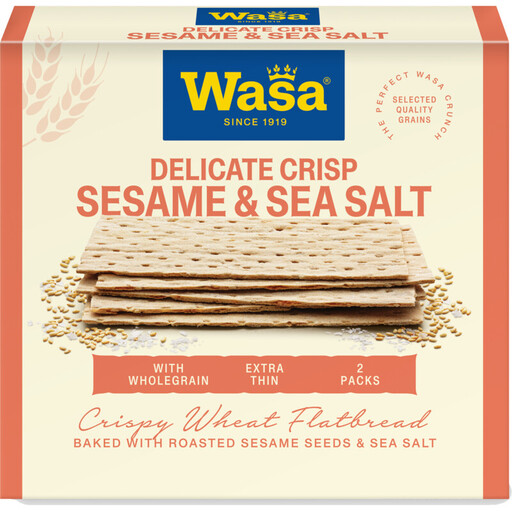
Wasa Thin Crisp Sesame 190 g
An option if you’re looking for thin sesame crispbread for breakfast and prioritise texture over choosing a wholegrain option.
For comparison, check the fibre and salt per 100 g on the current label. If you have an allergy, check the ingredients and any warnings for cereals containing gluten, sesame and milk.
View at Joybuy
Frequently asked questions
Is seeded crispbread automatically wholegrain?
No, seeds don’t tell you which grain base has been used. Check the wholegrain claim and ingredients separately; the Voedingscentrum also distinguishes between wholemeal flour and products made with refined flour.
Can gluten-free sesame crispbread contain other allergens?
Yes. Albert Heijn lists sesame and warnings for milk, mustard and soya for Wasa Sesame & Sea Salt gluten-free. If you have an allergy, always read the information on the pack you’re buying.
How do I compare fibre and salt between two packs?
Use the figures per 100 g for both products, so different serving sizes don’t skew the comparison. The Voedingscentrum recommends this basis for comparing nutrition information on labels.
Does ‘sea salt’ mean crispbread contains iodine?
No, you can’t tell the iodine content of a particular crispbread from the words ‘sea salt’. If this matters to your buying decision, check the product information or ask the manufacturer which salt was used.
How can I keep opened crispbread crisp?
Store it somewhere dry and reseal the pack tightly after opening, or use an airtight tin. Follow any storage advice on the pack for your chosen option.


