Choose crispbread explicitly labelled as wholegrain if the grain base is your priority, or look for thin sesame crispbread if you mainly want a crunchy base for breakfast toppings. Seeds don’t automatically make a product wholegrain: compare fibre and salt per 100 g, and check the ingredients and allergens for each variety.
Who is this for?
Breakfast lovers looking for a crunchy base for toppings
Want to top seeded crispbread with something like cheese, egg or a sweet topping? Check the description for details about its thickness and texture. Also check the ingredients if sesame or wheat matters to you.
Shoppers who prioritise wholegrains and fibre
A layer of seeds tells you little about the grain base. Look for an explicit wholegrain claim and compare the fibre per 100 g, alongside other nutritional information such as salt.
Breakfast lovers checking allergens or salt
Sesame, cereals containing gluten and warnings about the possible presence of other allergens vary between products. Always read the current label for the exact product you choose, and compare salt per 100 g.
What should you look for when choosing?
First, decide which ingredients are suitable for you. Then compare the grain base, the texture you want and the nutritional values per 100 g.
| What to consider |
What to check before buying |
Who it matters to |
| Wholegrains and fibre |
Look for an explicit wholegrain claim and compare fibre per 100 g. Visible seeds alone don’t prove that the grain base is wholegrain. |
If I mainly want a wholegrain base for breakfast, I look beyond the seeds on the crispbread. Around 42% of consumers would make this their priority. |
| Crunch and toppings |
Check whether the variety is described as thin and crunchy or more substantial; also look at the type of grain and seeds listed. |
For breakfast with toppings, I want to know whether a thin sesame variety or a sturdier rye crispbread better suits my preferences. Around 33% of consumers would prioritise this choice. |
| Allergens and salt |
Read the current allergen information for the variety you’ve chosen and compare salt per 100 g. Don’t assume it contains iodine based on the product category; check the salt information. |
If I need to watch certain ingredients or my salt intake, I need clear information about the exact variety I’ve chosen. Around 25% of consumers would put this check first. |
Common mistakes
-
Assuming seeds mean the grain base is wholegrain
A sesame topping doesn’t tell you how much wholemeal flour the product contains. Wasa states that its Sesame variety contains 49% wholegrain wheat, while the Leksands Seeds and Sea Salt variety described by Jumbo is labelled 100% wholegrain.
Check the wholegrain claim and ingredients before comparing the fibre per 100 g.
-
Going by the name of a seeded variety alone
Sesame and cereals containing gluten may be present in the product, and warnings about the possible presence of other allergens vary by variety. The Netherlands Food and Consumer Product Safety Authority says allergens must be listed on the label.
Before buying, read the current packaging for the exact variety, including the ingredients list and any warnings.
-
Comparing nutritional values per piece
Comparing values per piece can be misleading if the pieces or portions aren’t the same size. Nutritional information per 100 g gives you a consistent basis for comparing fibre and salt.
First compare the same values per 100 g, then choose according to your preferred thickness and seed mix.
-
Assuming all crispbread contains iodised baker’s salt
According to the Netherlands Nutrition Centre, bread’s contribution to iodine intake in the Netherlands is linked to iodised baker’s salt. That doesn’t tell you which type of salt is used in a specific crispbread variety.
If this information matters to your choice, check the product details for the exact variety or ask the manufacturer.
Brands to consider
Wasa
Wasa describes both thin wheat crispbread with sesame and a wholegrain rye variety topped with white and black sesame.
- According to Wasa, Sesame is thin and crunchy; Sesame Crunch Sensation contains 20 g of fibre per 100 g.
- The Sesame variety is labelled as containing 49% wholegrain wheat. Wasa states that Sesame Crunch Sensation contains 1,25 g of salt per 100 g; check the packaging for allergens for both varieties.
Leksands
The Seeds and Sea Salt variety described by Jumbo combines wholegrain rye flour with linseed, millet seed and toasted rapeseed.
- Jumbo labels this variety as 100% wholegrain, with 15,5 g of fibre per 100 g.
- Jumbo states that this variety contains 1,2 g of salt per 100 g, cereals containing gluten and may contain soya and mustard.
Ryvita
Ryvita describes Multigrain Crispbread as a variety made with wholegrain rye and a mix that includes linseed, sesame and buckwheat.
- Ryvita’s international product information states that it contains 18% toasted seeds and grains and 17,2 g of fibre per 100 g.
- The product details come from an international product page. When buying, check the ingredients on the Dutch packaging, including rye, sesame and any allergen warnings.
Breakfast crispbread on Joybuy
These products include a thin sesame variety and a wholegrain crispbread variety to consider for breakfast toppings. Before making your final choice, compare the ingredients and nutritional information on the current packaging.
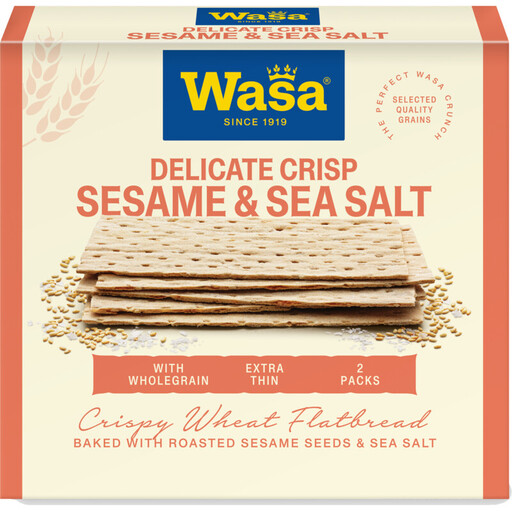 Image unavailable
Wasa Thin Crisp Sesame, 190 g
A thin sesame variety to consider if you’re looking for a crunchy base for breakfast toppings. The pack contains 190 g; check the current ingredients, allergens and nutritional information when choosing.
View on Joybuy
 Image unavailable
Bolletje Whole Grain Crispbread, 265 g
A wholegrain crispbread variety to consider if the grain base matters to you. The pack contains 265 g; check the current label for the seeds and allergens listed, and compare the nutritional values per 100 g.
View on Joybuy
Frequently asked questions
Is seeded crispbread automatically wholegrain?
No. Seeds can be a topping or an added ingredient without the grain base being entirely wholegrain. Check the wholegrain claim and ingredients list; the Netherlands Nutrition Centre says the wholegrain label depends on the flour used.
Should I check for sesame and gluten in seeded crispbread?
Yes, if these allergens matter to you: ingredients vary between varieties. Read the current ingredients list and any warnings on the packaging; the Netherlands Food and Consumer Product Safety Authority says allergens must be listed on the label.
Does crispbread in the Netherlands automatically contain iodine because of baker’s salt?
No, you can’t tell from the product category. The Netherlands Nutrition Centre explains that iodised baker’s salt is why bread contributes to iodine intake in the Netherlands. For a specific crispbread variety, check the salt information or ask the manufacturer.
How should I store crispbread after opening?
Seal it well and store it in a dry place to help keep it crunchy. Albert Heijn recommends storing its sesame variety in an airtight tin; Jumbo says to keep Leksands Seeds and Sea Salt in a dark, dry place.


