
Breakfast eaters keeping an eye on fibre
You’re looking for crispbread to top with savoury ingredients and comparing the type of grain and fibre per 100 g. Seeds on the front of the pack don’t tell you whether the grain is wholegrain.


Choose seeded crispbread for a savoury breakfast based on what matters most to you: a wholegrain base and fibre, the flavour and texture of the seeds, or a product that meets your allergy requirements. Then compare the proportion of seeds, the nutritional information per 100 g and the current label. A gluten-free sesame variety still contains sesame. If crispbread often replaces regular bread, also check whether baker’s salt is listed in the ingredients.
You’re looking for crispbread to top with savoury ingredients and comparing the type of grain and fibre per 100 g. Seeds on the front of the pack don’t tell you whether the grain is wholegrain.
You might prefer a distinct sesame flavour or a seed mix. The ingredients list helps you compare the types of seeds and the stated proportion.
For example, you may need to avoid gluten or sesame. In that case, the gluten-free claim, ingredients and information about possible allergens matter more than the flavour variety.
Start with the requirement that determines your choice, then compare flavour, fibre and salt: seeded crispbread isn’t automatically wholegrain or gluten-free.
| What to consider | What to check | Who is it important to? |
|---|---|---|
| Wholegrain and fibre | Check which grain forms the base and compare the fibre per 100 g. Wholegrain and fibre content are separate characteristics. | If I regularly have crispbread as the basis of my breakfast, I want to know whether the grain is wholegrain and how much fibre the product contains. This nutritional priority would come first for around 40% of consumers. |
| Seeds and texture | Check which seeds are used and the proportion stated in the ingredients list; a sesame variety differs in this respect from a mixed-seed variety. | With savoury toppings, I’m mainly looking for the flavour and bite of sesame or a seed mix. Around 30% of consumers would put seeds and texture first when choosing. |
| Gluten and allergens | Check the gluten-free claim, ingredients and any information about possible allergens on the current packaging. | If I need to avoid gluten or a specific allergen, the label must meet that requirement, regardless of how many seeds the product contains. This suitability would be the primary concern for around 20% of consumers. |
| Salt and replacing bread | Compare salt per 100 g and take savoury toppings into account. If you regularly replace bread, also check whether baker’s salt is listed in the ingredients. | If crispbread often replaces bread, I want to keep an eye on the salt in my breakfast and know whether the product contains baker’s salt. This would be the main priority for an estimated 10% of consumers. |
A pack showing seeds doesn’t tell you which types are used or how much the crispbread contains. Sesame and a seed mix also have different flavours and textures.
Check the ingredients list for the type of seed and any stated percentage. Then choose the option that goes best with your savoury toppings.
A product can contain fibre without having a wholegrain base. And gluten-free says nothing about whether it contains sesame.
Check the grain base, fibre per 100 g and allergen or gluten-free information separately.
Crackers vary in size, so it can be difficult to compare products by the amount in one cracker. Toppings also contribute to the total amount of salt in your breakfast.
First compare the salt per 100 g, then consider your usual portion with toppings.
According to the Voedingscentrum, iodine is added to baker’s salt; sea salt naturally contains very little iodine. So a sea salt claim doesn’t tell you whether a crispbread contains baker’s salt.
If you often replace regular bread with crispbread, check the ingredients list on the pack and consider your choice as part of your overall diet.
The products reviewed include a regular sesame crispbread and a separate gluten-free sesame variety.
Leksands Zaden & zeezout is a rye crispbread with several named seeds.
Jumbo Knäckebröd Sesam is an own-brand option for anyone specifically comparing sesame crispbread.
The own-brand range includes varieties with sesame, sunflower seeds and pumpkin seeds.
Lidl lists crispbread varieties with sunflower seeds and pumpkin seeds.
ALDI describes Goud Gebakken Robuust crispbread as wholegrain crispbread with seeds, available in two varieties.
Ryvita Original Crispbread is a rye option for comparing grain bases. The product information described is for the UK Original, not a Dutch seed variety.
These sesame varieties are for anyone looking for crispbread to top with savoury ingredients at breakfast. Compare the grain base, fibre, salt and allergens on each pack; the varieties aren’t interchangeable if you have a specific dietary requirement.
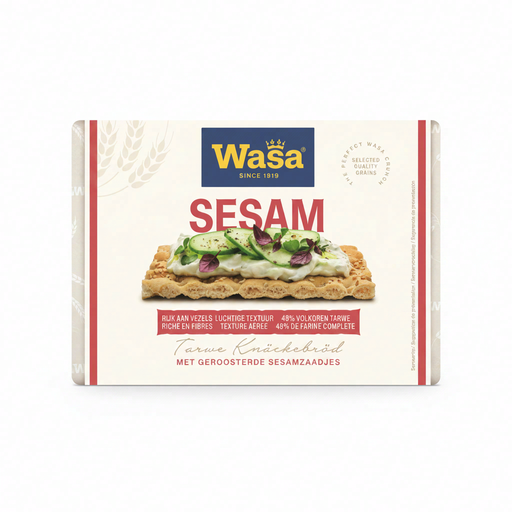 No image available
A sesame variety for anyone looking for crispbread to top with savoury breakfast ingredients.
The product information lists 11% sesame seeds, 49% wholegrain wheat flour, 9 g of fibre and 1,2 g of salt per 100 g.
Contains wheat, gluten and sesame, and may contain milk. Check the current label if you have allergies, and if you regularly replace bread, check whether baker’s salt has been used.
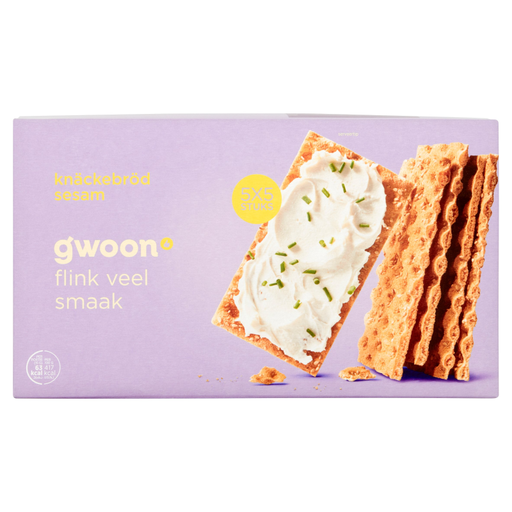 No image available
A sesame variety to consider alongside the salt content when choosing what to serve with your savoury toppings.
The product information lists 10% sesame seeds, 6,9 g of fibre and 0,675 g of salt per 100 g. The ingredients include wheat flour; if you want a wholegrain option, check the current label.
Contains wheat and sesame and may contain traces of soya. If you regularly replace bread, also check whether baker’s salt is listed in the ingredients.
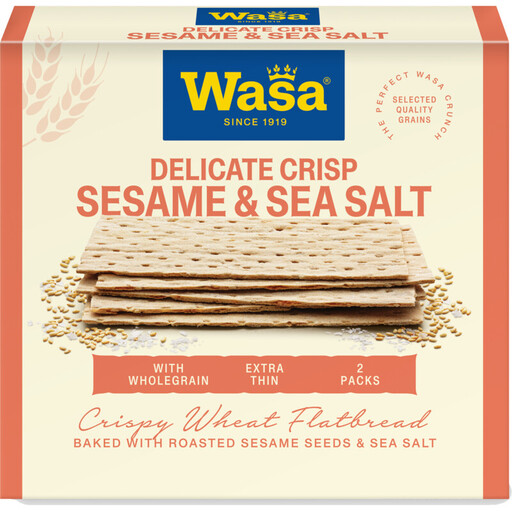 No image available
A thin sesame cracker for anyone who wants to use this style as a base for savoury toppings.
The product information lists 11,5% sesame seeds, 43% wholegrain wheat and 1,75 g of salt per 100 g. If fibre content will determine your choice, check the nutrition table on the pack.
Contains gluten from wheat and barley, and contains sesame; may contain milk. If you regularly replace bread, also check whether baker’s salt is listed in the ingredients.
No, the seeds and the grain base are separate characteristics. For example, Albert Heijn describes Leksands Zaden & zeezout as 100% wholegrain; for other varieties, check the ingredients list separately for the grains and seeds used.
Only choose a product with a gluten-free claim if its current label meets your requirements. Wasa Sesame & sea salt is labelled gluten-free, but contains sesame and may contain milk, mustard and soya. Regular wheat- or rye-based crispbread isn’t a gluten-free option.
Check both the ingredients and any information about possible sesame traces on the current packaging. According to the Netherlands Food and Consumer Product Safety Authority, allergens must be clearly identifiable in the ingredients list; don’t choose a sesame variety based only on the type of grain.
No, a sea salt claim doesn’t confirm that iodine has been added. According to the Voedingscentrum, sea salt naturally contains very little iodine, while iodine is added to baker’s salt. If you regularly replace regular bread, check whether baker’s salt is listed in the ingredients.
Store it in a dry place and seal the pack tightly after opening to keep it crisp. The storage advice for the Leksands and Wasa varieties reviewed recommends keeping them somewhere dry; also follow the instructions on your own pack.