What should you look for when choosing?
First, decide whether soft breakfast cake, individually wrapped bars or a crunchy alternative is right for your family. Then compare the seeds and kernels listed on the label, the nutritional information per 100 g and how you want to divide up the portions.
| What to consider | What to check before buying | Who it matters to |
|---|
| Seeds and fibre |
Check the types and proportions of seeds or kernels, and compare fibre per 100 g. |
If I want to see the seeds in the cake itself, I want to know which ones it contains and how much. For around 33% of consumers, this combination with fibre is the top priority. |
| Portions for on the go |
Compare the number of pieces, the weight per piece and whether they’re individually wrapped. |
When family members take something with them at different times, I want to be able to divide up the portions easily. That’s the main consideration for around 27% of consumers. |
| Sugars and ingredients |
Compare sugars per 100 g and per portion; read the ingredients and any warnings about sweeteners. |
When choosing a bar for regular use, I don’t want to rely only on the wording on the front. I also want to know what’s in it. Around 20% of consumers give this check top priority. |
| Sharing and stocking up |
Check the total weight and whether the breakfast cake is pre-sliced; check separately for seeds. |
If we mostly eat together at home, I want a cake I can slice or divide into portions straight away. For around 20% of consumers, ease of sharing matters most. |
Related products on Joybuy
If you’d like to consider a crunchy sesame product alongside soft breakfast cake, you can compare the biscuits below. They’re a different type of product from breakfast cake.
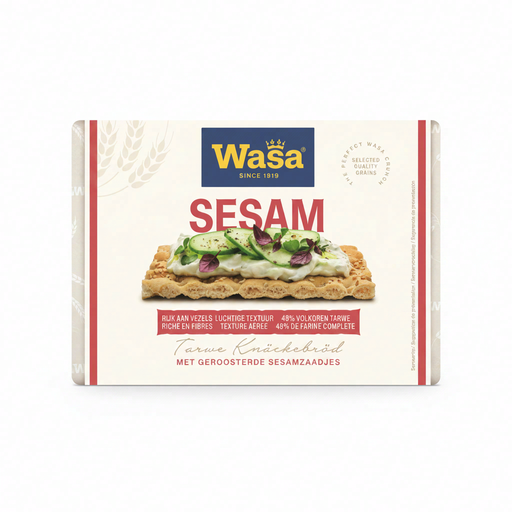 Image unavailable
Wasa Breakfast Biscuits Sesame 250 g
For anyone looking to compare a sesame biscuit with soft breakfast cake; this isn’t traditional breakfast cake.
250 g pack. Check the packaging for allergen information and how the biscuits are divided into portions.
View on Joybuy
Frequently asked questions
How can I tell whether a breakfast cake really contains seeds?
Read the ingredients list and check what proportion of the named seeds or kernels is stated. The Voedingscentrum explains that the percentage of an ingredient must be shown on the packaging when that ingredient appears in the product name or is pictured. Only then compare the nutritional information per 100 g.
Is seeded breakfast cake automatically a better everyday choice?
No. The presence of seeds alone doesn’t tell you enough about the nutritional value of the whole cake. Compare the sugars, fibre and portion size of the specific variants you’re considering, and check whether the format suits how you’ll use it at home or on the go.
Does every breakfast cake contain iodine from baker’s salt?
You can’t tell from the name breakfast cake. Check the ingredients of the variant you’ve chosen or ask the manufacturer whether it uses baker’s salt, if that matters to your choice.
Which allergens should I look out for in bars with seeds?
Check the allergens for the specific bar, including sesame, cereals containing gluten and any other allergens listed. Jumbo states that Bolletje Zaden & Pitten Zonnebloempit contains wheat and sesame; this doesn’t tell you what another variant contains.
How do I compare individual bars with a large breakfast cake?
First compare the nutritional information per 100 g, then look at the weight per portion, the number of pieces and the packaging. Individually wrapped bars can be handy to take with you; a large pre-sliced cake is easier to share at home. For both formats, check the proportion of seeds or kernels separately.


