If fibre is your priority, choose bread explicitly labelled wholemeal, and match the quantity and storage information to the length of your journey. If you’re mainly after a crusty texture and seeds, check the wholemeal label, ingredients and allergens separately: visible seeds or the name ‘multigrain’ don’t tell you everything you need to know. Bread that still needs baking also requires preparation before you set off.
Who is this choice relevant to?
Travellers looking for fibre
You’re looking for bread to eat on the go and don’t want to judge it by its visible seeds alone. The wholemeal label and nutritional information can help you choose. The Netherlands Nutrition Centre compares the fibre content of wholemeal and white bread.
Travellers who shop in advance
You’re buying bread for a journey lasting several days and want to work out how much to take and what you can freeze in advance. The storage advice for your chosen product should guide you.
Fans of seeds and kernels
You’re looking for a loaf or roll with plenty of texture, but also want to know what’s in it. If you have an allergy, the allergen information for the specific product is essential.
What should you look for when choosing?
Start by deciding whether fibre, a practical storage life or a particular texture matters most to you. Then choose a type and quantity of bread to suit the number of travellers and planned mealtimes.
| What to consider |
What should you check? |
Who is it important for? |
| Wholemeal and fibre |
Check the wholemeal label and compare the fibre per 100 g. Seeds on the crust don’t tell you what type of flour has been used. |
If I’m taking bread as a meal, I want to check whether it’s genuinely wholemeal rather than relying on the name. For around 31% of consumers, fibre is the priority. |
| Storage and taking it with you |
Check the date and storage advice on the packaging, and consider whether a whole, sliced or portioned loaf will be practical for your journey. |
For a journey lasting several days, I don’t want to have to take or use all the bread at once. Storage and portability are the first considerations for around 31% of consumers. |
| Seeds and allergens |
Check the ingredients and allergen information for your chosen bread, including when the range varies or the bread isn’t pre-packed. |
I’m looking for the texture of seeded bread, but I need to know which ingredients and allergens are in it before setting off. Around 23% of consumers prioritise this combination. |
| Quantity and portions |
Choose a whole loaf, half loaf or individual rolls to suit the number of people eating and the planned mealtimes. |
If I’m only planning one meal with bread, I don’t want to be left with a large amount. Getting the quantity right is the main consideration for around 15% of consumers. |
Common mistakes
-
Confusing visible seeds with wholemeal bread
‘Multigrain’ and seeds on the crust don’t necessarily tell you what flour has been used. If fibre is your main priority, you could end up choosing a different bread from the one you intended.
Check the wholemeal label and, if the information is available, compare the fibre per 100 g.
-
Taking a whole loaf without a storage plan
On a journey lasting several days, you may have bread left over before you get round to eating it. The Netherlands Nutrition Centre advises that you can freeze bread in portions soon after buying it.
Check the product’s storage advice and take a suitable amount for each day of your journey.
Bread that isn’t used in time can dry out or go stale.
-
Skipping the allergen information
You can’t tell which allergens seeded bread contains just by looking at it. The Netherlands Food and Consumer Product Safety Authority says allergen information is part of the food information consumers need to be able to check.
Read the current packaging or ask for the available allergen information if the bread isn’t pre-packed.
-
Assuming every loaf contains iodised salt
Seeing it listed on one loaf doesn’t tell you what’s in another. For example, Albert Heijn lists iodised salt in its AH Extra lang lekker Zaans volkoren heel bread.
If you want to know whether the bread you’re buying contains iodised salt, check the ingredients list for that product.
Brands to compare
These ranges offer different types of bread or information you can compare before setting off. Always check the specific product you’re considering.
Albert Heijn
A useful place to start if you want to check the ingredients, nutritional values, allergens and storage advice for packaged bread in advance.
- AH Extra lang lekker Zaans volkoren heel lists ingredients including wholemeal wheat flour, fibre and iodised salt.
- Albert Heijn says product information may change; check the packaging of the bread you buy for the latest details.
Jumbo
A range where you can compare different types of bread, including a wholemeal option with sunflower seeds.
- Jumbo’s wholemeal range includes whole and half loaves, as well as Stevig Volkoren Zonnepit.
- Check the ingredients and nutritional information for each loaf you choose; a category overview is no substitute for the product label.
Lidl
An option if you’re looking for a loaf or roll with seeds and kernels during a stop at the shops.
- Lidl describes its Volkorenbol as a roll with seeds and kernels, and mentions grains and seeds in Woutcorn.
- Ask in store about the ingredients and allergens in the bread you choose.
PLUS
A range to explore if you’re after a sourdough crust with seeds and kernels.
- PLUS describes the seeds and kernels on the crust of its Korenlanders sourdough bread as part of its flavour and texture.
- This range description doesn’t mean that every variety is wholemeal or has the same nutritional values.
Bread for those who can bake it before setting off
These two Lekhaven Bakkerij varieties suit a plan where you can defrost, bake and cool seeded bread before your journey. If you’re looking for bread you can pack straight away, check that the preparation required fits your departure plans.
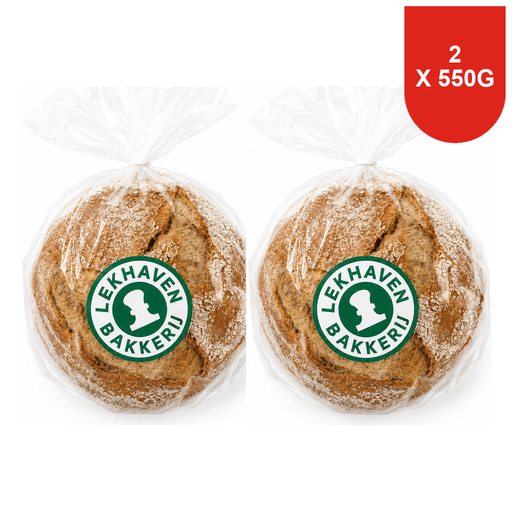 Image unavailable
Lekhaven Bakkerij Multigrain Country Bread Round, 2 × 550 g
For anyone wanting to prepare seeded bread for several meals. Allow time to defrost, bake and cool it before setting off, and check the ingredients and allergens on the packaging.
The product name specifies two round loaves weighing 550 g each. If wholemeal bread or fibre content is essential for you, check the nutritional information for this variety.
View on Joybuy
 Image unavailable
Lekhaven Bakkerij Multigrain Country Bread Round, 550 g
For anyone who can prepare one round seeded loaf before travelling. Allow time to defrost, bake and cool it, and check the latest ingredients and allergen information.
The product name specifies 550 g. If fibre is your main priority, check the wholemeal label and the fibre per 100 g for this variety.
View on Joybuy
Frequently asked questions
Is seeded bread automatically wholemeal?
No. Seeds and kernels alone don’t tell you what flour has been used. Check the wholemeal label on the specific loaf and look at the ingredients; compare the fibre per 100 g if you want to assess products on that basis.
How should I store wholemeal bread for a journey lasting several days?
Follow the date and storage instructions for the bread you buy, and consider freezing portions in advance. The Netherlands Nutrition Centre says wholemeal bread keeps for 2–4 days in a kitchen cupboard and 1–3 months in the freezer; the instructions on a particular pack may affect your plans.
Where can I find the allergens in seeded bread?
Check the allergen information on the current packaging, or ask about it if the bread isn’t pre-packed. Don’t judge by the visible seeds: ingredients and allergens vary from product to product.
How can I tell whether bread contains iodised salt?
Look for iodised salt in the ingredients list for the specific bread. For example, Albert Heijn lists it in AH Extra lang lekker Zaans volkoren heel, but that doesn’t mean it’s in other breads too.


