What should you look for when buying?
First decide which type of bread will work during breakfast service. Then compare each product’s wholemeal declaration, nutritional information and allergens rather than judging it by the seeds you can see.
| What to consider | What should you check? | Who should prioritise this? |
|---|
| Wholemeal content and fibre |
Check the wholemeal declaration and ingredients; compare fibre per 100 g for similar breads. According to the Netherlands Nutrition Centre, ‘multigrain’ means that at least three types of grain have been used, not that the bread is wholemeal. |
If I want a wholemeal base for the buffet, I need to be able to identify this from the exact bread. This is the top priority for around 33% of consumers. |
| Allergen information |
Record the current allergen information for each bread and make sure guests can access it at the buffet. The Netherlands Food and Consumer Product Safety Authority lists shelf labels and menus among the ways to do this. |
When there are different breads on one buffet, I want to be able to tell guests clearly which allergens each product contains. Around 33% of consumers say this information is their top priority. |
| Stock and preparation |
Compare the bread format and pack size with the time available for slicing and replenishing; follow the product-specific storage and oven instructions for rolls or part-baked bread. |
During the breakfast rush, I want to replenish the bread without having to schedule a baking step when oven space or staff are unavailable. This practicality is the main concern for around 20% of consumers. |
| Texture and variety |
Consider which seeds, kernels and bread formats suit your presentation; check wholemeal status and allergens separately. |
Alongside other breakfast breads, I want to offer an option with a different texture without the presentation suggesting more about its ingredients than the label confirms. Around 14% of consumers prioritise this variety. |
Bread options on Joybuy
These baguettes are options for adding bread made with multiple grains or seeds to your breakfast buffet. Choose between a ready-to-serve format and a bake-at-home option only after checking the preparation requirements, nutritional information and allergens for the exact variant.
 No image available
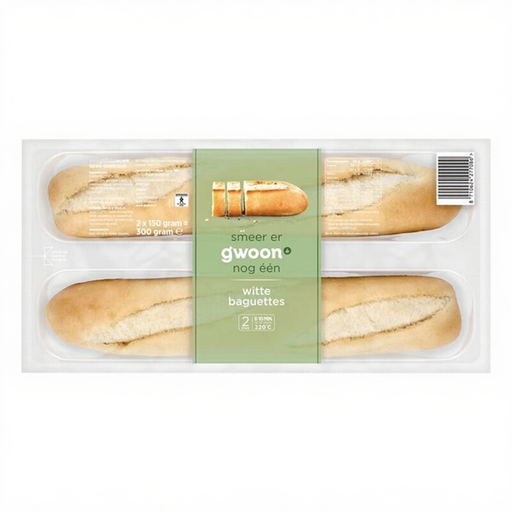
g'woon Popular Multigrain Baguettes, 2 pieces, 300 g
An option if two multigrain baguettes suit the buffet portions you have planned.
Check the current nutritional and allergen information before serving this bread unwrapped.
View on Joybuy
 No image available
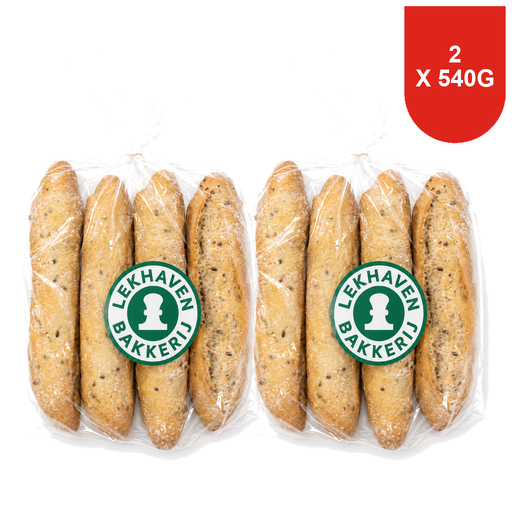
Lekhaven Bakkerij Multigrain Rustic Baguette, 4 × 135 g × 2
Suited to buffet plans that allow time and oven space for thawing and baking.
Before serving, check the preparation instructions and current ingredients and allergen information for this variant.
View on Joybuy
 No image available
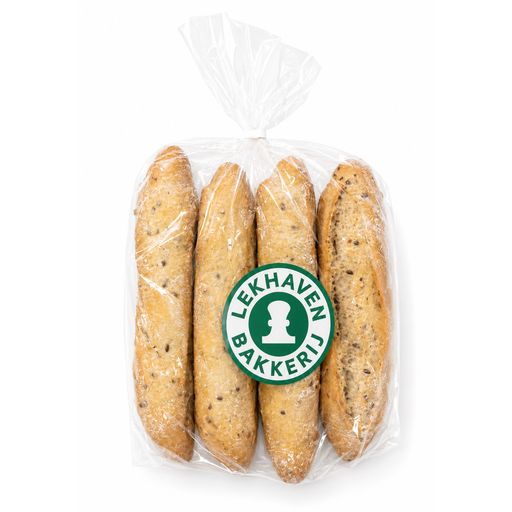
Lekhaven Bakkerij Multigrain Rustic Baguette, 4 × 135 g
A bake-at-home option for a breakfast team that can schedule thawing and oven use.
Check the baking instructions for this variant before planning its preparation. Use the current allergen information on the packaging for guests.
View on Joybuy
Frequently asked questions
Is multigrain bread with seeds automatically wholemeal?
No. According to the Netherlands Nutrition Centre, ‘multigrain’ means that the bread contains at least three types of grain; it does not mean that it is wholemeal. Check the product name and ingredients if you are looking for wholemeal bread.
How do you provide allergen information for unwrapped bread at a hotel buffet?
Make information about the allergens present in each bread accessible to guests. For unpackaged products in catering, the Netherlands Food and Consumer Product Safety Authority lists shelf labels and menus among the options; base the information on the current variant being served at the buffet.
Which allergens should you check in seeded bread?
Check the full allergen declaration for the exact bread, not just the seeds you can see. The PLUS rolls reviewed contain sesame, soya and milk, as well as cereals containing gluten; the ingredients may differ in another product.
Does all bread in the Netherlands contain iodised baker’s salt?
That is not what the rule described by the Netherlands Food and Consumer Product Safety Authority says. It allows iodine compounds in bread and other bakery products only through added baker’s salt, with a maximum of 65 mg of iodine per kg of salt; the rule does not confirm that every individual bread contains this salt. Check the ingredients of the variant you choose if this is relevant to your purchasing decision.


