What should you look for in a macro lens?
First, note your camera’s mount and sensor format. Then compare the framing you want, the space you’ll need for lighting and the technique that suits the seed pod’s depth of field.
| What to consider |
What to look for |
Who is this important for? |
| Mount and version |
Check your exact camera model, mount and sensor format, then compare them with the lens version you’re considering. |
I want to make sure the lens fits my camera before comparing magnification. Around 36% of consumers put compatibility first. |
| Magnification and framing |
Compare the maximum magnification with the size of the whole seed pod or the detail you want to capture. Canon UK explains that 1:1 reproduces the subject at life size on the sensor. |
I want to choose between framing the whole seed pod and capturing a tiny detail at a large scale. Around 29% of consumers in this decision-making context prioritise magnification and framing. |
| Lighting and depth of field |
Consider the working distance in front of the lens for your chosen composition. With a deep seed pod, focus stacking and a stable set-up can help combine different focus points. |
I want to position my light properly and get the depth of a stationary subject in focus. Around 21% of consumers who prioritise their studio set-up and depth of field fall into this group. |
| Handling and features |
Weigh up the magnification and focusing controls you want against your usual studio set-up. Image stabilisation is no substitute for sufficient depth of field. |
I don’t want to choose features that don’t suit the way I work or use my equipment. Around 14% of consumers in this decision-making context prioritise cost and handling. |
Joybuy products
These Joybuy products are Sony E lenses which, according to their descriptions, can also be used for close-ups. Their stated magnifications are limited for filling the frame with very small seed details, so don’t consider them a substitute for a 1:1 or higher-magnification macro solution.
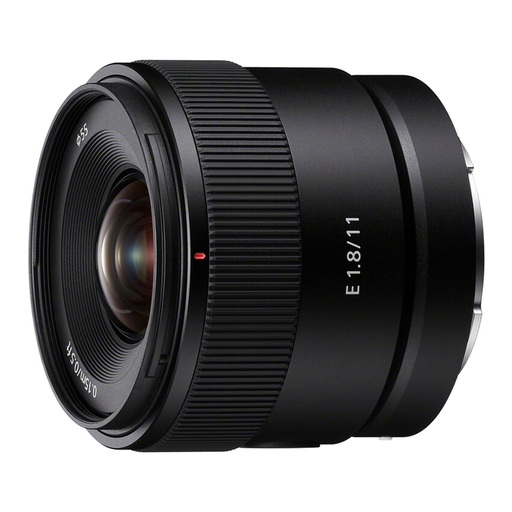 Image unavailable
Sony E 11mm F1.8 APS-C wide-angle lens (SEL11F18)
The description mentions close-up and macro photography, but the stated magnification is limited for capturing very small seed details.
11 mm, F1.8 and APS-C according to the product name; minimum focusing distance 0.15 m. The description states magnification of 0.13× with AF and 0.20× with MF.
Joybuy
 Image unavailable
Sony E 50mm f/1.8 OSS Black
The description mentions close-up and macro photography; the stated magnification is limited for capturing very small details at a large scale.
50 mm, f/1.8 and OSS according to the product name; minimum focusing distance 39 cm, magnification 0.16 and weight 202 g according to the product description.
Joybuy
Frequently asked questions
Do you need 1:1 magnification to photograph an entire seed pod?
No, not always. First decide how large you want the whole seed pod to appear in the frame. If you want to capture small details at a large scale, compare the maximum magnification. Canon UK explains that 1:1 means the subject appears at life size on the sensor.
How can you keep the front and back of a seed pod sharp?
Set your camera up securely and, if the subject is stationary, take shots at different focus points and combine them as needed. Nikon UK describes focus stacking as a way to increase the depth of field in the final image. Check what your camera and workflow can do.
What lighting works well in a small home studio?
A movable light and a simple background give you room to control the lighting and texture. Nikon UK describes these elements in macro photography. With your chosen lens, also check that there’s enough space to position the light where you want it.
Are you always entitled to a two-year statutory warranty on a lens in the Netherlands?
No. According to the Dutch government, there is no fixed statutory warranty period in the Netherlands. You’re entitled to a product that works as it should, and what you can reasonably expect from the lens is one of the factors that matters. If a product is faulty, contact the seller. A manufacturer’s warranty may be available in addition to this.
Can you return a lens bought online within 14 days?
For eligible consumer purchases made at a distance, the Dutch government says you’ll often have 14 days to change your mind. This doesn’t apply to every transaction; for example, these rules don’t cover an online purchase from a private individual. Before you order, check who the seller is and what the returns policy says.


