
Small households packing school lunches every day
If you buy bread for one pupil or a small family, how much you use before it goes stale matters. Half a loaf may be a better fit; check whether the packaging includes freezing instructions too.


For a regular school lunch, half a loaf of wholemeal bread is a practical choice if a whole loaf is too much for your household; save croissants for an occasional treat. Compare how much you use and check the nutritional information and allergens for each product. The Netherlands Nutrition Centre discusses croissants as an occasional choice in a survey of parents of primary-school children; the survey does not specifically cover secondary-school pupils.
If you buy bread for one pupil or a small family, how much you use before it goes stale matters. Half a loaf may be a better fit; check whether the packaging includes freezing instructions too.
A croissant can add variety to a planned lunch, but it is not necessarily a substitute for bread every school day. In its survey of parents of primary-school children, the Netherlands Nutrition Centre describes croissants as an occasional choice.
If you need to take allergens into account, check the latest information for your chosen bread or croissant, as well as the school’s arrangements, before packing it. Information for one product does not automatically apply to another version.
First decide whether you need bread for several school days or a croissant for a change. Then consider how much comes in the pack and which ingredients and allergens matter for the pupil.
| What to consider | What to check when buying | Who is this most important for? |
|---|---|---|
| Bread for every school day | When choosing bread, look for ‘wholemeal’ in the product description and compare fibre per 100 g. | If I’m packing lunch for several school days, I want to know which bread I’m choosing and how its nutritional value compares. Around 36% of consumers prioritise this everyday bread choice. |
| Quantity and storage | Check the pack size, number of portions, and storage and freezing instructions. | When buying for one pupil, I don’t want to open more bread than we’ll use. Around 29% of consumers prioritise keeping leftovers to a minimum. |
| Allergens | Read the latest allergen information and any warnings about traces; check the school’s arrangements too. | If a pupil needs to avoid certain ingredients, I need to be able to assess the chosen product before packing it. Around 21% of consumers give this check the highest priority. |
| Variety and preparation | Choose a suitable pack size and, for bake-at-home croissants, check the preparation and storage instructions. | For an occasional lunch, I want to know whether one croissant will be enough or whether I can use a multipack. This variety matters most to around 14% of consumers. |
A croissant and a wholemeal loaf do not have the same composition. The Netherlands Nutrition Centre describes croissants in primary-school children’s lunchboxes as an occasional choice.
Plan croissants as a change from the usual, and compare the nutritional information for the bread products you’re considering for regular school lunches.
The small butter croissant listed by PLUS also contains milk and egg. A gluten-free croissant may contain other allergens too.
For packaged products, read the latest allergen information. For an unwrapped croissant, ask for the information before buying and take the school’s arrangements into account.
The name ‘multigrain’ does not in itself mean that bread is wholemeal. Jumbo lists wheat, barley, oats, rye, sesame and soya among the allergens in Waldkorn Multigrain Half.
If wholemeal is one of your buying criteria, look for an explicit wholemeal description and check the ingredients and allergens separately.
A pack of several bake-at-home croissants calls for different planning from a single croissant, especially if you only need one.
Choose an amount you expect to use and follow the storage and preparation instructions on the pack.
Defrosting and baking take time to prepare. For PLUS’s small butter croissant, also follow the product instructions not to refreeze a defrosted product.
Worth considering for half wholemeal loaves and a separate gluten-free half loaf.
Worth considering for half wholemeal and multigrain loaves, as well as croissants.
Worth considering for a small bake-at-home croissant and a separate gluten- and wheat-free croissant option.
Worth considering for a single fresh butter croissant.
Worth considering for butter croissants in a multipack.
Worth considering for a butter croissant from the in-store bakery.
These bread options come in different pack formats for planned school lunches, from rye bread and flatbreads to round wholemeal loaves. Compare the quantity in each pack with what your household uses; a pack of six or two loaves calls for different planning from half a loaf.
 Image unavailable
A pack of nine may suit you if you want to plan lunches by the piece. Check the portion information, ingredients and allergens on the packaging.
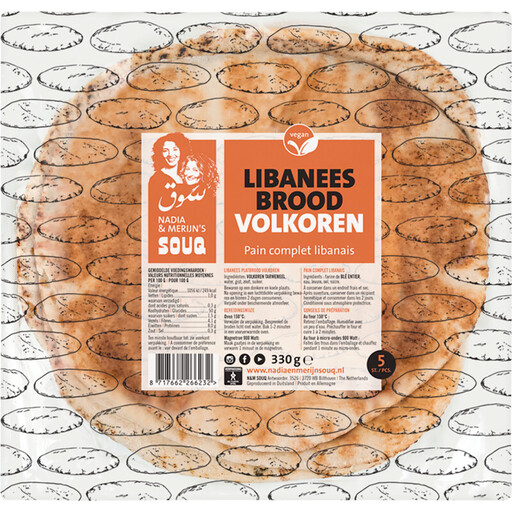 Image unavailable
Six individual flatbreads may suit lunches you plan one at a time. Check the packaging and allergen information before buying.
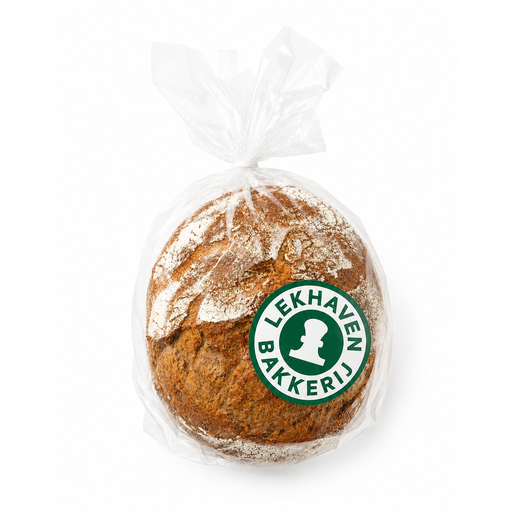 Image unavailable
This 550 g round loaf may suit a plan where you use several portions from one loaf. Check the storage and preparation instructions, and the allergens listed on the packaging.
 Image unavailable
When planning portions for this 500 g rye bread product, its exact form matters: check the packaging to see whether you’re buying a bread roll or sliced bread. Also check the allergen information.
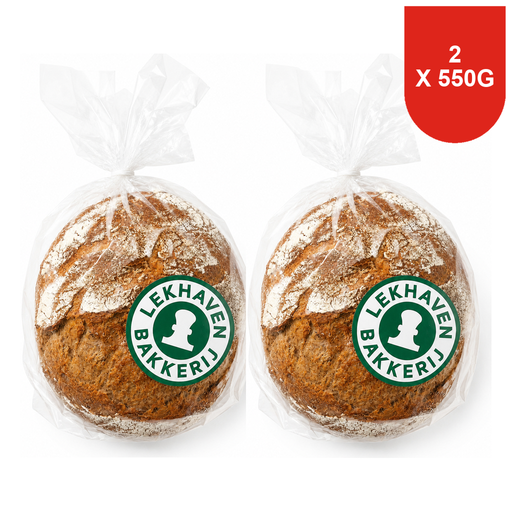 Image unavailable
Two loaves of 550 g each are best suited to a plan where you can use both for lunches. Consider how much storage space and preparation the pack requires, and read the latest allergen information.
Half a wholemeal loaf is a practical choice if you pack lunch regularly and a whole loaf is too much. The Netherlands Nutrition Centre describes croissants as an occasional choice in a survey of parents of primary-school children; for a secondary-school pupil, also compare the specific portions and nutritional information.
Not necessarily: ‘multigrain’ and ‘wholemeal’ describe different properties. If you want to choose wholemeal bread, look for an explicit wholemeal description and read the ingredients list for the loaf you’ve chosen.
Before buying, ask for the allergen information for the product or speak to a member of staff. The Netherlands Food and Consumer Product Safety Authority says this information must also be available for unwrapped food; check which specific grains and other relevant allergens are listed for the croissant.
No. ‘Gluten-free’ does not, in itself, tell you anything about all other allergens. The Consenza croissants described by PLUS contain egg and soya and may contain traces of sesame, lupin and nuts; always check the latest packaging for the pupil.
Half a loaf may better match the amount a small household uses for school lunches. Plan the portions and follow the storage instructions; Albert Heijn says that one half wholemeal loaf reviewed can be frozen at home.