
Sellers who want to show book details
You want the cover, title and any relevant signs of wear to be easy to make out, even against a light background.


If you only have a few books to photograph, your smartphone is a sensible place to start. Try it with even lighting and a consistent set-up before buying a camera. If you photograph books often or want to show text and signs of wear clearly, compare a compact camera with manual settings against a mirrorless camera with a suitable lens. Always test both a full cover shot and a close-up.
You want the cover, title and any relevant signs of wear to be easy to make out, even against a light background.
You regularly photograph similar listings and want a consistent composition you can use again. Canon UK describes a tripod as a useful aid for keeping your framing consistent.
You want to work out whether your current phone is good enough, or whether the settings on a compact or mirrorless camera could improve the way you work.
A good fit if: you only photograph books occasionally and your phone takes a sharp, readable picture in good light.
Keep in mind: check that small text and subtle signs of wear remain visible; you may not need a new camera at all.
A good fit if: you want manual shooting modes and RAW without having to choose a separate interchangeable lens.
Keep in mind: on the Panasonic LUMIX DC-TZ99, the stated 3 cm macro focusing distance applies only at the wide-angle setting; the lens is fixed.
A good fit if: you photograph books often and want to choose the lens and framing yourself.
Keep in mind: a camera body on its own is not a complete set-up; check that the lens suits the working distance you need.
| What to consider | What should you check? | Who should pay particular attention? |
|---|---|---|
| Details and signs of wear | Take a photo of the full cover and a separate close-up of a real book; check that the camera can focus at the distance you need. | I want text and wear to be easy to assess. Around 33% of consumers prioritise visible book details. |
| Colour and exposure | Compare a test shot with the book and check whether you can adjust the white balance and exposure. | I don’t want light damage or discolouration to disappear against a white background. Around 25% of consumers prioritise colour and exposure. |
| A repeatable set-up | Check that you can position the camera steadily and frame the book in the same way each time. | I take lots of similar photos and want to spend less time setting up the framing again. Around 25% of consumers value a repeatable workflow most. |
| A suitable lens and complete set | Check which lens comes with the camera and test whether it can capture the full cover and the details you want. | I want to know whether the set on offer can handle the job, without assuming it includes a lens that may not be supplied. Around 17% of consumers pay particular attention to having a practical, complete set-up. |
The lens helps determine whether you can photograph both the whole book and small details from the distance available.
Check exactly what comes in the set and test the framing you need; don’t assume a macro lens is included.
You may need a suitable lens. A fixed set-up and appropriate lighting may also be part of your workflow.
For the Panasonic LUMIX DC-TZ99, Panasonic states 3 cm in wide-angle macro mode and 200 cm at the listed telephoto setting, so the distance depends on the setting.
Test focusing at the zoom setting you’ll actually use to photograph the cover or a mark of damage.
The Sony listing at Joybuy gives the model as ILCE-6400A but contains conflicting details about whether it’s a body or a set with a 16–50mm lens. This doesn’t confirm that it’s the same version as the ILCE-6400 we looked at.
Compare the full model code, specifications and box contents before choosing a version.
A different version may not include the lens you need.
If the exposure makes the book too bright, light details or signs of wear may be harder to see.
Compare the photo with the actual book and, if needed, take separate, sharp pictures of the spine, title page and any relevant wear.
The EOS R50 is a mirrorless camera for anyone looking to choose an RF or RF-S lens for their set-up.
The LUMIX DC-TZ99 is a compact camera with a fixed lens and manual shooting modes.
The X-M5 is an X-mount mirrorless camera worth considering if you want to choose your own lens.
The Z50II is a DX-format mirrorless camera. Choose a Nikon Z lens to suit your working distance.
The ILCE-6400 is an E-mount mirrorless camera; compare the exact model code and what’s included in the set.
These cameras are included as options to consider for this topic. Use test shots to see whether they’re suitable for photographing a full book cover and individual details.
 No image available
The product name describes this as a vlogging camera. Take some test shots first to see whether it’s suitable for photographing books.
The product name lists a 330° rotating lens, a 1.72-inch touchscreen, Wi-Fi and a tripod.
 No image available
The product name describes this as a pocket gimbal camera for vlogging. Check with a book to see whether the framing and close-up capability meet your needs.
The product name lists a 1-inch CMOS sensor, 4K/240fps video, 3-axis stabilisation and 107 GB of built-in storage.
 No image available
The product name describes this as a pocket gimbal camera for vlogging. Take test shots of a book before deciding whether it’s suitable for the job.
The product name lists a 1-inch CMOS sensor, 4K/240fps video, a rotating screen and 107 GB of built-in storage.
 No image available
The product name describes this as a digital camera for photography and vlogging. Test its sharpness at the distance you need for book details.
The product name lists 5K video and 18× zoom.
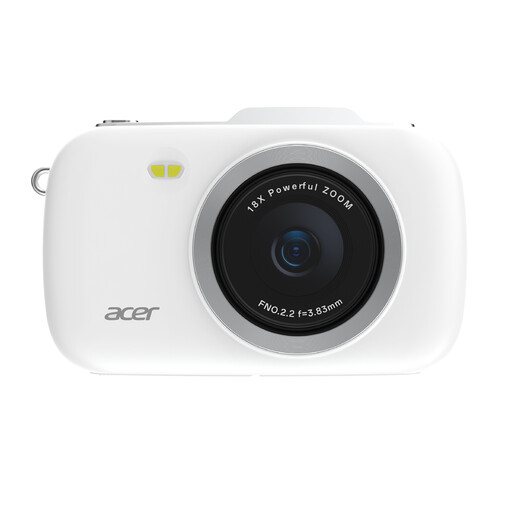 No image available
The product name describes this as a digital point-and-shoot camera. Use test shots to check whether you can capture both a full cover and small details in focus.
The product name lists 4K video and 18× zoom.
Yes. If you only photograph books occasionally, start with the phone you already have. Use even lighting and a consistent set-up, then check that text and signs of wear are clearly visible.
Not if that makes details on the book disappear. Compare the photo with the actual copy and check the cover colour, page discolouration and any damage before using the image.
Check which lens comes with the set and test whether you can use it to photograph both the whole book and the details you want. A camera body on its own won’t tell you whether the complete set-up suits your working distance.
No, it varies by camera and setting. Panasonic lists focusing from 3 cm in wide-angle macro mode on the LUMIX DC-TZ99 and 200 cm at the listed telephoto setting. So test the setting you plan to use for your book photos.
According to the Dutch Authority for Digital Infrastructure, electronic and radio equipment sold in Europe must meet the applicable European requirements and carry a CE mark. Check this for the specific version; general model specifications don’t confirm that every individual product on offer carries the mark.