
Creator editing a monologue
You want to edit the performance or adjust the sound of the voice afterwards. So check the recording format and microphone placement before you start.


For a seated narrator who plans to edit the monologue later, a handheld recorder with built-in microphones and WAV recording is a sensible option. If you mainly want to record and listen back easily, consider a voice recorder with internal storage. Placement, file format, storage and power all affect whether your recording is usable. So start with a short test recording: 32-bit float or a quoted long battery life is no substitute for checking.
You want to edit the performance or adjust the sound of the voice afterwards. So check the recording format and microphone placement before you start.
You want to get started quickly and listen back to sections without a complicated recording set-up. A recorder with internal storage offers a different approach from a model that uses a memory card.
You want to interrupt the performance as little as possible. Check the available storage, power supply and recording time in advance, using the settings you’ll actually use.
Suitable when: you can record the narrator in a fixed position and want to edit the monologue later.
Worth noting: a test recording is still essential. Zoom warns that reflections from a table can reduce clarity if you place the H1essential directly on it.
Suitable when: getting started quickly and listening back to sections easily matter more than having extensive set-up options.
Worth noting: check whether the model supports your preferred recording format and how much storage that format requires.
| What to consider | What should you look for? | Who should pay particular attention? |
|---|---|---|
| Clarity | Make a test recording from the intended position and listen back. Decide whether the built-in microphone is sufficient or whether a compatible external microphone would be easier to position. | I want the narrator to be clearly audible from their chosen seat. Around 36% of consumers put clarity first. |
| File for editing | Check which recording formats the exact model supports and try opening a test file in the software you plan to use. | If I want to edit sections or adjust the sound of the voice, the file needs to suit my workflow. Around 29% of consumers put post-production first. |
| Recording without interruption | Check the available storage and power supply for your chosen format and settings; the quoted maximum battery life won’t necessarily reflect how long it lasts in your set-up. | I want to avoid storage or power interrupting the performance. Around 21% of consumers prioritise uninterrupted recording. |
| Ease of use | Try the recording controls, file navigation and playback function before recording the final performance. | If I want to record without extensive preparation and check sections straight away, ease of use matters most to me. Around 14% of consumers put this first. |
A recording format won’t change the microphone’s position. Zoom warns that reflections can reduce clarity when the H1essential is placed directly on a table.
Test your intended set-up and listen back to the recording before recording the whole monologue.
Available recording time depends on the format and settings. The quoted maximum storage time won’t necessarily apply to every recording setting.
Once you’ve selected your preferred format, check the remaining recording time and available space.
Your chosen set-up may also require a suitable memory card, power supply, tripod or compatible external microphone.
Check which items are included with the exact version and whether the accessories you need are compatible.
The age of the subject alone doesn’t determine the rights that apply to the text or to publishing an identifiable voice.
Find out who wrote the text, what usage rights apply and what arrangements have been made with the narrator for publication.
The H1essential has built-in X/Y microphones, a 32-bit float mode and a 3.5mm microphone input.
According to Tascam, the DR-05XP has built-in stereo microphones, WAV modes including 32-bit float, MP3 and an input for a suitable external microphone.
The ICD-PX470 has 4 GB of internal storage and supports MP3 and LPCM recording.
According to Philips, the DVT4115 has 8 GB of internal storage, a rechargeable battery, MP3 and PCM recording, and can be controlled via a smartphone app.
According to OM SYSTEM, the WS-883 has 8 GB of internal storage, linear PCM and MP3 recording, and a simple operating mode.
This selection of Joybuy products includes a microphone set and voice recorders. Check that each model’s recording set-up, file formats and post-production options suit a seated monologue.
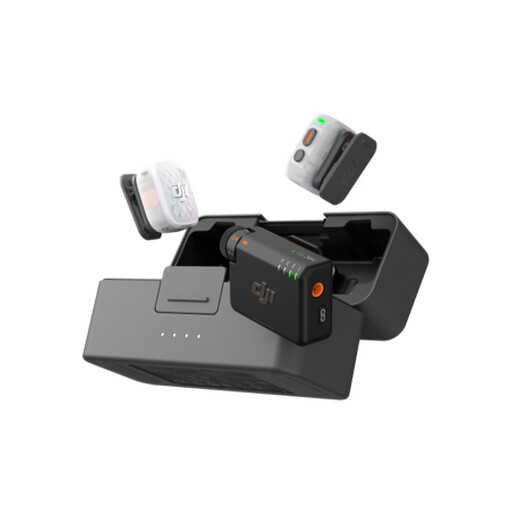 Image unavailable
The product name describes a set with two TX units, one RX unit and a Charging Case. Check whether the set can record on its own or needs to be connected to a compatible recorder.
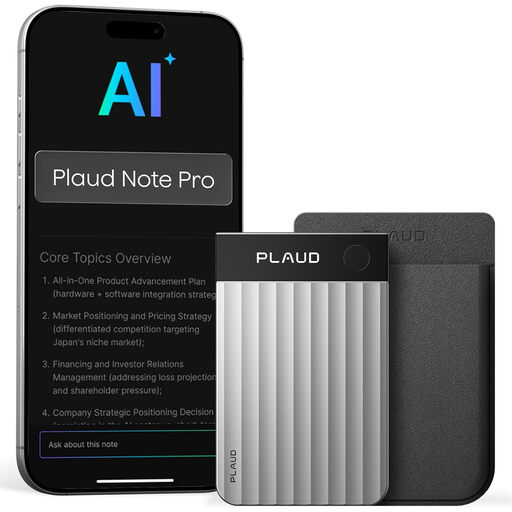 Image unavailable
The product name describes a voice recorder with AI Notes & Summary. Check which recording formats are available and whether the file is suitable for the editing you have in mind.
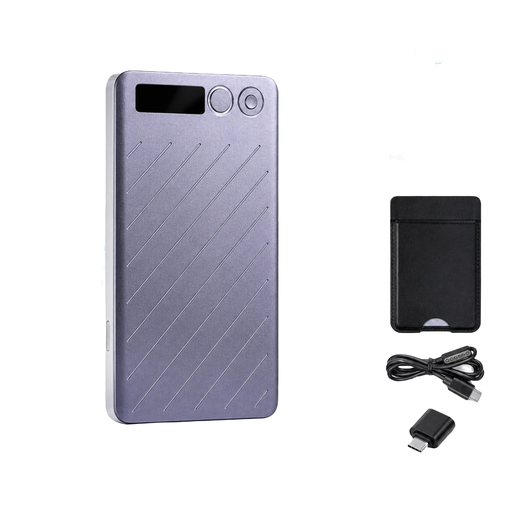 Image unavailable
The product name lists 64 GB of storage and a transcription function. Check which recording formats are available and whether the files suit your editing process.
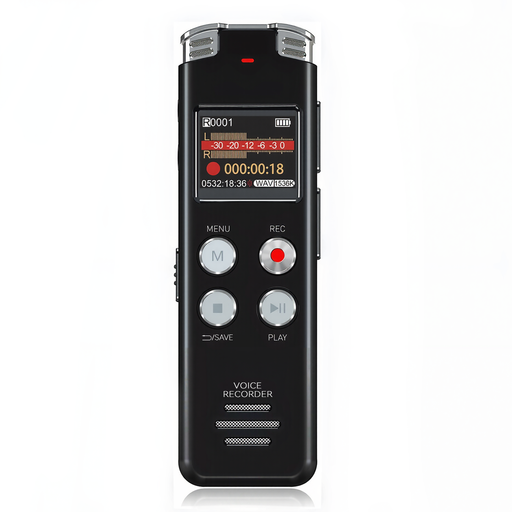 Image unavailable
The product name lists 128 GB of storage. Check which file formats the device supports and whether the microphone set-up will capture a seated narrator clearly.
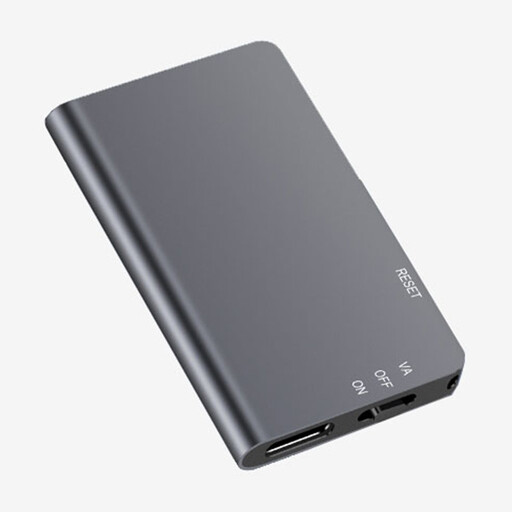 Image unavailable
The product name lists 64 GB and One-Touch Recording. Check the available recording format, playback function and how you can transfer the file afterwards.
Make a short recording from the intended position and listen back before starting the full monologue. For the Zoom H1essential, Zoom warns that reflections from a table can reduce clarity; a tripod can lift the device off the tabletop. This advice won’t necessarily apply to every other model.
No, not necessarily. Zoom and Tascam offer this mode on the handheld models mentioned, while voice recorders may also support LPCM or MP3. Choose based on the file you need and your test set-up, not just the bit depth.
Check the power supply, available storage and recording setting, then make and play back a test file. Treat the quoted maximum storage or battery life as applying only to the setting it refers to, and copy the final file to a second storage location afterwards.
In the Netherlands, you’re entitled to a product that meets reasonable expectations. According to the Dutch government, if a product is faulty, the retailer is your point of contact for an appropriate solution; the manufacturer’s guarantee is in addition to your statutory rights.
Check whether you have permission or another valid legal basis before making someone else’s protected text public. Privacy rules apply when publishing identifiable personal data; the Dutch Data Protection Authority describes consent as one possible GDPR legal basis, although context and exceptions matter. For a particular text or recording, the answer depends on the rights and agreements that apply.