
For ironing in a small laundry area
You iron a few pairs of school trousers at a time and need to put away both the appliance and the ironing surface afterwards.


If you iron a few pairs of school trousers at a time, a standard steam iron is a sensible choice, provided you also have a stable place to lay them flat and somewhere to store the appliance. A handheld steamer is handy for freshening up light creases on a hanger, but it won’t create a crisp trouser crease on its own. A steam generator may suit larger piles of ironing, if you have space for its separate tank and ironing surface. Always follow the care instructions on the trousers.
You iron a few pairs of school trousers at a time and need to put away both the appliance and the ironing surface afterwards.
You want to smooth trousers precisely and adjust the temperature and steam to suit the care instructions.
You iron school trousers alongside other laundry or heavier fabrics, and are weighing up a steam generator’s capacity against the extra storage space it needs.
A good fit if: you have short ironing sessions and want to smooth trouser legs, seams or an existing crease.
Bear in mind: you’ll still need a suitable, stable ironing surface.
A good fit if: you mainly want to freshen up light creases on a hanger and have little room for an ironing board.
Bear in mind: for a sharply pressed crease, an iron soleplate on a flat surface gives you more control.
A good fit if: you regularly iron larger loads or heavier fabrics and have room for the complete system.
Bear in mind: the separate water tank makes the system bulkier to store; the Consumentenbond highlights this difference compared with a steam iron.
Measure not only the storage space for the appliance, but also the area where you can safely lay the trousers flat. A handheld steamer can help with light creases on a hanger; Philips notes that heavier fabrics often smooth out more quickly with a steam iron.
| What to consider | What should you check? | Who should consider this? |
|---|---|---|
| Working and storage space | Measure your storage space and decide where you can safely lay the trousers while ironing. | I have limited space and need room for both the appliance and the ironing surface; around 36% of consumers say space is their top priority. |
| Precise trouser finishing | Look at the shape of the soleplate and check whether you can adjust the steam and temperature. | I want to finish trouser legs, seams or an existing crease precisely; around 29% of consumers put this type of finish first. |
| Fabric care and maintenance | Read the care instructions, along with the water and descaling guidance for the exact model. | I iron trousers made from different fabrics and want to avoid damage without neglecting maintenance; around 21% of consumers make fabric care their main priority. |
| Size of your ironing load | Consider the size of your usual pile of ironing and measure the space available for a generator and ironing surface. | As well as school trousers, I regularly iron larger loads or heavier fabrics; around 14% of consumers prioritise the amount of ironing they do. |
You can use a handheld steamer on a hanger, but for precise ironing you’ll also need a suitable place to lay the trousers flat. A steam generator also takes up space because of its separate water tank.
Before you buy, decide whether you mainly want to freshen clothes up on a hanger or iron them flat, then measure the full amount of space you’ll need to use and store the appliance.
A steam output figure is a product specification, not an independent test result for your school trousers. The care instructions, fabric and way you iron all matter too.
Check that the temperature and steam settings suit the fabric, and don’t treat the manufacturer’s figures as proof of a particular ironing result.
The Consumentenbond explains that anti-scale systems can slow limescale build-up, but regular maintenance is still needed.
Before buying, check what descaling routine the exact model requires. Some systems may need replacement cartridges.
The Express Steam FV2838 and Easygliss Plus FV5736 are standard steam irons for anyone who doesn’t want a separate generator unit.
The TexStyle 7 Pro SI 7181 is a standard steam iron with manual temperature settings and a precision tip, as described by Braun.
The 3000 Series DST3041/30 is a standard steam iron; Philips also offers handheld steamers and steam generators for different needs.
This selection includes compact irons and steamers for anyone who wants to iron clothes flat. For each specific appliance, check the required CE marking and relevant product documentation. The NVWA states that this requirement applies to electrical consumer products for which CE marking is mandatory.
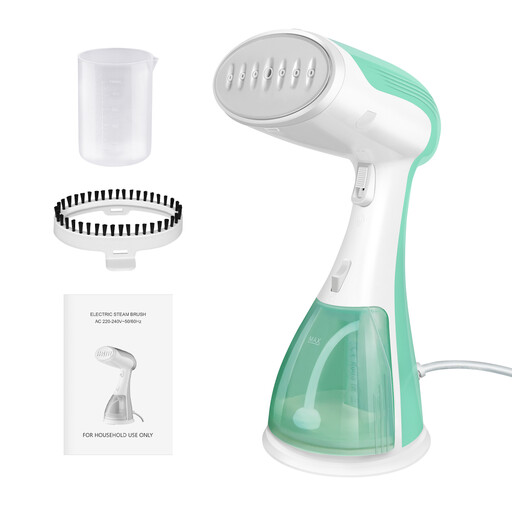 Image not available
The description mentions both flat ironing and steaming, making this an option for anyone who wants to treat school trousers precisely.
The product description lists a 300 ml water tank and continuous steam. Check the space you’ll need to use it and the product documentation for this specific model.
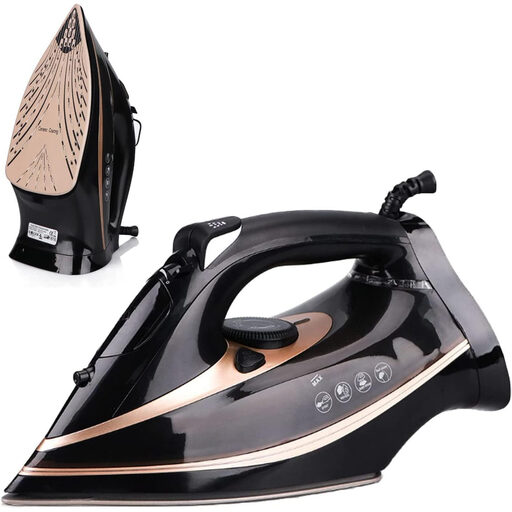 Image not available
The soleplate is designed for ironing clothes flat, which suits anyone looking to smooth trouser legs or seams precisely.
The product name lists 70 g/min steam, a 120 g steam boost, a 300 ml tank and self-cleaning. Check the product documentation for this specific model.
 Image not available
The soleplate makes this model suitable for anyone who wants to iron trousers flat rather than just freshen them up on a hanger.
The product name lists temperature settings for different fabrics, automatic cleaning and an anti-drip system. Check the product documentation for this specific model.
 Image not available
Adjustable temperature and steam settings suit anyone who wants to match their ironing settings to the fabric.
Tefal Netherlands lists continuous steam output of 45 g/min and a steam boost of 220 g/min for the FV5736. These are manufacturer specifications, not independent test results. You’ll need a stable surface to iron clothes flat.
 Image not available
The product description mentions both a steam function and an ironing function with a heated soleplate.
The description lists a ceramic soleplate, continuous steam, a cord storage system and a steam trigger lock. Check the product documentation for this specific model.
No, follow the care instructions for the specific pair of trousers. The Consumentenbond describes ironing symbols with maximum temperatures including 110, 150 and 200 °C, as well as a symbol for do not iron.
Choose a standard steam iron if you want to iron trousers flat or press a crease precisely. A handheld steamer may suit light creases on a hanger; Philips notes that heavier fabrics often smooth out more quickly with a steam iron.
Follow the instructions for the exact model, including guidance on water and descaling. The Consumentenbond says anti-scale systems can slow limescale build-up, but don’t remove the need for maintenance. Don’t use perfumed ironing water or other additives.
In the Netherlands, CE marking is required for electrical consumer products that must carry it. The NVWA explains this requirement; check the marking and relevant product documentation for the specific model you’re buying.