
Anyone looking to touch up a smart crease
You want to smooth out school trousers after storage and carefully refresh an existing crease. The care label tells you which temperature and amount of steam are allowed.


If you only have a few pairs of school trousers and limited storage space, a standard steam iron is an obvious choice; according to the Consumentenbond, this type is suited to smaller loads of ironing. A steam generator can be handy for a large seasonal pile and stubborn creases, but it takes up more space. Always follow the care label: a higher steam output is no advantage if the trousers need to be ironed without steam or at a low temperature.
You want to smooth out school trousers after storage and carefully refresh an existing crease. The care label tells you which temperature and amount of steam are allowed.
You take shine, pressure marks and a low permitted ironing temperature into account. GINETEX recommends using a pressing cloth or ironing garments inside out where necessary if they are sensitive to shine or pressure marks.
You weigh up the amount of ironing and whether you need a larger tank against the space the appliance and ironing board will take up.
A good fit if: you want to press a few pairs of trousers now and then and put away a compact appliance.
The trade-off: the built-in tank is smaller, and steam is not suitable for every pair of trousers.
A good fit if: you have a large pile of ironing during a wardrobe change and space for a base unit.
The trade-off: the setup needs more storage space and may require a suitable, sturdier ironing board.
A good fit if: quickly removing creases from hanging clothes matters more than creating a sharp trouser crease.
The trade-off: Philips describes a garment steamer as a different appliance from an iron, with different results, particularly on thicker fabrics.
First, check what the trouser care label allows, then work out how much ironing you usually have to do. GINETEX emphasises that the maximum temperature is determined by the care label, not just by the type of fibre.
| What to consider | What to look for | Who should pay particular attention? |
|---|---|---|
| A smart trouser crease | Check that the temperature and steam settings are suitable for the care label; see whether the soleplate can reach seams and smaller areas. | If I want to carefully touch up an existing crease, I’m mainly looking for control when pressing. Around 36% of consumers prioritise a smart trouser crease. |
| Protecting the fabric | Check the ironing symbol and make sure you can iron without steam at the low setting required. | For trousers that are sensitive to shine or pressure marks, I want to be able to follow the care label, even if it takes longer. Around 29% of consumers prioritise fabric protection. |
| A larger ironing session | Compare tank capacity and continuous steam output; also consider your available storage space and whether your ironing board is suitable. | If I’m ironing lots of items in a row, having to refill less often matters to me. Around 21% of consumers prioritise a larger ironing session. |
| Compact ironing between bigger loads | Check the dimensions and how heavy it feels in your hand, and make sure the controls suit the trousers you iron. | For a few pairs of trousers between bigger loads, I want an appliance that’s easy to get out and put away. Around 14% of consumers prioritise compact convenience. |
The care label determines which treatment is allowed. GINETEX states that the low ironing setting should be used without steam.
Check the care label before choosing the temperature and steam setting.
A larger tank and extra steam are most useful when you have more ironing to do; the base unit also takes up more space.
Compare how much ironing you have with the space available for the appliance and ironing board.
According to Philips, a garment steamer does not give the same results as an iron, particularly on thicker fabrics.
An iron with a soleplate is the best choice if you want a sharp crease and the care label allows it.
The Philips 3000 Series DST3031/20 is an example of a standard steam iron with a ceramic soleplate and a 300 ml reservoir, according to Philips’ product specifications.
The Express Steam FV2838E0 is an example of a standard steam iron with adjustable settings, a precision tip and a 270 ml reservoir.
Braun lists a precision tip and variable steam among the features of its TexStyle 7 Pro range, which can be useful around seams.
These Joybuy products include standard steam irons and steam generators for small jobs or larger ironing sessions. Follow the care label and check that your chosen electrical appliance or version carries the required CE marking; the NVWA outlines the general requirements for electrical appliances.
 No image available
A handheld iron may suit you if you want to iron a few pairs of trousers straight away; let the care label determine which treatment is allowed.
Power: 2400 W.
 No image available
A steam generator may suit a larger ironing session; the steam setting must still be appropriate for the trouser care label.
Power: 2400 W. Tank: 1.4 L. Steam boost: 350 g.
 No image available
This steam generator is for anyone who wants to iron several items in a row; always follow the care label for each pair of trousers.
The product information lists automatic OptimalTEMP temperature control and no manual temperature setting.
 No image available
A steam generator iron with a soleplate may suit a longer ironing session when you want to press trousers flat.
 No image available
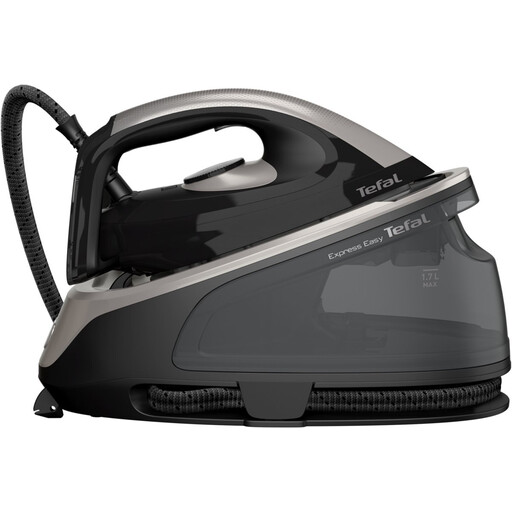
A steam ironing station may suit you if you have several items to iron in a row; check that you have enough space for the setup.
No. Base the maximum temperature on the trouser care label, not just the name of the fibre. GINETEX states that the low ironing setting should be used without steam, at a maximum of 110 °C. If parts of the garment are sensitive to shine or pressure marks, a pressing cloth or ironing inside out may help where necessary.
Check the model’s care instructions and descale it as directed. The Consumentenbond identifies limescale as a major cause of iron problems; do not use descaler without checking the manual first.
You do not need an extended warranty to have your statutory rights. According to ACM ConsuWijzer, a product must meet what you could reasonably expect when used normally; any manufacturer’s warranty or extra warranty you purchase is separate from this.
According to the Netherlands Food and Consumer Product Safety Authority, CE marking is compulsory for electrical products. This general rule does not confirm that an individual product on offer is correctly marked; check the marking on the version you choose.