
Vandaag of morgen in huis

Kwaliteit gegarandeerd

Welkomstaanbiedingen ontgrendelen: GRATIS bezorging | Tot 80% korting | Gratis 30 dagen JoyPlus-proefperiode
Download de app
Stocking up on school supplies might seem straightforward. Yet many purchases end up unused in a drawer. A pen that doesn’t write comfortably, a notebook that turns out too small, or scissors that are awkward for little hands. Even with office supplies and art materials, eye-catching colours or terms like “professional” don’t always tell you everything about everyday use.
So it’s best to focus on verifiable specifications. Think about size, nib thickness, material, pack contents and age warnings. That way, you can match writing instruments and educational resources more closely to the user.
A multi-pack can be handy for a classroom, family or shared office. But first check exactly what’s inside the pack. With ballpoint pens, for example, it could be several pens in the same colour, whereas a set with four colours per pen is better suited for highlighting and organising. With notebooks, the difference between 50 sheets and 100 pages is also important: one sheet usually has two pages.
A5 is suitable for longer notes, while A6 and A7 are mainly intended for quick jottings. A small notebook fits easily into a jacket pocket, but offers less space for lessons or detailed planning. Also check whether a product really is A5, A6 or A7; product descriptions can mention different sizes side by side.
With acrylic markers, the surface makes all the difference. A marker that the product description says is suitable for paper, glass, wood, fabric and ceramic can perform differently on each material. According to Faber-Castell’s product information, it’s water-based acrylic ink for use on multiple surfaces. So test the marker on an inconspicuous spot first, and check whether the ink is permanent, erasable or paintable.
For everyday writing, gel pens with a nib of around 0.7 mm are often practical. A finer nib gives more control with small letters and diagrams. A 0.5 mm mechanical pencil is suitable for precise lines and technical notes. For sketching, a thicker lead, such as 1.8 mm with 2B hardness, can release more graphite.
With mechanical pencils, pay attention to:
According to the product description, a metal pencil can feel heavier and more balanced. That’s no objective guarantee of greater writing comfort, but it may suit users who draw or write for longer periods.
Paper weight is expressed in grams per square metre, for example 80 g/m² or 100 g/m². Heavier paper generally feels sturdier, but doesn’t automatically prevent every ink from bleeding through. If in doubt, test the combination of paper and pen.
A sewn binding can allow a notebook to lie flat. A spiral binding is handy when you want to turn pages quickly or write with one hand. An elastic closure and bookmark help keep a booklet closed and organised on the go.
With children’s scissors, the length, handle, protective cap and age recommendation are more important than just the appearance. The M&G set in the selection has a length of 12 cm, stainless steel blades and protective caps. Always use scissors under appropriate supervision and store them with the cap on when not in use.
For educational resources with small parts, such as a molecular model set, you must follow the age warning. According to the product information, the set mentioned is intended for users aged 15 and over and contains 404 pieces. Small parts are not suitable for children under 3 years.
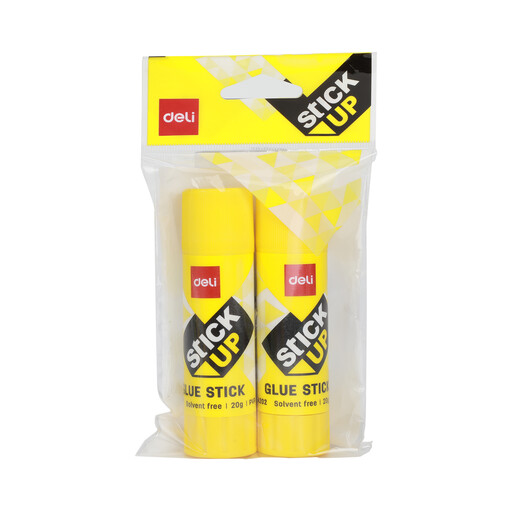
Why this suits the profile: A simple addition for school projects, craft activities and the office. The set contains two 20 g glue sticks with no complicated operation.
The packaging clearly states the number of pieces and the weight per stick. This makes comparison easier than with a set that has no contents list.
2 pieces; fixed content of 20 g per glue stick; suitable for office and school use according to the product name.
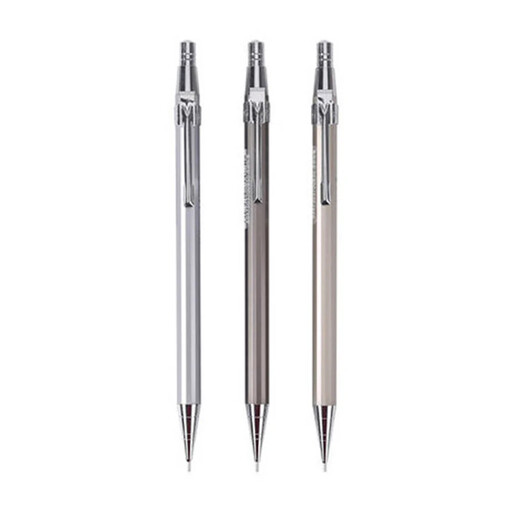
Why this suits the profile: Suitable for students, artists and office workers who prefer a precise nib and a metal barrel over a lightweight plastic model.
The nib thickness of 0.5 mm and the barrel material are clearly stated. So you don’t have to rely solely on descriptions like “precise” or “professional”.
3 pencils; 0.5 mm black lead; metal barrel; push-button mechanism for advancing the lead.
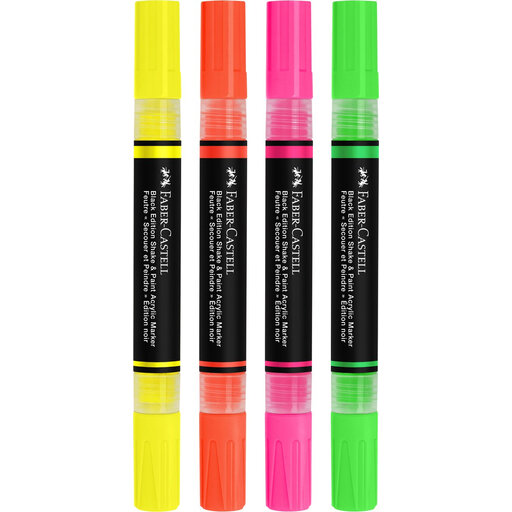
Why this suits the profile: For creative hobbyists, teachers and makers who want to work with art materials on different surfaces and need two line widths.
The product information mentions four colours, two nibs of 1 and 3 mm, and the required shake-and-pump action. Do test the coverage on each surface though.
4 neon colours; water-based acrylic ink according to the product description; nibs of 1 and 3 mm; recommended minimum age of 7 years.
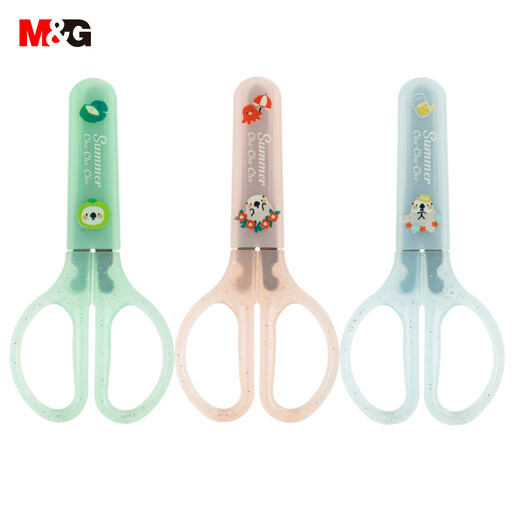
Why this suits the profile: Handy when several children or pupils are crafting at the same time. The three pairs can be shared at home or in a classroom.
The length of 12 cm, the number of pieces and the protective caps are clearly described. This makes the set easier to compare than a single pair of scissors with unclear dimensions.
3 pairs of scissors; stainless steel blades; protective caps; BPA-free plastic handles according to the product description.
We’ve put together a full, up-to-date list of products that fully meet these strict selection criteria and current European safety regulations.
For a pupil who writes every day, a practical basic set is enough: a few ballpoint pens, a mechanical pencil, spare leads, an eraser and a pencil sharpener with a container. Anyone who writes a lot of summaries might also choose gel pens in different colours or a 4-in-1 ballpoint pen.
For creative tasks, sketching materials, acrylic markers, glue sticks and children’s scissors are logical additions. With glue and markers, always check the surface you intend to use them on. For a teacher or parent, a multi-pack can be interesting because materials can then be shared without buying lots of individual products straight away.
A small A7 spiral notebook is suitable for shopping lists, tasks or quick ideas. For lesson notes, an A5 notebook usually works better. Look at the number of sheets, the paper type and the binding. The M&G Meeboki set contains four A7 notebooks with squared paper and a spiral-bound cover, while the Jubiluu A5 set consists of three sewn notebooks.
A basic stock consists of pens, pencils, eraser, pencil sharpener, ruler, notebooks and possibly glue sticks. For creative subjects, colouring pencils, sketch paper, markers and children’s scissors can be added. The exact list depends on the school and year group.
The lifespan varies by product and how intensively it’s used. Pens can dry out if not properly capped. Empty the container of a pencil sharpener regularly and store paper in a dry place. With acrylic markers, it helps to replace the cap immediately after use and follow the manufacturer’s activation instructions.
Don’t just compare the selling price, but also the price per piece, the paper size and the contents. A multi-pack is worthwhile when all the items will be used. For everyday schoolwork, buy the basics first and add specialised art materials or educational resources when an assignment calls for them.
