
Vandaag of morgen in huis

Kwaliteit gegarandeerd

Welkomstaanbiedingen ontgrendelen: GRATIS bezorging | Tot 80% korting | Gratis 30 dagen JoyPlus-proefperiode
Download de app
A new school year, a study plan or a creative project often calls for more than just a pen and a notebook. Yet it’s easy to focus on colour, packaging or a low price when buying school supplies and office stationery. That can lead to products that run out quickly, prove awkward to use or simply don’t suit the task.
Watch out for these three common pitfalls:
A practical purchase therefore starts with how you’ll use it: is it for quick notes, long texts, technical drawing, crafting, organising or studying?
For quick notes, compact A7 notebooks are handy. They fit in a jacket pocket or small bag and are ideal for to-do lists and short ideas. For school, work and journaling, A5 offers more writing space without being too bulky.
Alongside the size, also check:
Watch out for conflicting product information. Always check the current product page for size, paper weight and contents before you order.
The right pen depends on the line you want and the paper you’re using. Gel pens with a 0.7 mm tip give a clearer line than finer ballpoint pens. They’re pleasant for notes, but make sure you put the cap back on properly after use to prevent them drying out.
Ballpoint pens are a practical choice for forms, diaries and everyday writing. A 4-in-1 model with multiple colours can save space in a pencil case. For technical work and drawing, mechanical pencils with a 0.5 mm tip offer precise lines. A 1.8 mm model with 2B lead is more suited to sketching and broader pencil lines.
Also look at:
When crafting with children, rounded shapes, protective caps and appropriate supervision are important. A protective cap reduces the risk of scissors being loose in a bag, but it doesn’t replace safe use. Small parts, such as model-building components, are not suitable for young children.
For acrylic markers, check the surfaces they can be used on. The Faber-Castell set in this overview is described as suitable for paper, metal, ceramic, plastic, glass, textile, stone, canvas and wood. The marker uses a shake-and-pump system; follow the instructions and test on an inconspicuous area first.
With chemistry molecular model kits, the number of parts, the age warning and the storage option are all relevant. A set with 404 parts needs to be stored tidily, especially when pupils or several students are working with it.

Why this fits the profile: Four compact A7 notebooks are practical for different subjects, lists or short notes on the go.
The size, the squared pages and the contents of 50 sheets per notebook are clearly stated. So you’re not buying based on the colour scheme alone.
Four pieces, squared paper and a top-flip spiral binding for one-handed use.
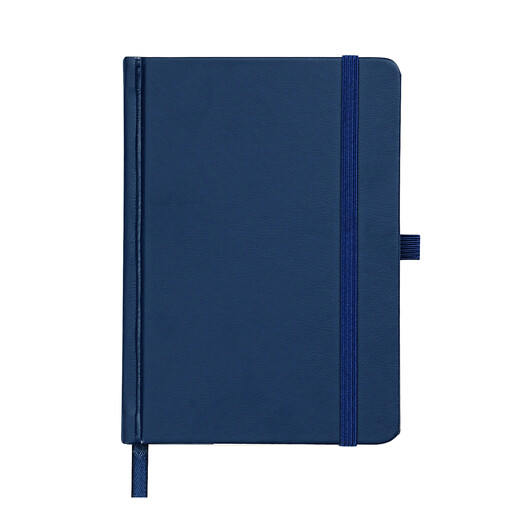
Why this fits the profile: The A5 notebook is designed for anyone looking for a permanent home for work notes, journaling or study planning.
The contents are clearly described: 80 sheets of lined paper, a bookmark, an elastic closure and a pen loop.
100g off-white offset paper, A6 size according to the product information and accessories for daily use.
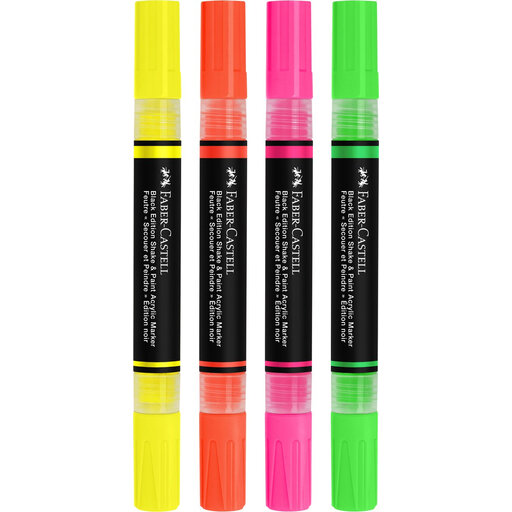
Why this fits the profile: Ideal for creative hobbyists and makers who want to work on multiple surfaces.
The set states four colours and two tips per marker: 1 mm and 3 mm. This means you can judge in advance whether the line thickness suits your project.
Four neon colours and use on paper, glass, wood, canvas and plastic, according to the product description.
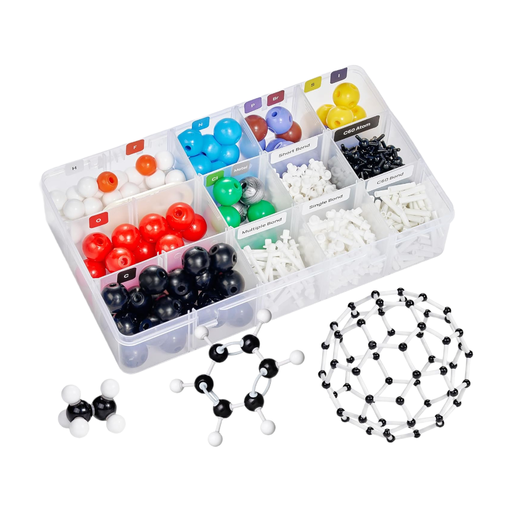
Why this fits the profile: An education-focused set for visually building organic and inorganic molecular models.
The 404 parts, the learning guide and the labelled storage box make the contents verifiable and easy to organise.
Colour-coded parts, 6 pages of instructions and a remover tool for disassembly.
We’ve put together a full, up-to-date list of products that fully meet these strict selection criteria and current European safety regulations.
When you’re buying office stationery with a purpose, you can top up the basics with practical accessories:
For most students, a practical basic set includes notebooks or notepads, blue and black ballpoint pens, a pencil or mechanical pencil, eraser, pencil sharpener, ruler and glue stick. For creative subjects, you can add drawing supplies, markers and a pair of children’s scissors.
Check the paper weight and test the combination of pen and paper on a back page. Gel pens and markers can behave differently from pencil or ballpoint. With notebooks using 80 g paper, it’s wise to test first, especially with intense ink colours.
The lifespan depends on use, storage and maintenance. Store paper in a dry place, cap gel pens, empty sharpeners regularly and put protective caps back on markers and scissors. With heavy use, refills and spares are often more practical than waiting until an item runs out.
