
Vandaag of morgen in huis

Kwaliteit gegarandeerd

Welkomstaanbiedingen ontgrendelen: GRATIS bezorging | Tot 80% korting | Gratis 30 dagen JoyPlus-proefperiode
Download de app
A full pencil case, a planner that does not suit the way you work or a notebook whose ink immediately bleeds through: choosing school and office supplies may seem straightforward, but small differences can make a big difference to everyday use. This applies to school pupils and students, as well as teachers, professionals, parents and journaling enthusiasts.
Pay particular attention to these three common pitfalls:
First, consider what you will use the product for. An A5 notebook measuring approximately 14.8 × 21 cm provides plenty of space for lectures, meetings and journaling. An A7 spiral notebook, at approximately 7.4 × 10.5 cm, is suitable for shopping lists, short tasks and quick ideas.
An undated planner is useful if you do not follow a fixed schedule every week. You can skip a monthly or weekly layout without leaving empty, pre-printed pages. However, check that the planner provides enough space for daily notes, goals and tasks.
Paper weight is expressed in grams per square metre, for example 80g or 100g. Heavier paper generally feels sturdier and can help reduce ink show-through, although the result also depends on the pen you use.
A hardcover offers more protection in a bag. A softcover is lighter and often more flexible. Spiral binding can be useful if you want to lay the book flat, but check that the spiral is not too wide for your pencil case or laptop bag.
With a mechanical pencil, the lead diameter and hardness determine the writing experience. A 0.5 mm pencil lead is suitable for fine lines and everyday writing. A 1.8 mm 2B lead is thicker and softer, making it better suited to drawing, sketching or marking.
Also consider:
The opening is important when choosing a sharpener. Some models are suitable for standard coloured pencils, while others are designed for thicker or hexagonal pencils. An integrated reservoir prevents loose shavings from ending up in a school bag, but it needs to be emptied regularly.

Why it suits this profile: Four compact notebooks make it easy to keep schoolwork, shopping lists and ideas separate.
The A7 size and specification of 50 sheets per notebook make it clear that this model is intended for short notes, not lengthy reports.
Pack of four, grid paper, soft cover and a fold-over spiral binding at the top.
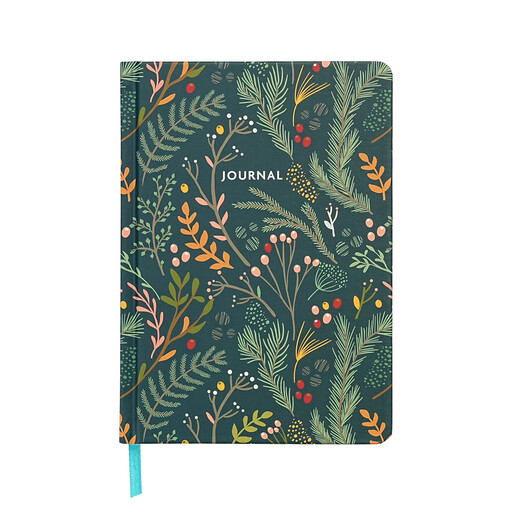
Why it suits this profile: A sturdy cover, A5 format and 100g lined paper are ideal for everyday use in the office, at school or during journaling.
The product information clearly specifies A5, 96 sheets, 100g offset paper, a ribbon bookmark and an elastic closure.
Hardcover, lined cream-coloured paper, ribbon bookmark and elastic band.
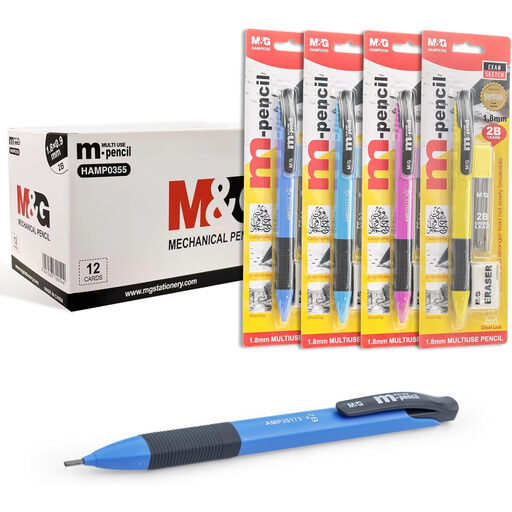
Why it suits this profile: The thicker 1.8 mm 2B lead is designed for drawing, sketching and drafting rather than fine writing.
The diameter and hardness are clearly stated. This means you will not end up buying a fine mechanical pencil when you actually need broad, dark sketch lines.
Pack of 12 pencils, 2B leads, a refill set and 12 erasers, according to the product description.
For school, a mechanical pencil, pencil leads, eraser and pencil sharpener with a shavings container provide a practical starting point. Students and professionals often get more use from an A5 notebook with a sturdy cover, as loose pages are less likely to become creased in a rucksack.
For journaling, you can combine a hardcover notebook with fineliners, stickers, an undated planner and other journaling supplies. If you work creatively, a sketchbook, coloured pencils and scratch paper may be more suitable. According to the product description, the Jar Melo Scratch Art Notes Set contains 130 pre-cut sheets measuring approximately 8.9 × 8.9 cm and one wooden stylus. This makes it suitable for short creative projects, cards or notes.
When buying products for young children, always check the age information and warnings on the product page. Small parts, such as elastic bands, ribbons or styluses, may pose a risk to children under the stated age.
We have put together a complete, up-to-date list of products that fully meet these strict selection criteria and the applicable European safety regulations.
A5 is usually more practical for detailed lessons, meetings and summaries. A7 fits in a jacket pocket or small bag and is mainly suitable for short lists and quick notes.
100g paper can help reduce show-through compared with 80g, but the type of ink and the pen tip also make a difference. If in doubt, test the pen on a back page before using the entire notebook.
Its lifespan depends on the number of sheets, the cover, the binding and how you carry the notebook. Keep stationery dry, avoid placing heavy pressure on the cover and choose a hardcover or spiral binding if the notebook will be carried in a full bag every day.
