
Vandaag of morgen in huis

Kwaliteit gegarandeerd

Welkomstaanbiedingen ontgrendelen: GRATIS bezorging | Tot 80% korting | Gratis 30 dagen JoyPlus-proefperiode
Download de app
A new set of school and office supplies might seem straightforward to choose. Yet many shoppers fall into the same traps: a pretty package says little about writing comfort, a large set often contains colours you never use, and a compact notebook turns out to be too small for daily use. With a few key checks, you can avoid a bad purchase and tailor your selection to school, work, journaling or creative projects.
Pastel-coloured pens and stylish notebooks quickly catch the eye. However, it is the tip size, grip, paper type and closure that determine whether you enjoy using them. A decorative pen with a tip that is too thick, for example, is less suitable for small notes or diaries.
According to the product descriptions of various brands, the ink is quick-drying or designed to reduce smudging. That is no guarantee that smears won't appear on every type of paper. Smooth paper, thick ink layers and writing with your left hand can all affect the result. If in doubt, test on an inconspicuous area first.
A notebook with 50 sheets typically contains 50 leaves and therefore 100 writable pages. So check whether the seller refers to sheets or pages. With an A7 notebook, the content is also important: this size is handy for short notes, but less suitable for detailed lesson notes.
A fine tip usually requires less space but can be more sensitive to pressure. A thicker pencil lead is useful for sketching, while 0.5 mm is better suited to technical notes.
A5 notebooks measuring 148 × 210 mm are suitable for school, work, planning and journaling. A hardcover offers more protection in a bag. A softcover is lighter and more flexible.
A spiral notebook can be practical when you want to fold pages completely back or lay them flat. With a top-flip binding, where the spiral is at the top, you can write with one hand. An A7 notebook fits easily into a jacket pocket or small bag and is mainly intended for shopping lists, to-dos and quick ideas.
Look for a non-slip grip if you write for long periods. With gel pens, a click mechanism is handy for daily use, while a cap offers extra protection for the tip. Store gel pens according to the product instructions, often horizontally and out of direct sunlight. Retract any retractable tips when you are not using the pen.
For notebooks, a dry storage spot helps prevent paper from warping. An elastic band keeps loose pages and the cover together, but check that it does not make the book unnecessarily bulky.

Why this fits the profile: Four compact A7 notebooks offer a simple way to keep tasks, subjects or ideas separate without a big investment.
The specifications clearly state the A7 size, grid paper and 50 sheets per booklet. So the limited writing space is clear from the start.
Set of 4, grid paper, soft cover and a top-flip spiral binding for quick notes on the go.
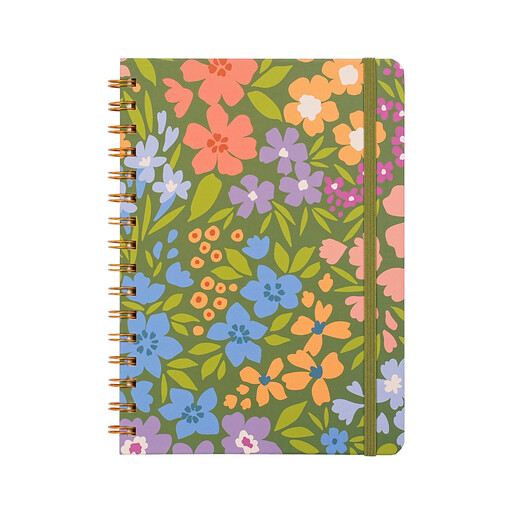
Why this fits the profile: This A5 notebook appeals to users who want a sturdier book for daily writing, work notes or journaling.
The description mentions 96 sheets, 100g cream offset paper, a hardcover and a double wire spiral. So you can compare the paper and binding choices directly.
A5 size, hardcover, elastic closure band and 100g paper according to the product specifications.
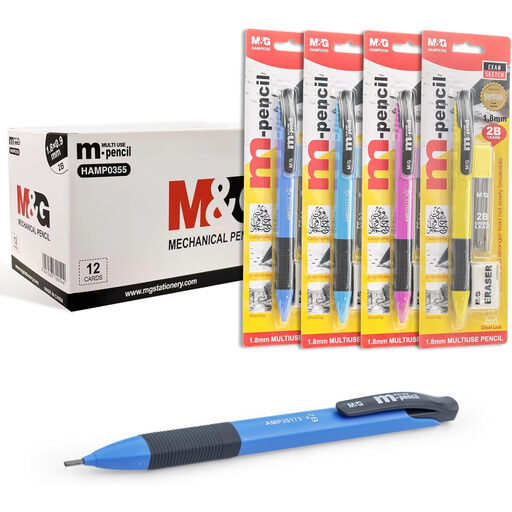
Why this fits the profile: The broad 1.8 mm 2B lead suits drawing, sketching and highlighting, where a classic fine propelling pencil lead is not always practical.
The lead thickness and hardness are clearly stated. So you are not buying a standard 0.5 mm propelling pencil for work that needs a thicker drawing lead.
Set of 12 pencils, 2B leads and aimed at drawing, sketching and school use according to the product name.
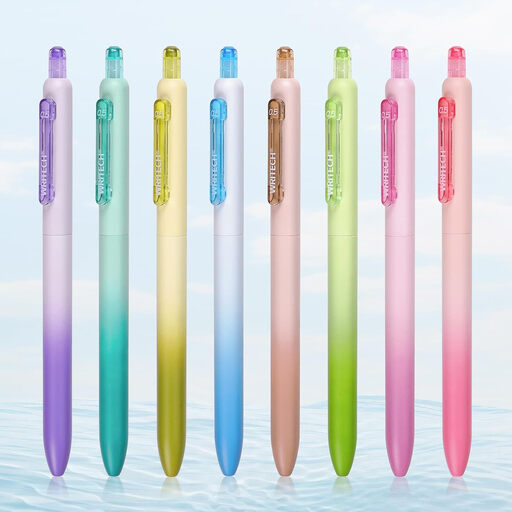
Why this fits the profile: The combination of eight colours, a fine tip and a retractable mechanism is practical for journaling, colour-coding and detailed notes.
The set states the tip size of 0.5 mm and the eight ink colours. Do check on your own paper whether the ink dries quickly enough.
0.5 mm fine tip, eight colours, retractable design and a grip with a matte finish according to the product information.
We have compiled a full, up-to-date list of products that fully meet these strict selection criteria and current European safety regulations.
Erasable gel pens with heat-sensitive ink are handy for temporary notes and planners. The product description of the M&G So Many Cats version mentions a blue, thermally erasable gel ink and an integrated eraser. Do not automatically use this type for documents that need to last a long time: heat can affect the visibility of the ink.
For small handwriting and precise lines, fineliners or 0.5 mm gel pens make sense. Colour pens and drawing and sketching pens are especially useful when colours have a clear function, such as distinguishing subjects, marking plans or creating illustrations. Look not only at the number of colours, but also at the tip size and the suitability of the paper.
Start with a black or blue gel pen of 0.7 mm, a pencil or propelling pencil, an eraser and an A5 notebook. Add colour pens or fineliners if you use colour-coding, planning or journaling. For short shopping lists and reminders, an A7 notebook is more convenient.
In everyday use, these terms are often used interchangeably. Both work with replaceable leads instead of wood. Check the lead thickness and hardness in particular. A 0.5 mm HB lead suits small notes; a 1.8 mm 2B lead is more aimed at drawing and sketching.
That depends on use, paper and storage. Gel pens generally stay usable for longer when you retract or cap them properly and keep them away from heat. A notebook lasts longer if the binding is not overstressed and the paper stays dry. So compare not only the price, but also the number of pens, sheets and the intended use.
