Use tortilla chips as a small, crunchy addition to a school lunch, rather than as its main source of protein. According to product information from Albert Heijn and Jumbo, the chips reviewed provide 6.1–7.8 g of protein per 100 g, compared with 18–19 g per 100 g for their protein-rich wheat wraps. A wrap is a different kind of lunch base, and the protein-rich varieties reviewed contain wheat and gluten. Check the portion size, other nutritional information and your school or after-school club’s rules too.
Who might find this choice useful?
Schoolchildren who play sport and have a protein goal
If you pay attention to protein when putting together lunch, you can compare the nutritional values of wraps and chips per 100 g and per portion eaten. The protein-rich wraps listed by Albert Heijn and Jumbo are soft wheat products, not chips.
Parents packing a complete lunch
If you want to include something crunchy, think of chips as an addition rather than the basis of the lunch. For primary school children, the Netherlands Nutrition Centre highlights wholegrain products, vegetables and fruit as some of the components of everyday food choices.
Families checking allergens and school rules
If there’s an allergy or a rule set by the school or after-school club, check the label of the exact variety. The protein-rich wraps reviewed contain wheat and gluten, while the allergen information for the chips reviewed varies by product.
What should you look for when choosing?
First decide whether you’re looking for a soft lunch base or a small, crunchy addition. Then compare the portion size and the label of the product you’re actually planning to pack.
| What to consider |
What to check before buying |
Who it matters to |
| Protein contribution |
Compare protein per 100 g and check how much the chosen product provides per portion eaten. Albert Heijn and Jumbo list 18 and 19 g of protein per 100 g respectively for the protein-rich wraps reviewed. |
If protein is the top priority for a school lunch around sport, I want to know what the portion actually contributes. Around 31% of consumers are said to put protein contribution first. |
| Role in the lunch |
Decide whether the product will be the basis of the lunch or a small addition, and consider the nutritional information for the whole lunch too. |
If I want a lunch that’s more than a bag of crisps, I look for a suitable base to go with the other lunch items. The make-up of the lunch is said to be the main consideration for around 31% of consumers. |
| Allergens and rules |
Read the allergen information for the exact flavour or variety and ask what rules apply at school or at the after-school club. |
If a pupil needs to avoid certain ingredients, I don’t want to rely on the product category alone. Allergens and local rules are said to be the main concern for around 25% of consumers. |
| Packaging and availability |
Check the number of pieces or portions, storage advice after opening and how the product is currently sold. Lidl lists its Tortilla chips sweet paprika as an in-store product. |
If I’m preparing several packed lunches, I want to choose packaging that suits how it will be used and stored. Around 13% of consumers are said to give priority to this practical consideration. |
Common mistakes
-
Mistaking a protein-rich wrap for tortilla chips
The protein-rich products reviewed from Albert Heijn and Jumbo are soft wheat wraps. They don’t have the crunchy texture you’d choose chips for.
Before buying, decide whether you need a base for lunch or just want to add something crunchy.
-
Assuming all corn chips have the same allergen information
Albert Heijn lists AH Tortilla chips naturel as gluten-free, but says they may contain soya. According to Joybuy, Doritos Cool American contains milk and may contain soya, wheat and gluten; Jumbo lists milk in its Tortilla Chips Paprika.
Check the ingredients and allergen information on the current packaging of the exact flavour you’re packing.
-
Comparing protein per 100 g alone
The value per 100 g is useful for comparing products on the same basis, but it doesn’t tell you how much protein is in the portion eaten. The products reviewed also have different listed salt values.
Look at both the values per 100 g and the portion size, and take the rest of the lunch into account when choosing.
-
Overlooking school or after-school club rules
What you can pack also depends on the rules at the school or after-school club in question, for example those relating to food and allergens.
Ask about the current local rules before packing a product.
Brands to consider
These examples show that tortilla chips and protein-rich wraps are different products, even within the same brand. Always check the variety you’ve chosen.
Jumbo
Jumbo lists both a protein-rich wheat wrap and Tortilla Chips Paprika.
- According to Jumbo, Jumbo's High Proteïne Tortilla Large contains 19 g of protein per 100 g and 11.7 g per 61.7 g tortilla.
- The wrap contains wheat and gluten; Jumbo Tortilla Chips Paprika is a different product and contains milk.
Albert Heijn
Albert Heijn lists a protein-rich wrap and plain tortilla chips as separate products.
- According to Albert Heijn, its Tortilla proteïne wraps naturel medium contain 18 g of protein per 100 g.
- The protein-rich wraps contain wheat and gluten. Albert Heijn lists its Tortilla chips naturel as gluten-free, but says they may contain soya.
Doritos
The Doritos varieties reviewed are tortilla chips for anyone looking for a crunchy addition.
- Albert Heijn lists Doritos Pure paprika as containing 6.1 g of protein and 1.1 g of salt per 100 g.
- Allergens vary by flavour: according to Joybuy, Doritos Cool American contains milk and may contain soya, wheat and gluten.
Mission
Mission describes Protein Tortilla Wraps as wraps, not tortilla chips.
- Mission Foods lists 7 g of plant-based protein per portion for these wraps on its US product page.
- That US product information doesn’t necessarily describe the ingredients of a product sold in the Netherlands. Check the packaging of the variety you want to buy.
Lidl Snack Day
Lidl lists Tortilla chips sweet paprika as standard chips sold in-store.
- Lidl lists this product in a 60 g pack.
- If you’re specifically choosing based on protein, check the nutritional information on the packaging in question.
A wrap as a lunch base at Joybuy
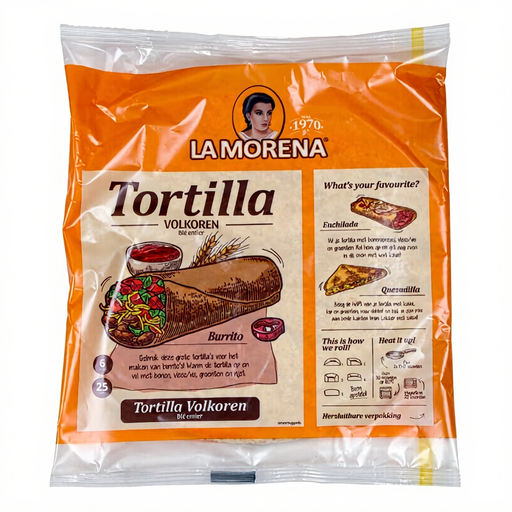
This wholemeal wrap is a soft base to fill and pack, not a crunchy tortilla chip or a wrap specifically labelled as protein-rich. If you have a protein goal, compare the nutritional information per portion with that of the protein-rich wraps you’re considering.
 No image available
La Morena Whole Wheat Tortilla, 6 pieces
A soft wholemeal wrap to use as the base for a filled lunch; the pack contains six. If you want to know how much protein each wrap provides, check the portion size and nutritional information on the packaging. If you have an allergy, check the current ingredients list too.
View at Joybuy
Frequently asked questions
Are tortilla chips a protein-rich base for a school lunch?
If protein is your main consideration, the tortilla chips reviewed aren’t a like-for-like alternative to the protein-rich wraps reviewed. According to product information from Albert Heijn and Jumbo, the chips contain 6.1–7.8 g of protein per 100 g, while the protein-rich wraps contain 18–19 g per 100 g. Also compare the portion you’ll actually be packing.
Do protein-rich tortilla wraps always contain gluten?
The two Dutch protein-rich wraps discussed here, from Albert Heijn and Jumbo, contain wheat and gluten, but that doesn’t tell you about the allergen profile of other products. Read the current label for the exact variety; Albert Heijn, for example, lists its Tortilla chips naturel as gluten-free.
What should I look for besides a ‘high protein’ claim?
Check the nutritional information per 100 g and per portion, as well as the ingredients and allergens. That way, you can compare how much protein the amount you’re packing provides and also check the listed values for things such as salt and fibre.
How should I store opened wraps for a packed lunch?
Follow the storage advice on the packaging you’ve chosen. For its High Proteïne Tortilla, Jumbo advises keeping it in the fridge for no more than three days after opening, at a maximum of 7 °C. Don’t automatically apply that guidance to a different wrap.


