
Makers who want to show yarn colours
You photograph scarves for product pages and want the colours to look true to life. Adobe explains that white balance can help colours look more natural under the lighting you’re using.


For an overview photo of a knitted scarf, try your smartphone first with a plain background, good lighting and a stable setup; Shopify describes this approach for product photography. A mirrorless camera is worth considering if you want more control over lenses, framing or colour settings. For stitch details, the lens’s minimum focusing distance and magnification matter, while a new camera body won’t automatically solve problems caused by changing light.
You photograph scarves for product pages and want the colours to look true to life. Adobe explains that white balance can help colours look more natural under the lighting you’re using.
You want to show the stitches and yarn texture as well as the whole scarf. The lens’s minimum focusing distance and magnification both help determine how tightly you can frame your shot.
You photograph products regularly against the same background and want to keep your framing and lighting consistent. Canon Europe describes a tripod as a useful aid for framing product photos consistently.
Choose this if: you mainly want to photograph the whole scarf and see what your current phone can do first.
Bear in mind: lighting, a plain background and stable support still matter; Shopify describes these as elements of a simple product photography setup.
Choose this if: you want to take different types of shot or choose the lens and colour settings yourself.
Bear in mind: check whether the version includes a lens and whether it can focus at your working distance to capture the stitch detail you want.
Choose this if: you mainly want to photograph individual stitches and prefer a fixed lens to an interchangeable lens system.
Bear in mind: the OM SYSTEM TG-7 manual states that you can shoot from as close as 1 cm in the relevant close-up mode; check that this working distance leaves enough room for your lighting setup.
| Consideration | What should you check? | Who is this important for? |
|---|---|---|
| Yarn colour | Check the white balance settings and, if you want to edit your photos, the file format supported by the exact model. Adobe explains how white balance affects colour reproduction under the lighting you’re using. | If I want yarn colours to look true to life on a product page, I need to be able to assess them accurately under my usual lighting. Around 36% of consumers say colour reproduction is their top priority. |
| Stitches and yarn texture | Compare both the minimum focusing distance and maximum magnification of the lens included with the version you’re considering. | For a photo that clearly shows individual stitches, I want to know whether the lens can capture the framing I need in sharp focus. Around 29% of consumers put stitch detail first. |
| Complete setup | Check which lens, battery, charger and memory card are included with the version; also consider stable support and suitable lighting. | If I want to get started with as few extra purchases as possible, I need to know what I can already use and what else I’ll need. Around 21% of consumers say the cost of a complete, usable setup is their main consideration. |
| Consistent photos | Check that you can use the camera with your tripod setup and maintain the framing and settings you want. | When I photograph several scarves against the same background, I don’t want to have to work out the setup from scratch each time. Around 14% of consumers say consistency is their top priority. |
A high resolution doesn’t, by itself, tell you how true to life the yarn will look under your lighting. White balance and exposure matter too; Adobe explains the role of white balance in colour reproduction.
Test your lighting and white balance with a real scarf before choosing a camera based on resolution.
Minimum focusing distance and magnification vary from lens to lens. Sony, for example, publishes separate figures for the E PZ 16-50mm OSS II; they don’t automatically apply to every kit lens.
Check the exact lens included with the version you’re considering, and see whether it can capture the framing you want at your working distance.
If that lens can’t capture the framing you want, you may need a different lens or to adjust your shooting setup.
A smartphone setup can be a good starting point for overview photos; the OM SYSTEM TG-7 also has a close-up mode. Both options need suitable lighting and framing.
Take an overview photo and a stitch detail first, then work out which features your current setup lacks. Shopify describes a simple smartphone setup for product photography.
The Canon EOS R50 with RF-S standard zoom is a documented mirrorless camera kit for overview photos and different types of shot.
The Nikon Z50II kit with the NIKKOR Z DX 16-50mm lens is an option if you’re looking for a mirrorless camera with a standard zoom.
The ZV-E10 II is worth considering if you want to create video product presentations as well as take photos.
The X-S20 is a model to explore if you want to use interchangeable lenses and shoot in RAW.
The TG-7 is a compact camera with a fixed lens for anyone who wants a close-up function without having to choose a separate lens.
Cameras on Joybuy to compare if you’re considering buying one for scarf photography.
 No image available
Take a test shot of the whole scarf and a stitch detail to see whether the camera can capture the framing you want.
The product name lists 4K, 80MP and 18× zoom; an SD card is not included.
 No image available
Compare an overview photo and a stitch detail with your current setup before deciding whether this camera meets your photography needs.
The product name lists 12× optical zoom, 4K, 64MP and Wi-Fi.
 No image available
Take a test shot of your own scarf to see whether this camera captures the colours and stitches you want.
The product name lists 5K, 80MP and 18× zoom; an SD card is not included.
 No image available
Try a photo of your own scarf to see whether this model suits your photography needs; video specifications alone don’t tell you how well it can capture stitch details.
The product name lists a 1-inch CMOS sensor, 4K/120fps video and 3-axis stabilisation.
 No image available
Take a test shot of the whole scarf and a stitch detail to see whether the framing works for you.
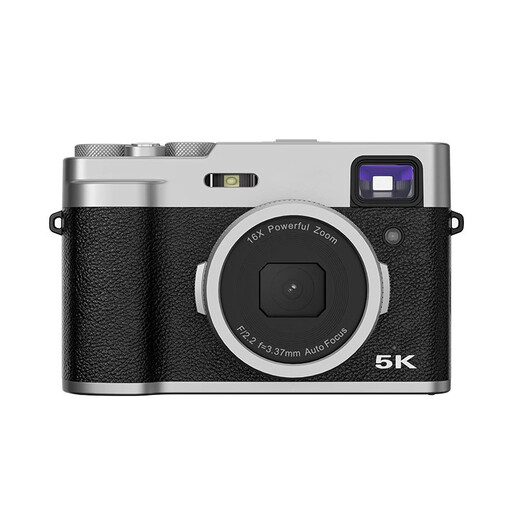
The product name lists 48MP, autofocus, 5K, a 2.8-inch LCD screen and an optical viewfinder.
No. Try your smartphone first with a plain background, good lighting and a stable setup. Shopify describes this approach for product photography; check your own photo to see whether the colours and stitches are clear enough. A mirrorless camera is mainly a next step if you need more control or a different lens.
Keep the lighting as consistent as possible and set the white balance to suit the light you’re using. Adobe explains how white balance affects colour reproduction. Shooting in RAW can make it easier to adjust the image afterwards if the exact camera model supports it; compare the photo with the real scarf too.
Check what’s included in your kit, take a test shot of a whole scarf and a stitch detail, and note down your framing and lighting setup. Remove any visible fluff beforehand so it doesn’t stand out in close-ups.
Consumer purchases are covered by the statutory guarantee: if a product doesn’t do what you could reasonably expect under normal use, the seller is responsible for providing an appropriate solution. ACM ConsuWijzer explains this consumer right; this answer doesn’t determine which terms apply to a purchase made on behalf of a business.
For online purchases, consumers generally have a statutory cooling-off period of up to 14 days after the product is delivered, according to the ACM; some legal exceptions apply. This answer relates to distance purchases by consumers, not business purchases.