
Keeper of delicate booklets
You want to capture bound or worn programmes without putting unnecessary strain on the spine. Make a test scan of an inside page and check that the text remains legible near the spine.


For delicate or bound programmes, an overhead scanner with book correction is a sensible choice. For small booklets that can be laid flat gently, an A4 flatbed scanner may be all you need. Measure the largest booklet when open, and check a test scan at the spine before deciding based on size, processing time or searchable text. The National Archives describes checking image quality and looking for missing pages as part of digitisation; product specifications do not guarantee that every historic page will be captured well.
You want to capture bound or worn programmes without putting unnecessary strain on the spine. Make a test scan of an inside page and check that the text remains legible near the spine.
You have lots of theatre programmes to process and want to be able to find pages later. Build page-turning, file naming and checks for missing pages into your workflow; the National Archives describes these checks as part of digitisation.
You have both loose sheets and small booklets, and want to choose a scanner that suits their sizes and the way they can be laid out.
Choose this option: if booklets are bound or delicate and cannot be laid flat on a glass platen.
Bear in mind: curvature correction is a software feature. Check with a test scan that the text near the spine is captured clearly.
Choose this option: if most booklets fit within A4 and can be opened sufficiently flat without damage.
Bear in mind: the area you want to scan must fit on the glass platen, and the spine must be able to rest on it gently.
Consider this option: if your collection consists mainly of loose, flat programme sheets, including larger formats.
Bear in mind: A3 capture does not automatically mean a scanner can capture curved book pages well.
Start with a test scan of representative material and check both the spine and for any missing pages. The National Archives identifies image quality and completeness as separate checks.
| What to consider | What to look for when buying | Who should prioritise this |
|---|---|---|
| Delicate binding and legibility near the spine | Scan a page close to the spine and compare the text and image with the original. | If I have delicate booklets, I don't want to force the spine, and the text near it needs to remain legible. Around 40% of consumers put preserving the binding and legibility first. |
| Processing time | Try a complete booklet, including page-turning, file naming and checks for missing pages. | When working through a pile of theatre programmes, I want to know how long page-turning, organising and checking will take. Around 31% of consumers prioritise a manageable workflow that uses as few volunteer hours as possible. |
| Scan size for a mixed collection | Measure the largest booklet when open and note how much material is flat, bound or loose-leaf. | If my collection includes originals of different sizes and types, I want to know what scan area I actually need. Around 15% of consumers prioritise getting the right size. |
| Finding text and performances later | Test text recognition on an old programme and use a consistent naming system with keywords. | I want to be able to search later for performances, years or venues, for example. Around 14% of consumers give searchability and organisation top priority. |
An A3 scanning area for sheets does not, by itself, tell you how well a bound book's spine will be captured. CZUR describes the Shine 800 A3 Pro primarily for flat pages, and the ET series for books with page-curvature correction.
Match the scanner to the type of original and check the text near the spine in a test scan, not just the maximum paper size.
Manual correction or rescanning may take extra time.
Scanning is only one step: turning pages, naming files and checking for missing pages are all part of the work too. The National Archives lists checks for skipped pages as part of digitisation.
Try scanning a complete, representative booklet, from preparation through to the checked file, before estimating the workload.
Volunteers also need to allow time for file naming and quality checks.
Text recognition does not change the copyright in texts and images. Under the Dutch Copyright Act, rights holders have the right to reproduce and make works available to the public, subject to legal exceptions.
Decide separately what the group will keep for internal use and what it wants to share. Check copyright and any personal data before publishing.
The features mentioned apply to specific models or product ranges. They are not an assessment of an entire brand or an indication of availability.
CZUR positions the ET24 Pro for bound books, with page-curvature correction, and the Shine 800 A3 Pro primarily for individual flat pages.
IRIS says the IRIScan Desk 6 Pro combines A3 capture with features including searchable PDF output; Canon Netherlands lists book-curvature correction for this model.
Ricoh describes the ScanSnap SV600 as an overhead scanner for books and larger documents, with automatic book correction and page-turn detection.
Epson Netherlands describes the Perfection V39II as an A4 flatbed scanner with a removable lid for thicker bound material.
Plustek describes the OpticBook 4800 as a book-focused flatbed scanner with a scanning edge for bound material.
These products are suited to A4 flatbed scanning or scanning mostly flat, loose sheets. Check whether they are suitable for bound booklets by making a test scan.
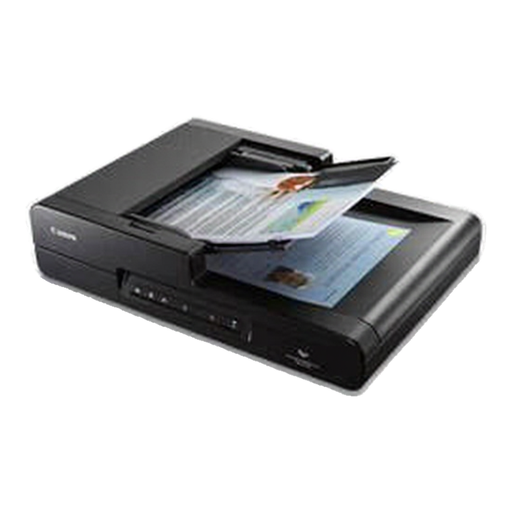 Image unavailable
The description recommends the flatbed for books and delicate material, and the ADF for a batch of loose pages.
A4; 600 × 600 dpi according to the product name.
The description lists a 50-sheet ADF, duplex scanning at 20 pages per minute and output to editable PDF.
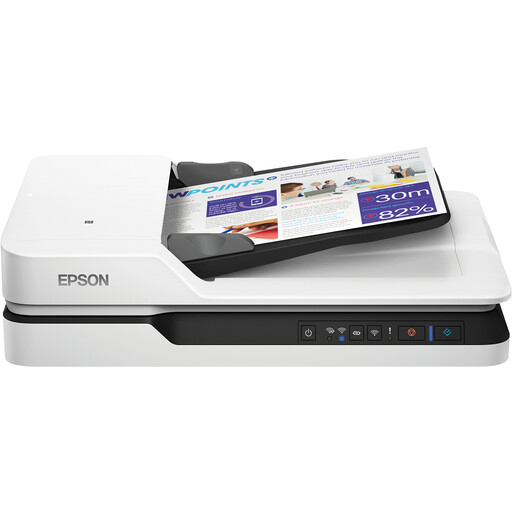 Image unavailable
The description lists books, bound documents and delicate materials as suitable uses for the flatbed scanner.
A4; 1200 × 1200 dpi according to the product name.
The description lists duplex scanning at 25 pages per minute and wireless or USB connectivity.
 Image unavailable
The description positions this model for flat A3 and A4 sheets and lists OCR for text recognition; do not treat it as a substitute for book-curvature correction.
The product description advises against scanning glossy material, such as glossy photographs and magazines.
First, sort the booklets by size, binding and condition. Make test scans of different examples, check the spine and make sure all the pages are there. Then agree a consistent approach to file naming and checking. The National Archives describes condition assessment, keywords and checks for skipped pages as part of its digitisation process.
No. OCR makes recognised text searchable, but it does not replace organising files with keywords. Check how well it recognises old print and unusual layouts, and decide how you will label performances, years and venues, for example.
Before buying, check that the software works on the group's computer and find out what parts and support the seller offers. Check originals for loose parts and dirt before placing them on the scanning area; the National Archives describes preparing materials to prevent damage and scratches.
Do not assume that it does. The Netherlands Authority for Consumers and Markets describes the statutory guarantee for sales to consumers; whether it applies depends on the purchase and how the product is used. If buying in the group's name, make sure it is clear who the contracting party is and which guarantee and service terms apply.
Not automatically. Under the Dutch Copyright Act, rights holders have the right to reproduce and make works available to the public, subject to legal exceptions. Check the rights to texts and images separately; a private home-copy exception does not give you a general right to distribute scans on behalf of a group. Also consider whether publication involves identifiable people or other personal data, and what legal basis applies.