
Teachers with bound sketchbooks
You want to capture pages regularly without pressing the binding or artwork against a glass plate. The ScanSnap SV600 and CZUR ET24 Pro are examples of overhead models designed for bound materials.


If you regularly scan bound sketchbooks that you don’t want to press against a glass plate, start with an overhead book scanner that has a suitable capture area and a practical page-turning workflow. If you mainly scan loose A4 pages and need to assess lines accurately, also compare a book-friendly flatbed scanner. With either option, test colour reproduction using your own drawings rather than relying on dpi or megapixels alone.
You want to capture pages regularly without pressing the binding or artwork against a glass plate. The ScanSnap SV600 and CZUR ET24 Pro are examples of overhead models designed for bound materials.
You want to see fine lines and subtle colour differences, so test your own materials before using a resolution claim as your benchmark. Larry Jordan discussed colour reproduction and OCR specifically in his review of the CZUR ET24 Pro.
You share a small worktable with teaching materials and need room for both the scanner and the open sketchbook. IRIS describes the IRIScan Desk 7 Pro as compact, but you’ll still need space for the open spread.
First, measure the largest open spread. Then decide whether contactless scanning, assessing fine detail or saving table space matters most. Finally, check colour reproduction with a test scan of your own artwork.
| Buying priority | What to look for | Best for |
|---|---|---|
| Bound pages | Check for book correction and page-turn detection, and make a test scan near the binding. | If I regularly scan bound sketchbooks, I don’t want to press delicate artwork against glass. Around 36% of consumers with this scanning need prioritise bound pages and repeated scanning. |
| Colour and fine lines | Test pencil lines and colour gradients using your own materials; assess the image output, not just OCR. | When I assess drawings for detail and colour, I want to see how my own work is reproduced. Around 29% of consumers with this priority focus mainly on colour and fine lines. |
| Workspace | Measure both the available table space and the largest open spread; check that the software is compatible with the school computer. | If I share a scanning area with teaching materials, there needs to be room for both the device and the book. Around 21% of consumers prioritise a practical setup in a small classroom. |
| Larger formats | Measure the largest spread and compare it with the capture area of the exact model. | When my open sketchbook is larger than the capture area of smaller models, I want to capture the whole spread in one scan. Around 14% of consumers therefore prioritise support for larger formats. |
Sensor resolution, optical flatbed resolution and software interpolation are different specifications. In an independent review published on 4 May 2023, Larry Jordan reported limitations in colour accuracy on the CZUR ET24 Pro. That assessment doesn’t automatically apply to other models.
Compare scans of the same sketchbook, paying attention to pencil lines, colour gradients and reflections.
Test scans and any image correction may take extra time.
Even with a compact device, the open book needs to fit within the capture area.
Measure the available table space and the largest open spread, then compare both with the capture area of your chosen model.
Also allow for the space the scanning setup takes up during use.
Students’ personal data and copyright-protected work may require different considerations.
Before saving or sharing, check what’s on the page, who will have access and which school policies or permissions apply.
The ET24 Pro is an overhead scanner designed for repeatedly scanning bound books.
The IRIScan Desk 7 Pro is a compact overhead document camera for books and loose sheets.
The SV600 is a contactless overhead scanner for bound and delicate materials, among other things.
The OpticBook 4800 is a book-focused flatbed scanner for individual A4 pages.
The S21 is an overhead alternative for sketchbooks or open spreads that need A2 capture.
These product options suit thin booklets, books that can be placed on a glass plate, and loose flat sheets for use with sketching and teaching materials.
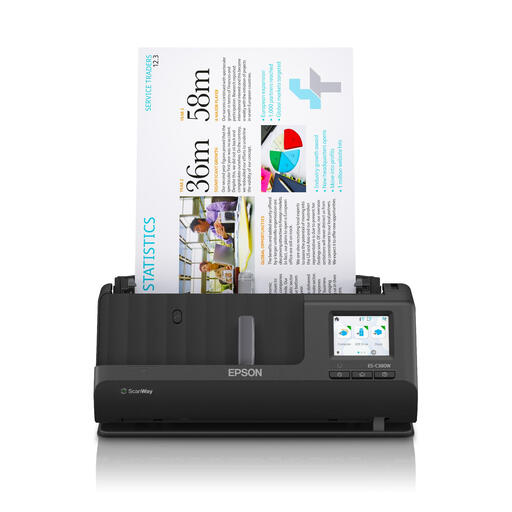 No image available
The product information specifies thin booklets up to 5 mm and a compact design. Check that the thickness and feed method are suitable for your sketchbook.
A4; 600 × 600 DPI; U-turn paper path.
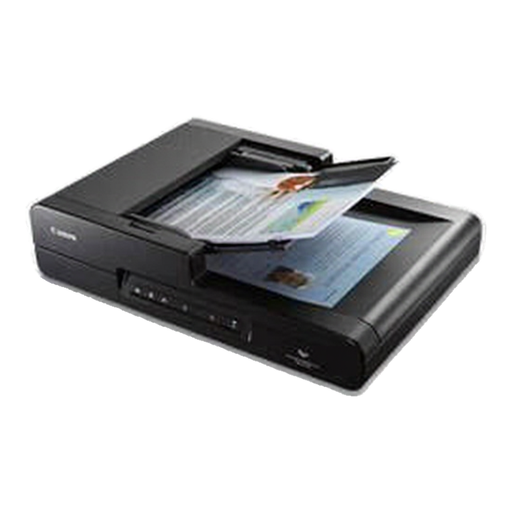 No image available
The product information describes a flatbed for books and delicate materials. Thick or bound items need to be placed face down on the glass.
A4; 600 × 600 DPI; flatbed and ADF.
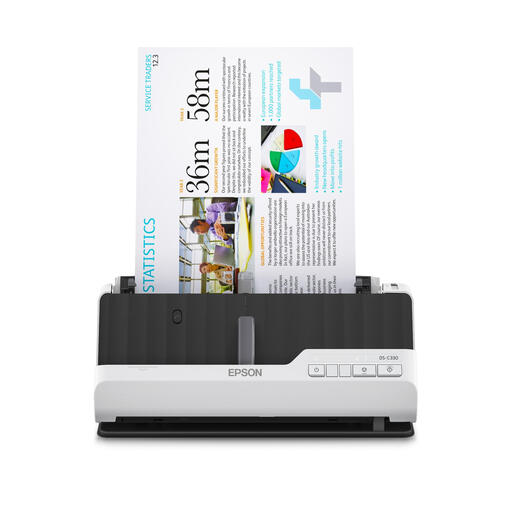 No image available
The product information specifies booklets up to 5 mm and a compact U-turn paper path. Check that your materials are within this thickness limit.
A4; 600 × 600 DPI. According to the product information, automatic double-sided scanning isn’t available.
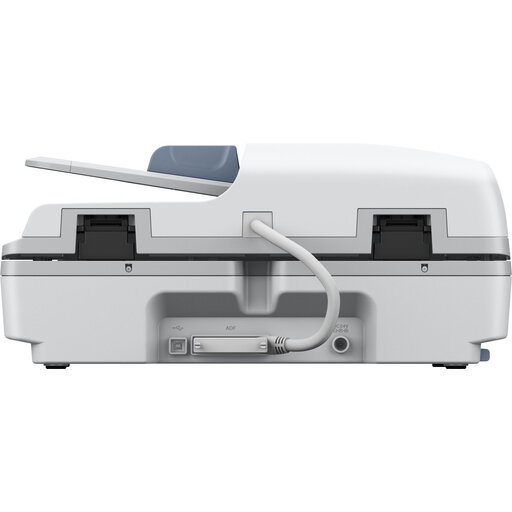 No image available
The product information describes a flatbed for books, bound documents and delicate items. Choose this option only if the material can rest on the glass.
A4; 1.200 × 1.200 DPI; automatic cropping and skew correction.
 No image available
According to the product information, this model is designed for loose flat sheets up to A3, so it isn’t suitable for scanning a bound sketchbook. The product information advises against scanning highly glossy materials.
8MP CMOS sensor; A3 capture; OCR; foldable design.
First, measure the largest open spread and check the available capture area. Make test scans of the binding, fine lines, and coloured or glossy work. Check that any required software works on the managed school computer; for the CZUR ET24 Pro, for example, check the published system requirements.
No, you don’t need OCR to save a drawing as an image. OCR is designed to recognise text and create searchable or editable output, so assess artwork as an image file too. Available file formats vary by model.
First, consider the content and purpose of the scan. If scans contain personal data, the school must comply with GDPR. The Dutch Data Protection Authority highlights the need for appropriate security and, when processing data through an external digital application, a lawful basis; outsourcing may also require a data processing agreement. For recognisable images of students taken and published by the school, the Dutch Data Protection Authority sets out specific consent requirements. This doesn’t mean that the same consent process automatically applies to every scan of a drawing.
A drawing may be protected by copyright automatically, so establish who created it and what permission is needed for the intended use. Published books and teaching materials are subject to separate rules: guidance from Education and Copyright on small extracts from these works in secondary education isn’t blanket permission to publish students’ entire sketchbooks.
Ask the retailer about support and terms for school purchases, and check whether the scanning workflow requires software that works on the school computer. Also consider whether using copyright-protected publications is covered by existing school policies or an applicable reprographic rights scheme; the Dutch Government explains reprographic rights for businesses, public authorities and educational institutions.