
Scanning individual postcards
You want to capture individual cards in colour and in full. Compare the size of your card with the scanning area, and check how you can save the front and back as separate scans.


For individual postcards that can safely be placed on glass, a flatbed scanner is a sensible first choice. Compare the scanning area, colour settings and file output. For cards fixed inside a fragile album, or ones you don’t want to place on glass, an overhead scanner may be a better fit, but check for reflections and legibility with a test scan. A book scanner is most relevant if you also need to capture material close to a book’s spine. Before publishing your scans, check copyright and any personal information separately.
You want to capture individual cards in colour and in full. Compare the size of your card with the scanning area, and check how you can save the front and back as separate scans.
You have brittle cards or an old album and want to handle the original as carefully as possible. Check whether the card can safely lie on glass, or whether capturing it without pressure would be more suitable.
You also need postmarks, names or handwritten text on the back for a school project. Clearly matching the front and back makes it easier to keep all the information for each card together.
Suitable for: individual cards that can safely lie flat on the glass.
Bear in mind: you place the card on the glass yourself and scan the front and back separately.
Suitable for: cards fixed in an album, or ones you don’t want to place on glass, provided they fit within the capture area.
Bear in mind: check the lighting, reflections, crop and sharpness using your own card.
Suitable for: projects involving bound material close to a book’s spine, provided the book can safely lie on the glass.
Bear in mind: the special book edge doesn’t eliminate the need for contact with the glass or manual positioning.
| What to consider | What to look for when buying | Who is this most important for? |
|---|---|---|
| Image, colour and crop | Compare the scanning area with your largest card and check the colour and file settings. Assess a test scan at the size you intend to display the image. | If the image is the focus of my project, I want to show the whole card and its details clearly. Around 36% of consumers put image quality first. |
| Fragile originals | Decide whether the card can be moved and turned over safely; if not, check the capture area and lighting of an overhead model. | With a brittle card or fragile album binding, my main concern is avoiding unnecessary strain on the original. Around 29% of consumers give preserving the original top priority. |
| Backs and file organisation | Check the colour output and available file formats. Test any text recognition on one of your own cards, and give the front and back clearly matching file names. | If postmarks, names or handwriting matter, I want to be able to find the back easily alongside the right image. Around 21% of consumers prioritise text and organisation. |
| Cards in an album | Measure the open album spread and check whether the album can safely be opened and laid on the glass. For overhead scanning, check that the whole card fits within the capture area. | When cards are fixed in an album, I want to capture them without opening the album unsafely or placing it on glass. Around 14% of consumers give bound material top priority. |
A special book edge is designed for material close to a spine. It may offer little benefit for individual cards, while a flatbed scanner may also be designed for photos.
First, work out whether your cards are loose or fixed in an album. Only compare book-scanning options if bound material is genuinely part of the project.
A book edge or book correction feature may mean extra features and steps that you don’t need for individual cards.
A stated resolution doesn’t prove that every scan will reveal more detail from the original. Results also depend on the card and how you intend to use it; specifications for different scanner types aren’t necessarily directly comparable.
Compare test scans for detail, colour, reflections and whether the whole card is captured at the size you plan to use it.
Higher settings can require more processing and storage without delivering noticeably more detail from your card.
An address, date or postmark on the back may be just as relevant to your school project as the image. OCR also doesn’t provide a verified transcription of handwriting.
Save a clearly matched pair of files for each card, and check any handwritten text yourself.
If you need the back later, scanning it again takes extra time, and you could lose track of which image it belongs with.
According to Epson, the Perfection V39II is an A4 flatbed scanner for photos and documents. It’s worth comparing if you’re scanning individual cards in a small workspace.
The CanoScan LiDE 400 is an A4 flatbed scanner for individual cards.
The IRIScan Desk 7 Pro is an overhead model for books and documents up to A3.
The OpticBook 4800 is a book-edge flatbed scanner for material close to a binding.
CZUR describes its ET series as overhead scanners for loose documents and bound material.
These Joybuy products include sheet-fed document scanners, a flatbed scanner with an ADF and a document camera. Check each model to see whether its feed or capture method is suitable for your loose, fragile or glossy postcards.
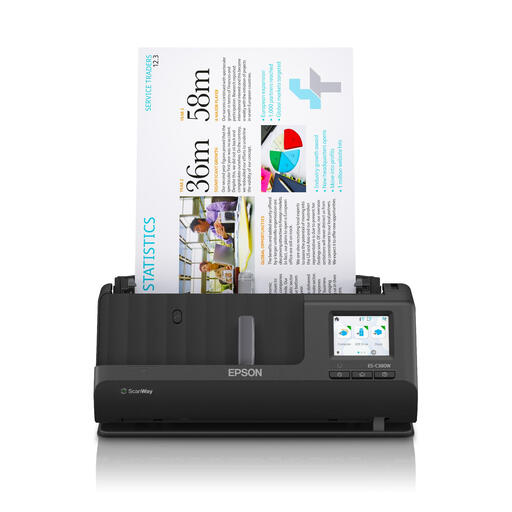 Image unavailable
This is an A4 sheet-fed document scanner; check whether its feed method is suitable for the old, individual cards you want to scan.
The product name lists 600 × 600 DPI and A4.
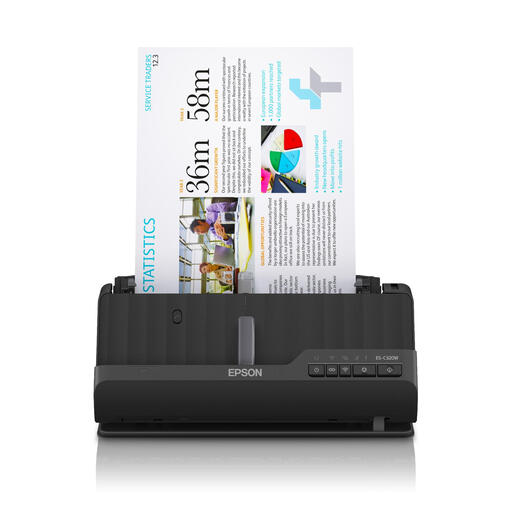 Image unavailable
This A4 sheet-fed document scanner may be worth comparing if you’re considering a feeder model; first check that its feed method is suitable for your cards.
The product name lists 600 × 600 DPI. The product description mentions Wi-Fi, automatic double-sided scanning and scanning sizes up to A4.
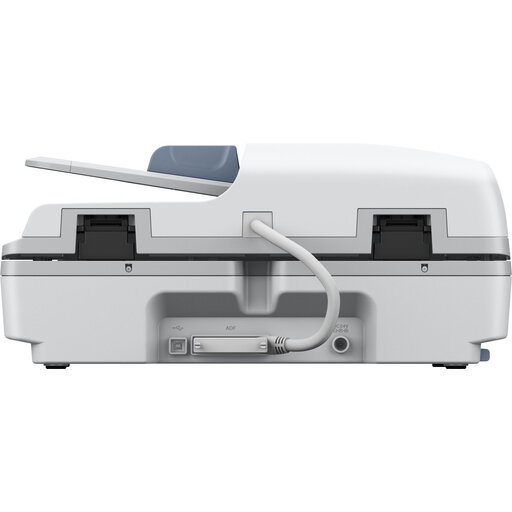 Image unavailable
The product description lists a flatbed scanner with an ADF, which may be worth comparing for cards that fit within the stated A4 size.
The stated resolution is 1200 dpi horizontally and vertically. The listed output formats are JPG, PDF and TIFF.
 Image unavailable
This document camera is designed for flat originals up to A3. Take a test shot before capturing a glossy postcard, as the product description advises against scanning highly glossy material.
The product description lists an 8MP CMOS sensor and OCR in more than 180 languages.
Not just for its book-scanning feature. If the card can safely lie flat on glass and fits within the scanning area, a flatbed scanner is a sensible first option to compare. A special book edge is mainly designed for bound material.
The Library of Congress advises gently cleaning the glass with a lightly dampened, lint-free cloth and not spraying water directly onto the device. If the card’s surface is fragile, don’t assume that standard cleaning is safe: first consider what the original can withstand.
Don’t assume that it can. According to Plustek, the OpticBook 4800 offers searchable PDF features, but that doesn’t guarantee it can recognise handwriting on old cards. Test text recognition on a representative card back and check the text yourself.
Not automatically just because the cards are old or the project is for school. The Dutch government says permission may be needed to use copyright-protected material; Auteursrecht.nl outlines exceptions for educational use, subject to conditions. Public distribution requires a separate assessment. If a card shows identifiable people or personal information, consider privacy too; the Dutch Data Protection Authority has specific guidance on images in education.
For many online consumer purchases, the Dutch government says you have a 14-day cooling-off period. This is separate from your right to a product that works properly if something is wrong; the Netherlands doesn’t have a fixed statutory warranty period of exactly two years.