
Keeper of bound magazines
You want to preserve old issues and choose a scanning method that takes the strain on the paper and spine into account. Avas Systemen describes the spine and brittle paper as vulnerable parts of old books.


For fragile, bound magazines, an overhead scanner is a more sensible choice than a document feeder. A flatbed scanner may work if you can lay the pages flat without damaging them. Next, measure the largest page and check whether the exact model can create searchable files. OCR and scanning speed don’t tell you how well yellowed or curved pages will be captured.
You want to preserve old issues and choose a scanning method that takes the strain on the paper and spine into account. Avas Systemen describes the spine and brittle paper as vulnerable parts of old books.
You want to capture full pages and images. Measure your magazines and compare their size with the scanning area of the exact model; IRIS and Epson list different maximum sizes for their models.
You want to find articles again later, so check whether the model can create searchable files. IRIS and Plustek list this output for specific models.
Start by considering the condition of the magazine and how you can scan it safely. Then check the page size and the output you need.
| What to consider | What should you check? | Who is this most important for? |
|---|---|---|
| Fragile binding and paper | Can you open the magazine safely? Does the scanner work from above, or do you need to lay the page flat on a glass plate? | I want to put as little strain as possible on the spine and paper, and I’m happy to position pages individually. Around 36% of consumers prioritise preserving bound material. |
| Full pages and images | Measure the largest page and decide whether you want to capture a single page or an open double-page spread in one scan. | I want to scan large pages or illustrations in full, without having to crop them or stitch multiple scans together. Around 29% of consumers prioritise this need. |
| Finding text later | Check whether the exact model can create searchable PDFs and test this feature with a few representative pages. | I want to search for articles by keyword and understand that text recognition on old pages may need checking. Around 21% of consumers prioritise searchable output. |
| Loose pages and workspace | For a feeder model, check the supported paper sizes and weights. If space is limited, also consider how you can store the scanner. | I mainly scan suitable loose sheets or want a practical setup in a hobby room. Around 14% of consumers give this need priority. |
A larger scanning area doesn’t automatically make a scanner suitable for a bound issue. CZUR describes the Shine 800 A3 Pro as designed for flat, loose pages, while the ET series includes features for curved books.
As well as comparing the maximum size, check the stated use and assess a test scan of your own material.
Positioning pages and checking scans can take extra time.
IRIS distinguishes between sensor resolution and software-interpolated resolution in its model comparison. These terms don’t mean the same thing.
Compare the original specifications for the exact model and assess a test scan with small print and illustrations.
You may need to scan pages again or correct the image manually.
The Brother ADS-1200 is designed for loose sheets within its specified media limits, not for an intact magazine. Brittle or damaged pages need to be assessed individually.
Only feed loose pages that meet the specified size and weight requirements; choose another scanning method for bound material.
An unsuitable feeder could damage the original paper.
The ET series and Shine 800 A3 Pro are designed for different scanning methods.
The IRIScan Desk range includes overhead models; the model comparison distinguishes the Desk 6 Pro from the Desk 7.
The OpticBook 4800 is a flatbed scanner designed for books and other material that can be placed safely on the scanner.
The Perfection V39II is an A4 flatbed scanner for pages that fit and can be laid flat easily.
The ADS-1200 is designed for suitable loose documents, not for overhead scanning or intact bound magazines.
This selection includes scanners with automatic feeders for suitable loose pages and a document camera for flat A3 sheets. For old, bound or glossy magazines, carefully check that the scanning method you choose is suitable.
 No image available
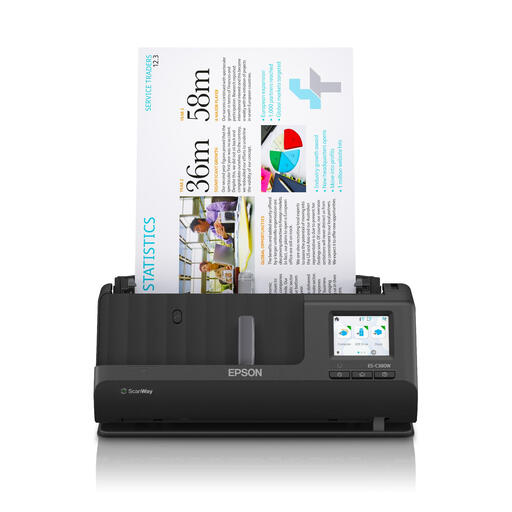
May suit scanning suitable loose pages or booklets using the automatic feeder; assess fragile old paper separately first.
The product title lists A4 and 600 × 600 DPI. According to the product description, the scanner can handle booklets up to 5 mm thick and save files as PDF, JPG and TIFF.
 No image available
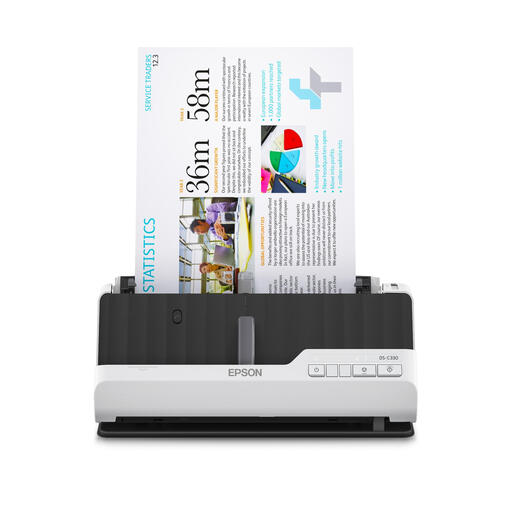
May suit scanning suitable loose pages if you want to use the automatic feeder and send files to network or cloud destinations.
The product title lists A4 and 600 × 600 DPI. According to the product description, the model can handle booklets up to 5 mm thick and scan to network and cloud destinations. Automatic double-sided scanning isn’t available.
 No image available
May suit flat, loose pages up to A3 if you want OCR output; this doesn’t automatically make the model suitable for bound magazines.
The product title lists support for Windows and macOS. The product description mentions OCR to editable text and advises against scanning highly glossy material, including magazines.
No, that isn’t necessary for every scanning method: an overhead scanner captures the open magazine from above. First check whether you can open it without causing damage; a document feeder is designed for suitable loose sheets.
Check whether the exact model can create searchable PDFs and test it with a few representative old pages. IRIS lists this output for the Desk 6 Pro and Plustek for the OpticBook 4800; OCR doesn’t guarantee that every word will be recognised correctly.
Don’t do this without first checking whether the pages are suitable for the feeder. Compare their size and weight with the model specifications and assess any damage individually; the Brother ADS-1200’s feeder specifications don’t mean that every old sheet can be processed safely.
According to ACM ConsuWijzer, you’re entitled to a legal guarantee if a product is faulty; the seller must resolve the issue in line with the applicable terms. A manufacturer’s guarantee doesn’t replace this legal right.
According to the Dutch government, a private copy for personal use may not be shared or made available to the public. Check the rights before publishing protected articles or photos; if personal data can be used to identify someone, privacy is also a consideration, as explained by the Autoriteit Persoonsgegevens.