
Keeper of bound minutes
Wants to digitise older minutes without pressing the binding flat. The scanning method and readability near the spine are key factors when choosing a scanner.


For bound minutes that you don’t want to press flat, an overhead scanner with book page correction is generally a better fit. For loose, flat sheets, a flatbed scanner can be a practical choice. Check the scanning format, output and software compatibility with your studio computer. If the minutes contain personal data, you should also decide who can open the files and where they will be stored.
Wants to digitise older minutes without pressing the binding flat. The scanning method and readability near the spine are key factors when choosing a scanner.
Wants to find decisions in scans later, so pays attention to OCR output and checks the recognised text.
Needs to consider both the scanner’s setup and access to files that may contain personal data. The Dutch Data Protection Authority advises taking steps to prevent unauthorised access to personal data.
Start with the original: bound books need a different scanning method from loose, flat sheets.
| What to consider | What should you check? | Who is this important for? |
|---|---|---|
| Bound pages | Check whether the model offers book page correction and whether the book’s thickness is within the model specifications. Assess a test scan near the spine. | If I want to scan old minutes without pressing the binding flat, I focus on the spine and the maximum book thickness allowed. Around 33% of consumers prioritise preserving bound originals. |
| Searchable text | Check whether the exact model produces searchable PDFs, and test OCR with the typeface and quality of your own minutes. | If I want to find decisions later using a search, I check that the recognised text matches the page. Around 27% of consumers prioritise searchability. |
| File management | Check where the software stores files and who can access them. Set access permissions on the studio computer and any shared storage carefully. | If the minutes contain personal data, I want to know in advance who can open and share the scans. Around 27% of consumers prioritise secure file handling. |
| Space and loose sheets | Compare the available storage space and maximum scanning format with your largest loose minutes. A scanner for flat sheets is not automatically suitable for bound books. | If my minutes are mostly loose sheets and I want to put the scanner away after use, I consider its size and setup. Around 13% of consumers prioritise compact scanning of flat sheets. |
The CZUR Shine 800 A3 Pro is designed for loose, flat pages, while the CZUR ET series is aimed at book scanning with curve correction. These models therefore do not serve the same purpose when scanning bound minutes.
First, consider whether you’ll mainly be scanning bound books or loose sheets. Don’t choose a model for flat sheets based on its compact design alone.
Text near the spine may need extra checking, post-processing or another scan.
OCR output alone doesn’t tell you how accurately the software will recognise your minutes. Small print, a crease or handwriting may mean you need to check the results more carefully.
Test a difficult page and compare both the scan and the searchable text with the original.
Allow time to check the recognised text and correct it where necessary.
If the minutes contain personal data, a shared storage location could give unauthorised people access. Personal data is not always immediately obvious in a document, either.
Choose a suitable storage location in advance, check the access permissions and review files before sharing them. The Dutch Data Protection Authority stresses that access to personal data must be protected.
The SV600 is a contactless overhead scanner for bound documents and materials up to A3, among other things.
The ET series is designed for books, with curve correction; according to CZUR, the Shine 800 A3 Pro is intended for loose, flat pages.
According to the manufacturer, the IRIScan Desk 7 Pro combines an overhead setup with scanning up to A3 and OCR output.
The CanoScan LiDE 400 is an A4 flatbed scanner for minutes that can lie flat on the glass.
The Perfection V39II is an A4 flatbed scanner for flat documents.
These products are intended for scanning loose minutes, flat originals or thin booklets. Check for each model whether the scanning method is suitable for your bound documents.
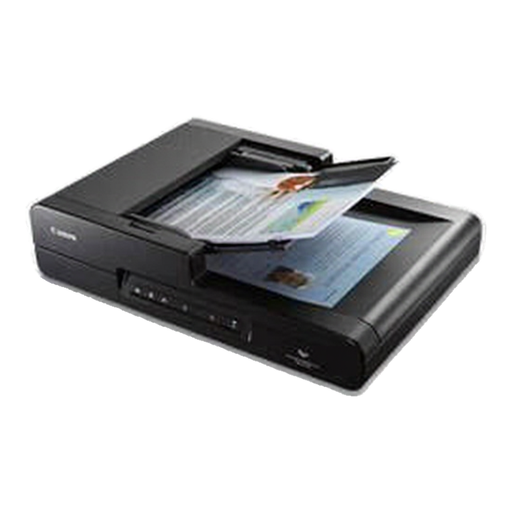 No image available
A combination of flatbed and automatic document feeder for loose documents and flatbed scans.
A4; 600 × 600 DPI; automatic double-sided scanning; 50-sheet feeder; output to editable PDF.
Place bound documents on the flatbed glass according to the product instructions.
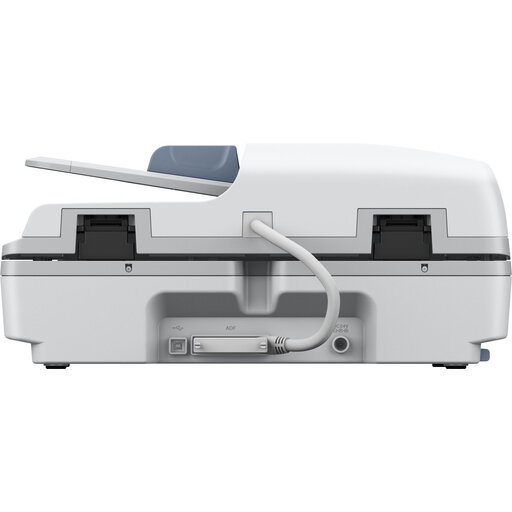 No image available
A flatbed and ADF option for scanning batches of loose minutes and creating scans you want to search later.
A4; 100-sheet automatic feeder; double-sided scanning; searchable PDF output; dimensions 495 × 360 × 217 mm; weight 9,8 kg.
Bound documents are scanned on the glass using the flatbed method. Bear its dimensions in mind in a shared workspace.
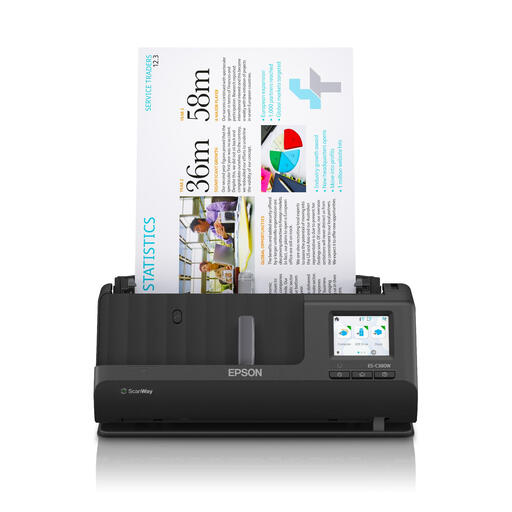 No image available
A compact feed scanner for loose documents; the stated booklet support is limited to thin booklets.
A4; 600 × 600 DPI; straight feed path for booklets up to 5 mm; scan destinations include network folders, email and cloud services.
According to the product description, automatic double-sided scanning is not available. This is not an overhead or flatbed scanner for general book scanning.
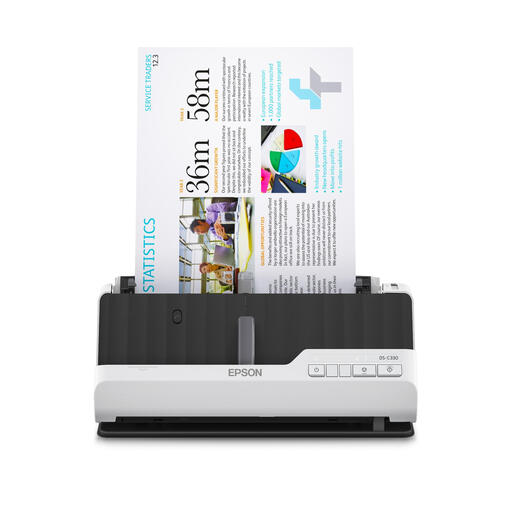 No image available
A compact feed scanner for loose sheets and thin booklets, when you don’t need a flatbed for bound minutes.
A4; 600 × 600 DPI; PDF, JPG and TIFF output; stated support for booklets up to 5 mm.
Booklet support is limited to the stated thickness.
 No image available
An overhead setup for loose, flat sheets up to A3, not for correcting the curvature of pages in thick, bound minutes.
A3 capture; OCR software; foldable design; according to the product description, support for more than 180 languages.
Check OCR results against the original, even when the text has been made searchable.
Choose searchable PDF output and search for familiar words in a test file. IRIS lists this output for the Desk 7 Pro, and CZUR lists OCR for the ET series; these specifications don’t prove that your minutes will be recognised flawlessly.
If the minutes contain personal data, decide where files will be stored before scanning and restrict access to prevent unauthorised people from viewing them. Check documents before sharing them, too; the Dutch Data Protection Authority warns that personal data is not always immediately visible.
The GDPR does not set a specific general retention period for personal data. The organisation must consider what is necessary for its purpose and take account of any applicable periods under other laws; there is no single fixed period for every collection of club minutes.
When personal data is involved, GDPR requirements apply, including having an appropriate legal basis and protecting it against unauthorised access. For material protected by someone else’s copyright, making a private copy for your own use is not the same as having permission to distribute copies. Whether specific minutes or appendices are protected by copyright depends on the documents.