What should you look for when choosing?
Start by considering how the book will be captured: contactlessly from above or on a glass platen. Then check that the scan area, available space and output suit your journals.
| What to consider |
What should you check? |
Who should consider this most? |
| Keeping the book’s binding intact |
Check whether the scanner captures pages contactlessly from above, what book size it accommodates and whether page-curvature correction is available for that model. |
If you don’t want to press a stiff or fragile journal against a glass platen, preserving the book will be a priority. Consumers who put book preservation first account for about 33% of this choice breakdown. |
| Mixed page content |
Check the output formats and assess test scans of a photo and a handwritten page. When comparing camera resolutions, check the optical figure against any software interpolation. |
If you want to preserve photos, drawings and handwriting as visible page images, check the scans yourself rather than relying on text recognition alone. Consumers who prioritise this type of image content account for about 27% of the breakdown. |
| Working and storage space |
Measure the table with the journal open and allow room to turn the pages; also check how the device can be stored. |
If the scanner needs to be put away after a lesson and your work surface is small, the space it takes up during use matters just as much as storage space. Consumers who prioritise space account for about 20% of the breakdown. |
| Processing a series of pages |
For the exact model, check the scanning controls, any page-turn detection and output to a multi-page document. Try the process first with a representative journal. |
If you want to process multiple pages, remember to allow time for turning, checking and saving them too. A quoted capture time doesn’t tell you how long a whole book will take. Consumers who prioritise processing large numbers of pages account for about 20% of the breakdown. |
Scanners at Joybuy
This Joybuy selection includes sheet-fed scanners, a document camera and flatbed scanners. For an intact, fragile journal, contactless overhead scanning is a different approach, so check whether your chosen model is suitable for your book and pages.
 No image available
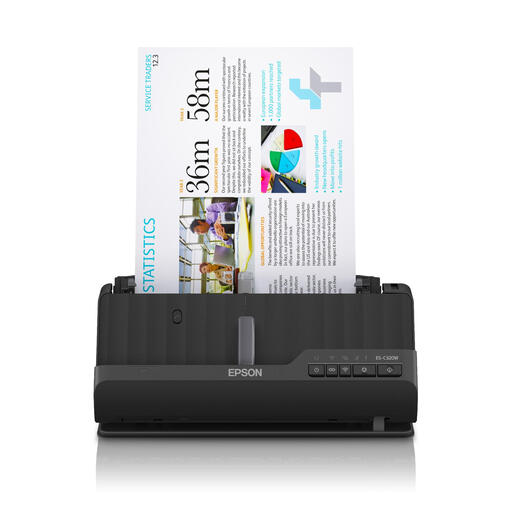
Epson ES-C320W ADF + Sheet-Fed Scanner (600 x 600 DPI, A4, Black)
Consider this A4 sheet-fed scanner only if the pages can be processed through the feed path of the exact model; it isn’t a contactless scanner for an intact bound journal.
The product name lists A4 and 600 x 600 DPI. Before use, check that the feeding method is suitable for the material you want to scan.
Joybuy
 No image available
CZUR Shine 800 A3 Pro document camera
This foldable document camera may be suitable if you want to capture flat pages and put the device away after use; check that its capture method is right for your journal.
The product information lists capture of A3 and A4 sheets and a foldable design. Glossy materials, such as glossy photos, are not recommended.
Joybuy
 No image available
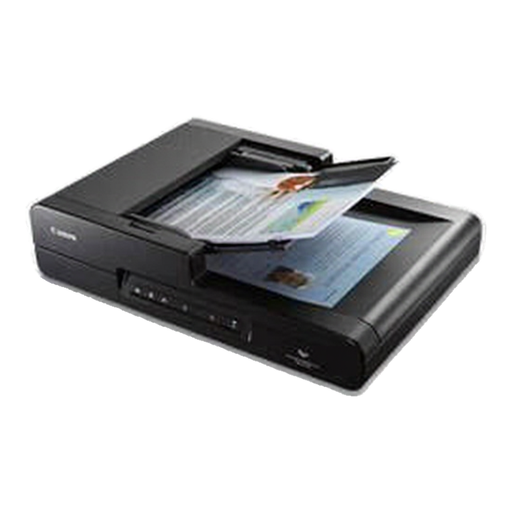
Canon imageFORMULA DR-F120 Flatbed & ADF Scanner (600x600DPI, A4, Black)
The flatbed function may suit occasional scans of pages that can lie on the glass platen; this isn’t a contactless overhead scanner.
The product name lists a combination of flatbed and automatic document feeding, A4 and 600x600DPI. If you’re scanning a book, allow for the horizontal working area you’ll need.
Joybuy
 No image available
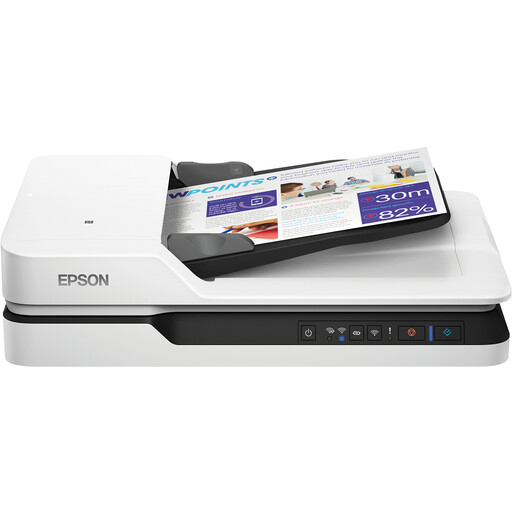
Epson WorkForce DS-1660W Flatbed Scanner (1200 x 1200DPI, A4, Black, White)
This A4 flatbed scanner may suit bound pages that can lie on the glass platen; the book won’t be scanned contactlessly from above.
The product name lists 1200 x 1200DPI and A4. Allow for the horizontal working area needed to place the book while scanning.
Joybuy
Frequently asked questions
Can I save a travel journal with photos and handwriting as a searchable PDF?
According to their manufacturers, overhead models can output image files and searchable PDFs, but that doesn’t prove that handwriting will be recognised correctly. For these pages, keep the visible image and assess any OCR separately.
What should I check before setting up the scanner in the classroom?
Measure the working area with the journal open, and check the connection, supported operating system and software available for the exact model. CZUR publishes separate downloads and system requirements for the ET24 Pro; information for another CZUR range is no substitute.
How can I avoid extra work when scanning a series of journal pages?
After the first few pages, check the order, cropping and how the pages look by the spine before continuing. Page-turn detection and a quoted capture time don’t automatically include the time needed to turn and check every page in a book.
Can a school store or share scanned travel journals belonging to pupils?
If scans contain pupils’ personal data, the school must apply the GDPR rules according to the Dutch Data Protection Authority. These include having a legal basis, informing those affected and providing appropriate protection. If a supplier processes that personal data on the school’s behalf, a data processing agreement is required. Whether a journal can be shared also depends on its creator, its content and the intended audience.
Can I scan and share someone else’s entire travel journal?
Not simply because a scanner is available. According to the Government of the Netherlands, the creator automatically owns the copyright to works including a text they have written themselves; a private copy for personal use cannot be shared or made public. For the specific journal, check who holds the rights and what use is permitted. An educational scheme for books and learning materials doesn’t automatically give you permission to share a personal journal.


