
Student with a few source pages
If you only need to capture an occasional loose page for a project, first check whether an A4 flatbed scanner will do the job. Epson Netherlands describes the Perfection V39II as an A4 flatbed scanner.


For a few individual source pages at home, an A4 flatbed scanner may be enough. If you need to scan on the go without a computer, a standalone handheld scanner may be a better fit. For lots of pages or thick, bound books, it’s more important to compare how a model handles the spine and curved pages, what size it can capture, and whether its software creates searchable text.
If you only need to capture an occasional loose page for a project, first check whether an A4 flatbed scanner will do the job. Epson Netherlands describes the Perfection V39II as an A4 flatbed scanner.
If you’re scanning pages while the book is available, a portable device that works on its own may be more useful. IRIS describes the Book 7 as portable and suitable for standalone scanning.
If you regularly need pages from bound books, compare the space around the spine, how the device handles curved pages and the type of text output you need. CZUR describes curve correction for the ET series; Plustek lists a book-edge design for the OpticBook 3800L.
Start by considering the type of pages you need to scan and where you’ll be scanning. Then check the scan area, how the book is supported and the file output you need.
| What to consider | What should you check? | Who is this important for? |
|---|---|---|
| A few loose pages | Check that the scan area is large enough and that your book sits properly on the glass. Epson Netherlands lists the Perfection V39II as an A4 flatbed scanner. | If I only need a few pages for a project at home, I want to know whether a basic A4 option will be enough. Around 33% of consumers prioritise scanning a few pages. |
| Scanning on the go | Check whether the device works on its own, how you move it across the page and which files it saves directly. IRIS lists standalone operation and PDF and JPEG output for the Book 7. | If I’m scanning in the library, I want to be able to take my device with me and not depend on a computer there. Around 27% of consumers prioritise scanning on the go. |
| The spine and curved pages | Compare the space around the spine and how the model supports pages. CZUR describes curve correction for the ET series; Plustek lists a 6 mm book edge for the OpticBook 3800L. | If my textbook is thick, I want to check whether I can capture readable text near the spine without having to force the book flat. Around 20% of consumers prioritise how well a scanner handles thick, bound books. |
| Searchable text | Check whether the software for the exact model offers searchable PDF output or OCR, and compare the recognised text with the original page. IRIS lists both image PDF and searchable PDF for the Desk 6 Pro. | If I’m using lots of source pages, I want to be able to find passages again later and check the text carefully. Around 20% of consumers say searchable text is their main requirement. |
Claimed scan times may refer to a single page at specific settings, rather than turning the pages of a book, processing every page or checking the text. Plustek specifies 7 seconds for an A4 scan at 300 dpi; IRIS’s stated time for the Desk 6 Pro refers to capturing an A3 page.
Compare the complete process for the number of pages you need, including checking text recognition and quotations.
Remember to allow time for turning pages, checking OCR and reviewing quotations too.
The scan area you need depends on the size of the pages and the open book. Plustek lists an A4 scan area for the OpticBook 3800L; CZUR specifies a maximum of A3 for flat sheets with the Shine 800A3 Pro.
Measure the page or open double-page spread you want to capture and compare it with the size and specifications of the exact model.
A PDF may contain an image of a page without searchable text. IRIS lists both image PDF and searchable PDF for the Desk 6 Pro.
If available, choose the text-recognition output specifically and check the recognised words against the original page.
The Dutch government distinguishes between a private copy for personal use and distributing or making it available to the public. Separate conditions apply to educational use; they don’t automatically cover every way of sharing.
Before sharing your scans, check what uses are permitted. Assess quotations individually and credit the creator and source wherever required for the quotation.
The Perfection V39II is an A4 flatbed scanner for loose pages and documents.
The Book 7 is a portable handheld scanner, while the Desk 6 Pro is a document camera. These models offer different ways of working.
The ET series is designed for contactless scanning of bound books; the Shine 800A3 Pro is a separate foldable document camera.
The OpticBook 3800L is an A4 flatbed scanner designed for books, with a book-edge design for loose pages close to the spine.
The CanoScan LiDE 400 is an A4 flatbed scanner for loose pages at home.
These products are suited to loose A4 pages, standalone use and larger flat sheets. Check whether each model suits the way you work with books.
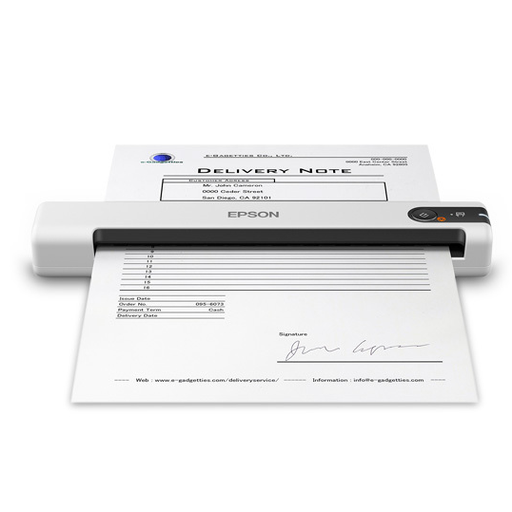 No image available
May suit anyone who wants to scan loose A4 source pages. A handheld scanner isn’t a flatbed that you can place a bound book on.
The product description lists 600 × 600 DPI, A4 scanning and software for editable text and searchable PDFs.
Don’t force thick or damaged documents into the feeder slot.
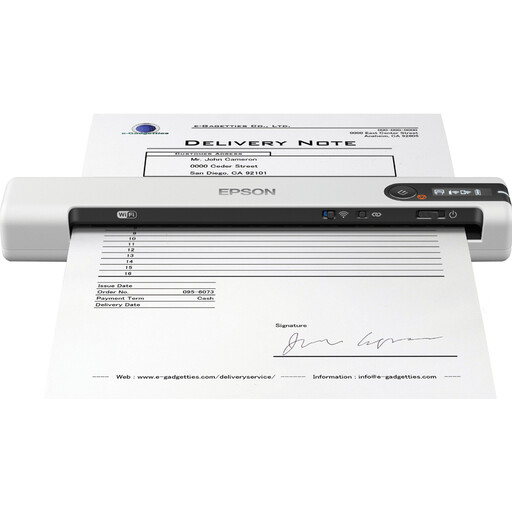 No image available
May suit anyone who wants to scan loose pages on the go and search the text later. Check in advance that the feeding method is suitable for your material.
The product description lists Wi-Fi, a battery, automatic feeding and OCR software for editable text and searchable PDFs.
Don’t put damaged, folded or stapled documents into the feeder slot.
 No image available
May suit larger, loose flat pages; the product listing doesn’t say that every open book will fit in one scan.
The product name lists support for flat sheets up to A3. The description mentions OCR output to editable text, automatic cropping and page splitting.
The description advises against scanning glossy materials, such as glossy photos or magazines.
Not necessarily. An A4 flatbed scanner may be enough if the pages fit within the scan area and the book sits properly on the glass. An overhead scanner or book-specific flatbed may be more suitable if the spine or curvature makes it difficult to capture the pages.
Choose searchable PDF output in the software if it’s available, then compare recognised words and quotations with the original page. IRIS lists both image PDF and searchable PDF for the Desk 6 Pro; Plustek lists OCR for the OpticBook 3800L.
According to the Dutch government, the seller must offer a solution if a product is faulty. The Netherlands has no fixed statutory guarantee period; a manufacturer’s guarantee is in addition to your statutory rights. When you buy online from a business, you’re often entitled to a 14-day cooling-off period.
Don’t assume that a private copy can also be distributed or made public: the Dutch government distinguishes between a private copy for personal use and sharing it further. Educational use is subject to exceptions and conditions; whether they apply to your situation depends on how the material is used and the educational context. Assess quotations individually and credit the creator and source wherever required.