
Archivist caring for fragile back issues
Wants to digitise old bound copies while taking care of their physical condition and checking for missing pages.


Start with the condition of the binding and the page size. An overhead scanner avoids contact with a glass plate, while a book-edge scanner may suit magazines that can safely be placed on glass. Use test scans to check whether the pages, spine text and any OCR output are usable. An A4 flatbed is worth considering mainly for smaller, manageable originals. In a shared studio, make sure the software, storage and access arrangements work for everyone.
Wants to digitise old bound copies while taking care of their physical condition and checking for missing pages.
Has periodicals with pages or covers that may extend beyond an A4 scanning area and wants to compare sizes and scanning methods first.
Wants to organise and search scans, and needs to choose between image files and text recognition.
Choose this option if: you want to avoid contact with a glass plate or scan larger bound magazines without taking them apart.
Bear in mind: how flat the pages lie. Contactless scanning does not automatically make it safe to open a fragile binding.
Choose this option if: the magazine can safely be placed on glass and shadows near the spine are a concern.
Bear in mind: the scanning area and physical handling. According to Plustek, the OCR software for the Plustek OpticBook 4800 (eBookScan) is for Windows.
Choose this option if: your originals are smaller and easy to handle, and you only scan occasionally.
Bear in mind: whether the whole page fits on the glass without applying harmful pressure. This is not a contactless option for fragile bindings.
| Consideration | What should you check? | Which consumers should pay particular attention? |
|---|---|---|
| Fragile binding and paper | Assess the condition and safe opening angle. Check the spine text and page edges on test scans. | If I want to preserve old bound copies, careful handling matters most to me. Around 36% of consumers prioritise protecting fragile originals. |
| Full page size | Measure the largest page and decide whether you want to capture a single page or a full spread in one scan. | When my magazines are larger than A4, I want to know whether the scanning area covers the whole page. Around 29% of consumers prioritise a scanning area that fits the page. |
| Searchable files | Test OCR on representative pages and check the text recognition, page order and for missing pages. | If I want to find text later, I need usable text recognition as well as scanned images. Around 21% of consumers give searchability top priority. |
| Shared studio workspace | Check that the software is compatible with the operating systems in use, and agree on storage, file naming and access. | When several people use the same scans and computer, I want to agree how files and access will be managed in advance. Around 14% of consumers prioritise shared studio use. |
For its Desk 6 models, IRIS distinguishes between camera resolution and software-interpolated resolution. Neither figure, on its own, shows how clearly small print in your magazine will come out.
Compare the original camera specification and assess the same representative page using the output settings you plan to use.
Scans that are not clear enough can mean extra time spent rescanning and correcting them.
The maximum scan size does not automatically mean that a full open spread, cover or page will fit in a single scan.
Measure the magazine and decide in advance whether you want to capture individual pages or the whole spread.
An unusual size may require extra scans and editing.
A 2 mm book edge is a stated feature of the Plustek OpticBook 4800 (eBookScan), but the original still needs to be opened and placed on glass.
Let the magazine’s condition guide how you handle it. If necessary, choose another scanning method or seek expert advice.
The Government of the Netherlands distinguishes between a copy for personal use and digital copying or internal sharing by a business or institution.
Before sharing, establish who owns the rights, who will have access and which permission or arrangement applies to this use.
Business or institutional use may require permission and may be covered by a reprographic rights scheme.
The ET series uses overhead scanning, and CZUR specifies A3 support for the series. This may be useful if you want to avoid contact with a glass plate.
IRIS positions the Desk 6 Pro as an overhead model that scans up to A3 and can output searchable PDFs.
The OpticBook 4800 (eBookScan) is a book-edge scanner for originals that can safely be placed on a glass plate.
According to Epson, the Perfection V39II is a compact A4 flatbed for smaller, manageable originals and occasional scanning.
This selection includes feed scanners, A4 flatbeds and a document camera for loose sheets. For old bound magazines, check that the scanning method is suitable for the condition of the original.
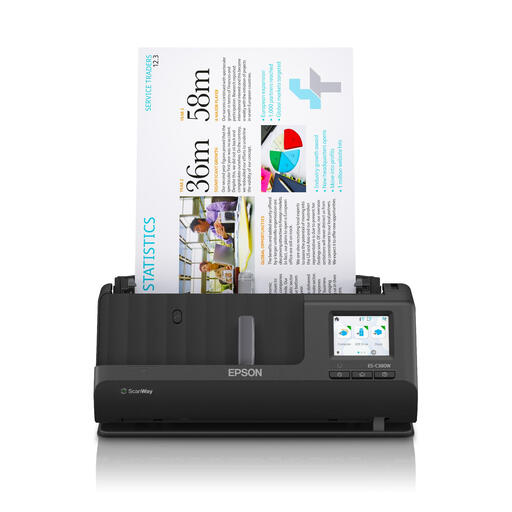 No image available
Worth considering if you need a feed scanner for a shared studio. Check in advance that the feed mechanism is suitable for your magazines.
The product name specifies 600 × 600 DPI and A4.
According to the product information, automatic duplex scanning is not supported.
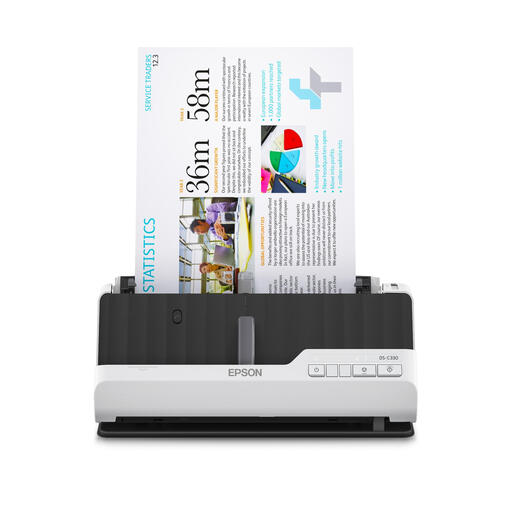 No image available
May suit a workspace where compact scanning of loose sheets is important. Check the feed path before scanning bound or fragile magazines.
The product name specifies 600 × 600 DPI and A4.
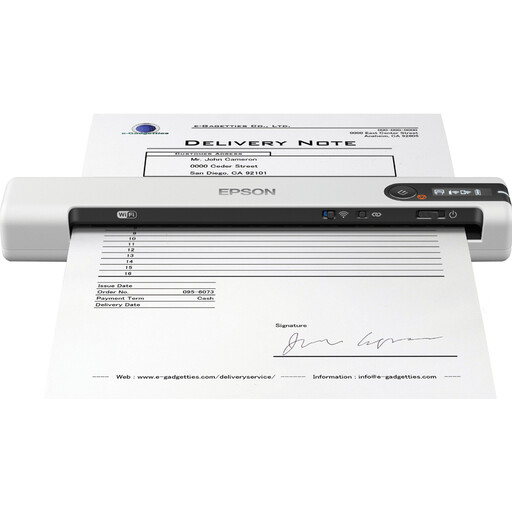 No image available
Worth considering if you want to scan in different parts of the studio. Check that manual scanning is suitable for the condition and size of your magazines.
The product name specifies 600 × 600 DPI and A4.
The product information advises against placing damaged, folded or stapled documents in the feed slot.
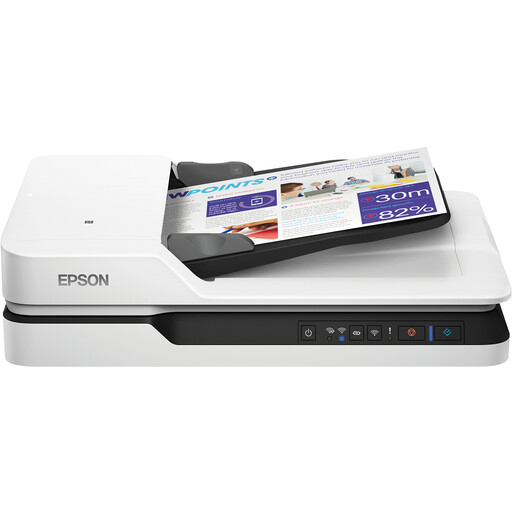 No image available
An A4 flatbed to compare if a magazine can be placed on the glass. Check that the whole page fits without harmful pressure.
The product name specifies 1200 × 1200 DPI and A4.
 No image available
The product name describes a document camera for flat sheets up to A3. Check that it suits the material you want to scan.
The product information advises against scanning glossy materials, including magazines. This model is therefore not an obvious choice for glossy old periodicals.
First assess its physical condition, and do not force a damaged binding open or flat. The National Archives describes condition assessment and physical preparation before digitisation. After scanning, also check for missing pages.
No. An OCR feature does not guarantee that text from your old print will be recognised correctly. Manufacturers offer searchable PDF output or OCR software; check representative test pages and the page order before processing an entire year’s issues.
Check the software for the exact model against the studio’s operating systems. Plustek lists Windows for the OCR software for the OpticBook 4800 (eBookScan), while CZUR lists downloads for Windows, Mac and Linux for the ET24 Pro. Also agree where scans will be stored and who will have access.
For a consumer purchase, the Government of the Netherlands explains that you are entitled to a product that works properly and that there is no fixed statutory warranty period in the Netherlands. For a business purchase, establish the terms under which the studio is buying; do not assume that consumer rights automatically apply to a business buyer.
Do not assume that a magazine’s age or owning the paper copy means you can share it. According to the Government of the Netherlands, a home copy for personal use may not be distributed or made public. Digital copying and internal sharing by businesses or institutions require permission and may be covered by a reprographic rights scheme. Check which rights and permissions apply to the specific magazines and intended use.