For regularly scanning stacks of loose, double-sided handouts, an ADF scanner with duplex scanning is an obvious choice. Epson Netherlands lists a 50-sheet feeder for the WorkForce DS-410, while Canon Netherlands specifies duplex scanning for the DR-C225 II. A flatbed offers a different approach for fragile or bound originals. In a small classroom, you’ll also need to consider how much space the scanner needs while feeding paper and the file formats you want.
Which scanner is right for you?
Teachers with stacks of loose handouts
If you regularly process loose sheets, which may be double-sided, compare the capacity of the automatic document feeder (ADF) and its duplex scanning function. Epson Netherlands and Canon Netherlands list these features for the WorkForce DS-410 and imageFORMULA DR-C225 II respectively.
Teachers with limited desk space
In a small classroom or shared workspace, you’ll also need to consider how much room the scanner takes up while you’re feeding paper. A compact paper path and a scanner you can move around address different space requirements; Brother Netherlands and Epson Netherlands describe these features for specific models.
Teachers with fragile or bound originals
If you also want to scan materials that you don’t want to feed through as loose sheets, consider a flatbed scanner. For book pages that regularly need to be scanned close to the spine, a book scanner such as the Plustek OpticBook A300 Plus is another option; Plustek describes this model as a book scanner.
What should you look for when choosing?
First, decide which task matters most: feeding in stacks of paper, saving space, scanning bound originals, making files searchable or sharing the scanner with colleagues. Then check the capacity, connections and software for the exact model.
| What to consider |
What should you check? |
Who is this important for? |
| Stacks of double-sided handouts |
Check the ADF capacity and whether the exact model scans both sides. Epson Netherlands lists a 50-sheet capacity for the DS-410; Canon Netherlands specifies duplex scanning for the DR-C225 II. |
If I often process stacks of loose handouts, I want to know how often I’ll need to refill the feeder and whether double-sided sheets can be scanned in one process. Around 28% of consumers have this as their main need. |
| Space in a small workspace |
Measure the available space while the scanner is in use and check its power and connection requirements. Epson Netherlands describes a space-saving U-turn paper path for the DS-C330; Brother Netherlands lists USB-C power for the ADS-1800W. |
If I use a small or shared workspace, I want to be able to position or move the scanner without unnecessarily restricting my work area. Around 22% of consumers prioritise space or portability. |
| Fragile or bound originals |
Decide whether you’ll mainly scan loose A4 sheets or also bound material; check the format and how originals are placed. Epson Netherlands describes the V39II as a flatbed scanner; Plustek describes a book-edge design for the OpticBook A300 Plus. |
If I have fragile or bound originals, I want to scan them without first feeding them through as loose sheets. Around 17% of consumers prioritise this need. |
| Finding files later |
Check whether the exact model’s software creates searchable PDFs on the school’s operating system. Canon Netherlands lists searchable PDF output for the DR-C225 II and OCR software for the R30. |
If I want to find text in digital handouts later, I want to know what file formats the bundled software creates and whether it works on my computer. Around 22% of consumers prioritise searchable files. |
| Scanning for multiple users |
Check network connections and scan destinations, and agree who will have access to files. Brother Netherlands lists a wired network connection for the ADS-4300N; the Dutch Data Protection Authority outlines the obligations of schools that process personal data. |
If several authorised colleagues use the same scanning area, I want to know in advance where files will be saved and who can open them. Around 11% of consumers say shared use is their main need. |
What to consider when buying
-
Comparing only the scan-speed figure
Canon lists separate ppm and ipm figures, test conditions and different quoted speeds for colour and black and white for the imageFORMULA R30. So one figure won’t tell you how fast it is at every scan setting.
Compare the same paper type, colour setting and unit of measurement. For larger stacks, also allow for time spent refilling the feeder.
-
Assuming a compact feed scanner is a flatbed
A compact paper path doesn’t automatically mean the scanner also has a glass platen for fragile or bound originals. The Epson Perfection V39II is a flatbed scanner; it doesn’t replace an automatic feeder for stacks of paper.
First decide whether you’ll mainly scan loose sheets or bound material, then check how the exact model handles originals.
-
Assuming scanning gives you permission to share material
The Dutch Government distinguishes between making a copy for personal use and distributing copyright-protected work. Education agreements can vary by sector and situation.
Check your institution’s policy and how you intend to use the material before sharing protected handouts digitally.
Scanner brands to consider
Epson
The product ranges mentioned include document feeders for loose sheets and the Perfection V39II as an A4 flatbed scanner.
- Epson Netherlands specifies a 50-sheet ADF for the WorkForce DS-410 and describes a U-turn paper path for the DS-C330.
- The V39II is a flatbed scanner, not an automatic feeder for stacks of loose handouts.
Canon
The imageFORMULA DR-C225 II and R30 are models for loose sheets, with specifications that vary between models.
- Canon Netherlands lists a 45-sheet ADF and searchable PDF software for the DR-C225 II. For the R30, Canon lists a 60-sheet ADF and CaptureOnTouch Lite with OCR.
- Check which software package and features are included with the exact version you choose.
Brother
The ADS-1800W is a portable option; the ADS-4300N is designed for shared workspaces with a wired network connection.
- Brother Netherlands lists ADF capacities of 20 and 80 sheets respectively for these models.
- A network connection doesn’t automatically determine who can access saved scans; set up storage and permissions separately.
Plustek
The OpticBook A300 Plus is a specialist option to consider if you regularly scan bound book pages.
- Plustek describes a book-edge design for pages close to the spine.
- This is a book-scanning option, not an automatic document feeder for stacks of loose handouts.
Joybuy products for handouts
This selection focuses mainly on document scanners for loose handouts, using an automatic or sheet feeder; one Canon model combines an ADF with a flatbed. For each model, check that the capacity, feeding method and connection suit your workspace.
 No image available
Canon imageFORMULA DR-F120 A4 flatbed and ADF scanner
Suitable if you want to feed in loose sheets and also need a flatbed for originals that can’t be fed through loose. The product name lists A4 and 600 x 600 DPI.
Joybuy
 No image available
Canon imageFORMULA DR-M160II A4 ADF scanner
Suitable if you want to process loose documents using an automatic feeder. The product name lists A4 and 600 x 600 DPI; check that the feeder capacity and software suit your needs.
Joybuy
 No image available
Canon imageFORMULA R10 A4 sheet-fed scanner
Suitable for use in different workspaces when you need a feed scanner. The product name lists A4 and 600 x 600 DPI; check that the connection and software are compatible with the school’s devices.
Joybuy
 No image available
Epson ES-C320W A4 ADF sheet-fed scanner
Suitable for a small classroom where space while feeding paper matters. The product name lists A4 and 600 x 600 DPI; check how the paper path fits your available workspace.
Joybuy
 No image available
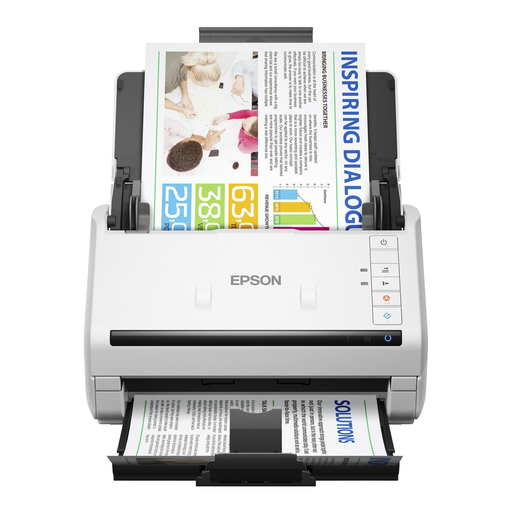
Epson WorkForce DS-530 II A4 sheet-fed scanner
Suitable if you want to scan loose handouts using a feeder. The product name lists A4 and 600 x 600 DPI; check the capacity and duplex function of the exact version before choosing.
Joybuy
Frequently asked questions
When should you choose an ADF, and when a flatbed?
An ADF is suited to stacks of loose sheets; with a flatbed, you place originals on the glass one at a time. Choose based on the task you do most often, and if you scan different types of originals, check whether one device offers both feeding methods.
Do you need to install extra software for OCR?
It varies by model. Canon Netherlands specifies CaptureOnTouch Lite with OCR for Mac and Windows for the imageFORMULA R30. Before buying, check which software comes with the exact version and whether it works with the school’s system.
Can you scan copyrighted teaching materials and share them digitally with students?
Scanning doesn’t automatically give you permission to distribute copyright-protected material. The Dutch Government distinguishes between making a copy for personal use and distributing it; Education and Copyright outlines different conditions for secondary and higher education. Check the education sector, the material, the amount you intend to use and your institution’s policy before sharing.
What if the handouts contain names or other personal data?
Treat scanning and saving the files as processing personal data. The Dutch Data Protection Authority explains that schools must be able to demonstrate that they have taken appropriate technical and organisational measures. Agree with your institution who will have access and where scans will be stored.


