
Volunteer with piles of forms
You regularly scan loose questionnaires and want to load paper less often without missing the reverse sides. Look for an automatic feeder and duplex scanning, and check the page order after a test scan.


If you regularly process piles of loose forms, start with a document scanner with an automatic feeder and check whether it scans both sides automatically. A flatbed is better for delicate or stapled forms, while a compact model is useful if you work in different locations. Test how clearly the forms scan, and if they contain personal data, decide in advance where scans will be stored and who can access them.
You regularly scan loose questionnaires and want to load paper less often without missing the reverse sides. Look for an automatic feeder and duplex scanning, and check the page order after a test scan.
Your forms are damaged, stapled or otherwise unsuitable for a standard sheet feeder. Careful scanning is more important than batch processing, so a flatbed may be a good alternative.
You organise the scanning and storage of responses that could be linked to individuals. Decide in advance who will have access and where the files will be stored.
Start by considering the condition and quantity of the forms. Then decide which feeding method and destination best suit your group’s needs.
| What to consider | What to look for when buying | Who is this important for? |
|---|---|---|
| Batch processing and both sides | Compare the size of your usual batch with the ADF capacity and check for automatic duplex feeding. Test-scan the front and back of a form. | If I regularly process loose forms with responses on both sides, I want to load and turn over paper less often. Around 40% of consumers prioritise batch processing as their main need. |
| Scanning delicate forms clearly | Assess the condition and size of the originals; test a handwritten form and check the saved pages. | When forms are damaged or irregular, I want to scan them carefully rather than put them through a feeder that is unsuitable. Around 30% of consumers prioritise preserving delicate originals. |
| Storage and access for personal data | Establish whether responses can be linked to individuals, who is allowed to open the files and which scan destination the group uses. | If responses could be linked to participants, I want to arrange suitable storage and access in advance. Around 20% of consumers prioritise managing personal data. |
| Scanning in different locations | Check the power supply, connection, software compatibility and feeder capacity of the exact model for the devices and locations you use. | When I scan small batches in different locations, a practical power and connection setup matters more to me than a large input tray. Around 10% of consumers particularly value being able to work in different locations. |
The stated speed applies under specific scanning settings and does not guarantee how long it will take to process your questionnaires. Preparing the paper, refilling the feeder and checking the scans also take time.
Only compare models once you have considered paper suitability, your usual batch size and the checks involved.
Allow time for preparation, refilling and checking.
A flatbed and a scanner with an automatic feeder work in different ways. With large batches, you have to place each page on a flatbed individually.
Let the condition and quantity of your forms matter more than a single resolution figure.
A network connection can be used to share files, but it does not automatically determine who has access or what security measures are appropriate when scans contain personal data.
Before you start, decide who can open the files and where the scans will be stored.
The ADS-1800W is a compact option for smaller batches in different locations, while the ADS-4300N is designed for a shared, fixed workspace.
The WorkForce ES-550W is an ADF option for loose batches, while the Perfection V39II is a separate flatbed option.
The imageFORMULA R30 is a desktop option for loose forms if scanning via a connected computer suits your needs.
The ScanJet Pro 2000 s2 is a compact sheet-fed scanner for a USB workstation.
These product options are relevant for completed questionnaires: they include models with automatic feeding and one model with both a flatbed and automatic feeding.
 No image available
May suit you if you want to process individual originals as well as batches; check which feeding method is right for your forms.
600 × 600 DPI; A4; black.
 No image available
Worth considering if you want to process loose questionnaires in batches; check that it is suitable for your paper and the scanning workflow you need.
600 × 600 DPI; A4; grey and white.
 No image available
May suit a workflow where you need to process both batches and individual originals; check which features are included with the version you choose.
 No image available
Worth considering for batches of loose forms; before use, check that your paper is in a suitable condition for feeding.
600 × 600 DPI; A4; white.
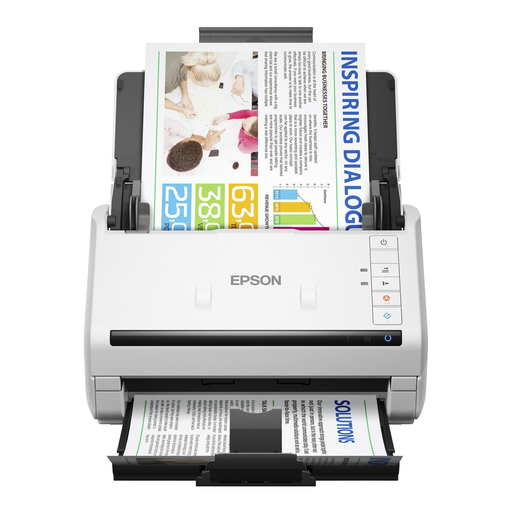 No image available
May suit you if you want to process loose forms in batches; check that it is suitable for your paper and compatible with the devices you use.
600 × 600 DPI; A4; black and white.
An OCR feature does not guarantee that handwritten responses will be converted without errors. Test your own forms and check the results manually before treating them as data.
Run a test batch to check that the front and back of each form have been saved in the right order and that no pages are missing. The National Archives describes checking for skipped pages as part of digitisation.
If responses can be linked to individuals, directly or indirectly, recording and storing them counts as processing personal data. The Dutch Data Protection Authority states that the group must identify an applicable GDPR lawful basis before processing and choose appropriate security measures. Consent is one possible lawful basis, but it is not automatically required.
According to the Dutch Data Protection Authority, the GDPR does not set a general, specific retention period. Do not keep personal data for longer than necessary for its purpose; set an appropriate period and check whether a different statutory retention period applies to your particular situation.
Health data that can be linked to an individual is special category personal data and has extra protection. Assess the content and applicable rules before processing or sharing scans; buying a scanner does not give you permission to do so.