
If you keep individual certificates
You mainly scan individual diplomas or certificates and want to check the size, text, stamps and edges clearly.


For individual certificates up to A4 that you want to check carefully, a flatbed scanner is an obvious choice. For large, delicate or bound originals, contactless scanning is more suitable. In a shared studio, you’ll also need to consider the available workspace and who can access saved files. If you need an official digital diploma certificate, first check whether your diploma is listed in My Diplomas: the Dutch Government says that, if it is, you can download an official DUO extract.
You mainly scan individual diplomas or certificates and want to check the size, text, stamps and edges clearly.
You scan at a workstation that other people use too. The space available for working and storage, as well as access to files, will all affect your choice.
You may also want to capture albums or books without pressing the original flat against a glass platen.
A good fit if: you mainly scan individual certificates up to A4 and can lay them flat.
Consider: this approach won’t suit larger or bound originals.
A good fit if: you want to scan loose documents and books, and a short camera arm would be practical on your desk.
Consider: check how it scans your own stamps and paper. An OCR feature doesn’t guarantee that every detail will be recognised correctly.
A good fit if: you also want to capture larger, flat sheets and put the scanner away after use.
Consider: check small text and edges in a test scan, particularly at larger scan sizes.
A good fit if: you have delicate or bound originals that you don’t want to press flat.
Consider: if you scan almost exclusively individual A4 certificates, book-scanning features may be less relevant.
| Consideration | What should you check? | Who is this most relevant to? |
|---|---|---|
| Legibility and completeness | Check a complete test scan for small text, stamps and all four corners; megapixels or OCR alone don’t prove the result will be good. | If I want to read names, numbers and the edges of individual certificates clearly, I check the whole scan. Around 33% of consumers give top priority to clear, complete copies. |
| Access to files | Check where files are stored, whether temporary files are created, and who can access the computer and output folder. | If I scan other people’s certificates, I want to be able to decide who can view the files. Around 27% of consumers prioritise controlled access to scans. |
| Workspace and storage | Compare the space needed while scanning with the size of your table, and check whether you can put the scanner away afterwards. | If I share a desk, I want to be able to clear the workspace after scanning. Around 27% of consumers place the greatest importance on available workspace and storage. |
| Bound or delicate material | Check whether contactless scanning and the way it handles curved pages are suitable for your original. | If certificates are in a book or album, I want to capture them without pressing them flat. Around 13% of consumers prioritise preserving bound or delicate material. |
A scan you create yourself isn’t automatically the same as an official DUO extract. The Dutch Government says that an official digital extract has the same value as the original diploma or a certified copy when the diploma is listed in My Diplomas.
First decide whether you need an archive copy or official proof. If you need the latter, check whether your diploma is listed in My Diplomas.
CZUR specifies 205 dpi at A3 for the Shine 800 A3 Pro. The Shine version for flat sheets is also different from an ET model designed for curved book pages.
Choose a scan size that suits your original, then check a test scan for small text and edges. Make sure you know which model you’re looking at.
When an organisation processes personal data, the Dutch Data Protection Authority says that appropriate security measures and access rights depend on the purpose and risks.
Before scanning other people’s certificates, check the access rights, temporary files and chosen storage folder.
The Perfection V39II is an A4 flatbed scanner for individual documents. It’s a suitable option if you don’t need a book scanner.
IRIS describes the IRIScan Desk 7 Pro as a compact document camera for scanning documents and books.
The Shine 800 A3 Pro is designed for larger, flat sheets. The ET range is specifically designed for books with curved pages.
The SV600 is a contactless scanner for books, delicate items and documents up to A3, among other things.
This selection is aimed at individual certificates and documents, from A4 sheets to flat originals up to A3. The sheet-fed models are designed for loose sheets, not bound books.
 No image available
Suitable for individual, flat certificates and larger documents up to A3; check small text in a test scan.
The product name lists OCR and compatibility with Windows and macOS. According to the product information, scanning highly glossy materials is not recommended.
 No image available
Suitable for individual A4 documents; its feed mechanism isn’t designed for bound books.
The product name lists a sheet-fed scanner, A4 and 600 × 600 DPI. Don’t feed documents with staples, paper clips or torn pages into the scanner.
 No image available
Suitable for individual documents up to A4 if you’re looking for a handheld scanner; its feed mechanism isn’t designed for bound books.
The product name lists 600 × 600 DPI. According to the product information, damaged, folded or stapled documents aren’t suitable for the feed slot.
 No image available
Suitable for individual A4 documents if you’re looking for a handheld scanner; its feed mechanism isn’t designed for bound books.
The product name lists 600 × 600 DPI. According to the product information, damaged, folded or stapled documents aren’t suitable for the feed slot.
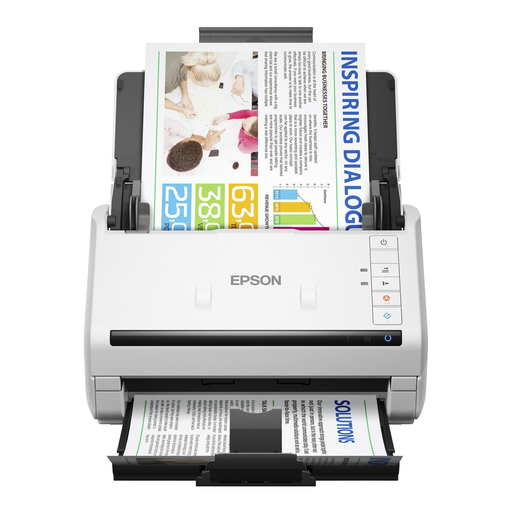 No image available
Suitable for multiple individual A4 documents; its feed mechanism isn’t designed for bound books.
The product name lists a sheet-fed scanner and 600 × 600 DPI. Check that your loose originals are suitable for feeding into the scanner.
Not always. If your diploma is listed in My Diplomas, you can download an official digital DUO extract which, according to the Dutch Government, has the same value as the original diploma or a certified copy. Not all school years are listed in My Diplomas, so check first whether your diploma is available. This doesn’t mean that every scan you make yourself has the same status.
After scanning, check the whole image and choose carefully where to save the file. If an organisation processes personal data, it needs appropriate security and properly managed access rights. The Dutch Data Protection Authority says these depend on the purpose and risks of the processing.
For a consumer purchase in the Netherlands, statutory consumer rights apply alongside any manufacturer’s warranty, but a business purchase for a studio doesn’t automatically fall under the same consumer rules. The Dutch Government says there is no fixed statutory warranty period in the Netherlands and that you should contact the seller if a product is faulty. Check which terms apply to your purchase.
That depends on who processes the data, for what purpose and on what legal basis. An organisation processing personal data must have an appropriate legal basis and take suitable security measures. The Dutch Data Protection Authority says the GDPR doesn’t set a general, specific retention period. Make sure the storage arrangements and access rights are appropriate for the specific processing activity.