
Vandaag of morgen in huis

Kwaliteit gegarandeerd

Welkomstaanbiedingen ontgrendelen: GRATIS bezorging | Tot 80% korting | Gratis 30 dagen JoyPlus-proefperiode
Download de app
A scalp massager can come in handy after a long day at work, during a break at the office or while you’re out and about. Many models look similar, though, even when there are significant differences in ease of use, water resistance and massage heads. A low price doesn’t automatically mean a product is right for you.
Look out for these common pitfalls:
Check whether the product lists an official IP rating, such as IPX7. This rating relates to protection against water under specific test conditions. Always read the instruction manual too. Some models state that, despite having a water-resistant casing, you shouldn’t use the device on wet hair or skin.
Only use a waterproof scalp massager as instructed by the manufacturer. Keep the charging port, charging station and cable dry. For example, a device supplied with a bamboo charging base may be handy on a desk or bedside table, but it isn’t designed for use in the bathroom.
The shape and material of the massage heads are important for a comfortable scalp massage. Silicone massage heads generally feel softer than hard plastic ones and are often easier to remove and clean.
Check the following:
A head and body massager is worth considering if you want to use one device on several parts of your body. Just check that the massage heads are actually designed for this.
A rechargeable massager means you won’t be tied to a plug socket while you use it. Don’t just look at the claimed run time; check how it charges too. USB charging and a charging station are handy at home, at work and when travelling.
A compact model measuring around 10 to 12 centimetres is easier to fit in a bag. An ergonomic handle also helps you move the device in a controlled way over your scalp, neck or shoulders. Check how many settings it has, too. For example, three massage modes give you more choice than one fixed speed, without making the controls complicated.
The recommendations below are based on verifiable product information, such as dimensions, IP rating, materials, charging method and included parts. Claims about relaxation or stress relief describe intended uses from product descriptions; they are not medical promises.
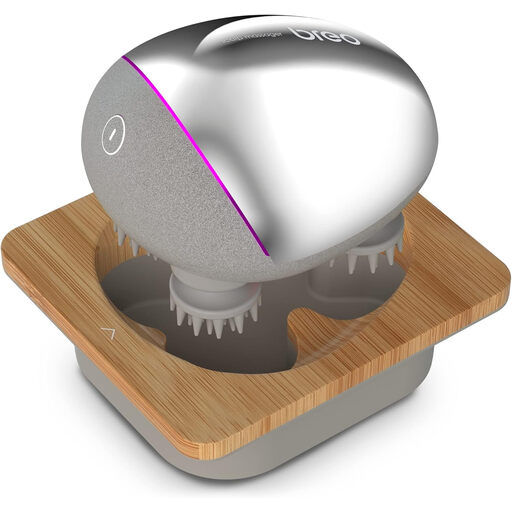
Why it suits this profile: This compact model is designed for easy use at home, at the office or when travelling. It measures 11 x 12 x 8,2 cm and weighs 0,32 kg.
The four removable massage heads make cleaning and swapping them more straightforward than with a fixed design. According to the product information, the device has three massage modes and an IPX7 rating. Always follow the supplied safety instructions when using it around water.
USB rechargeable and supplied with a charging station featuring a bamboo element and silicone massage heads. According to the product description, the heads are also designed for use on the neck, shoulders, hands and legs.
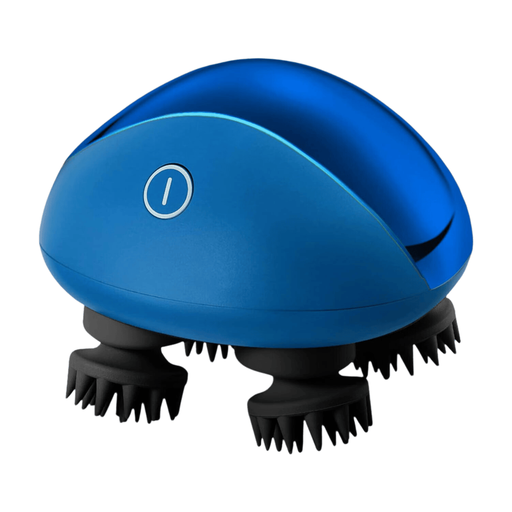
Why it suits this profile: This model is a good fit if you’re looking for a cordless scalp massager that’s versatile and has an IPX7 rating.
The product information lists a cordless design, USB charging and soft silicone heads. The safety information also warns against using it on wet hair or skin, so water resistance doesn’t remove the need to use it carefully.
According to the brand description, it has 96 contact points and is designed for the head, neck, shoulders, back, legs and waist. This is a claim made by the brand, not an independently established result.
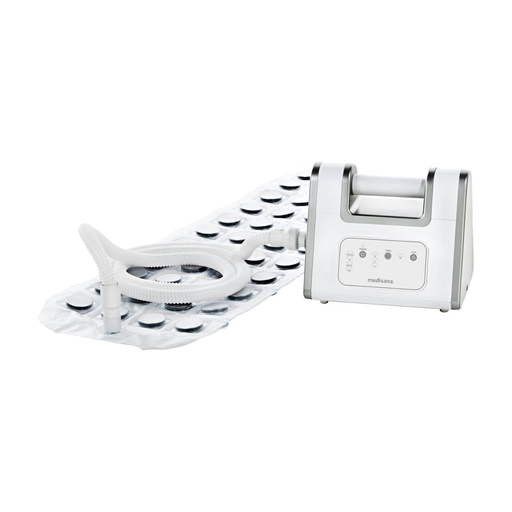
Why it suits this profile: This isn’t a scalp massager, but it’s an alternative if you’re mainly looking for a bubble massage in the bath and don’t necessarily need a portable model.
Its purpose is clear: it’s a whirlpool mat for a standard bath, not a multifunctional portable massager. That means you know what you’re buying it for from the outset.
Fitted with massage jets and designed for use in the bathroom. Bear in mind its larger size and the fact that it isn’t a cordless scalp massager.
We’ve put together a complete, up-to-date list of products that meet these strict selection criteria and the applicable European safety regulations.
Start with the lowest setting whenever you use an electric massager. Move it gently over your scalp and don’t apply too much pressure. Don’t use it on damaged or irritated skin, and follow the product instructions. Clean removable heads after use and let all parts dry completely before putting them away.
Don’t use a scalp massager while you’re asleep. Stop if it feels uncomfortable, and ask a doctor or pharmacist if you’re unsure about how to use it. A massager is designed for relaxation and comfort, not as a substitute for medical care.
It depends on the model. An IPX7 rating doesn’t automatically mean you can use it on wet hair. Check the instruction manual and safety information. The instructions for the Breo models mentioned above say to avoid using them on wet hair or skin.
Run time depends on battery capacity, intensity and how often you use it. Manufacturers sometimes provide an estimate based on a certain number of minutes of use per day. Treat this as a guide, and check whether USB charging or a charging station suits your routine.
After you’ve bought it, the direct running costs are generally limited to charging the battery. Costs depend on power consumption, how often you charge it and the battery’s lifespan. A model with replaceable or easy-to-clean massage heads may be more practical in the long run, as you may not need to replace the whole device as soon.
