Who is this relevant to?

Baker making small loaves

You scale down bread recipes and mainly want to weigh small quantities of yeast. Check how clearly the scale displays low weights, not just its maximum capacity. Broodsmakelijk explains that standard kitchen scales often have a resolution of 1 g.

Baker looking for one scale

You want to weigh yeast, flour and water without having to store a second appliance. The weighing capacity and the space available for your mixing bowl will determine whether a particular model is suitable. Broodsmakelijk recommends comparing the base of the bowl with the platform.

Baker who already owns a kitchen scale

Your current scale works well for flour and water, but not for small portions of yeast. In that case, a separate precision scale is an option instead of replacing the existing one.

What should you look for when choosing?

One scale for everything

Suitable if: you want to weigh both yeast and ingredients in a bowl on the same appliance.

Bear in mind: check that the bowl fits and that the appliance gives a sufficiently precise reading at the low weight you need.

Precision scale alongside your existing scale

Suitable if: your current scale works well for flour and water, but not for small quantities of yeast.

Bear in mind: you’ll need to use and store two appliances; a small scale may not have enough space or capacity for a bowl of dough.

Dual scale with a separate precision platform

Suitable if: you want to weigh yeast and larger quantities of ingredients in one appliance, but not on the same platform.

Bear in mind: the platforms may have different capacities and increments; for the ADE KE2354 Isabella, ADE lists a maximum of 500 g in 0,1 g increments on the small platform and a maximum of 5 kg in 1 g increments on the large platform.

What to consider What should you check? Who is this important for?
Small quantities of yeast Check both the increments and the stated range at low weights. The increment alone does not prove the scale’s accuracy. If I’m weighing yeast for a small loaf, I want to be able to read changes at low weights. Around 36% of consumers put yeast precision first.
Weighing in the same bowl Include the bowl and ingredients in the maximum weight; compare the base of the bowl with the platform and check whether the scale has a tare function. If I want to weigh flour and water directly into my mixing bowl, the bowl needs to sit securely and remain within the scale’s capacity. For around 29% of consumers, weighing everything in one bowl is the top priority.
Readability and controls Check the position of the display and buttons, and find out how long it takes to switch off, if this is specified. If I’m adding ingredients while baking, I want to be able to see and use the display with my own bowl in place. Around 21% of consumers put ease of use first.
Storage space Compare the dimensions of the appliance and platform with your available storage space and the bowl you want to use. If my kitchen has limited space, I want to store as few appliances as possible without compromising on the bowl size I need. Around 14% of consumers put saving space first.

Common buying mistakes

  • Assuming 0,1 g means proven accuracy

    The displayed increment and the measured deviation are not the same thing. In addition, the increment may vary depending on the weight range.

    Check which weight the stated increment applies to. Where possible, look for independent measurements at low weights.

  • Looking only at the maximum weight

    A scale may have enough capacity, but the bowl could be too large for the platform. With a dual scale, yeast may also be weighed on a different platform from the bowl.

    Check the maximum weight including the bowl, the dimensions of the platform and which platform offers the finer increments.

  • Replacing a useful kitchen scale when weighing yeast is the only problem

    You may be able to keep using your existing scale for flour and water, and use a separate precision scale for yeast.

    Compare the storage space needed for an extra appliance with that required by a combined or dual scale.

Brands worth considering

Beurer

Beurer describes the KS 36 as a compact precision kitchen scale with tare and calibration functions.

  • According to Beurer, the KS 36 has a maximum capacity of 2 kg, displays increments of 0,1 g and has a weighing surface measuring 11,5 × 8,0 cm.
  • The small surface means you’ll need to check the dimensions if you want to put a mixing bowl on it. These are manufacturer specifications, not results from an independent test.

Tanita

Tanita lists the KD-321 as having a capacity of up to 3 kg, a 147 × 147 mm platform and a fine display of 0,1 g.

  • Tanita lists a removable platform and AA batteries included.
  • Check which increment applies to the total weight you want to measure. The 0,1 g specification is not an independent accuracy test.

ADE

ADE describes the KE2354 Isabella as having a separate precision platform for small ingredients and a larger platform for a bowl.

  • According to ADE, the small platform weighs up to 500 g in increments of 0,1 g, while the large one weighs up to 5 kg in increments of 1 g; each has its own tare function.
  • Yeast and a filled bowl are weighed on different platforms. These are manufacturer specifications, not independent test results.

Scales at Joybuy

This selection includes digital kitchen and coffee scales. For yeast, check whether the stated increment applies at the low weight you need; for weighing in a bowl, also check the capacity and platform dimensions.
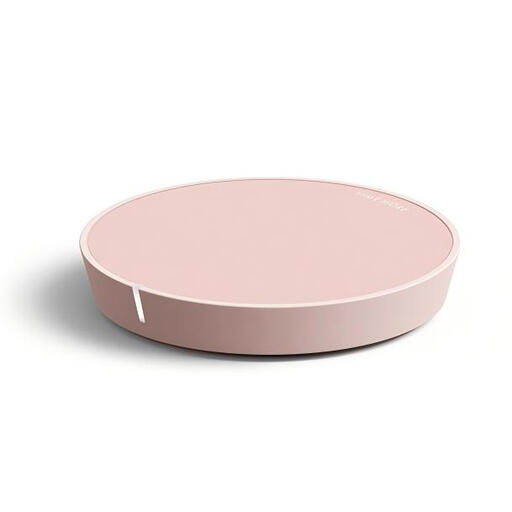
TIMEMORE Coffee Scale DOT coffee scale, pink

TIMEMORE Coffee Scale DOT, pink

The product name lists features for coffee-to-water ratio, flow rate and a timer; for yeast, check the increment at low weights and the weighing range.

The units can be switched between ounces and kg.

View at Joybuy

Digital kitchen scale with dual LED display

Digital kitchen scale with dual LED display

The stated increment of 0,1 g and tare function may be useful for small quantities and weighing ingredients one after another; an increment is not an independent accuracy test.

The product specifications list a capacity of up to 3 kg and a rechargeable battery with USB-C.

View at Joybuy

Digital coffee scale with timer and tare function

Digital coffee scale, 0,1 g, up to 3 kg

The stated increment of 0,1 g may be useful for yeast; check which weight it applies to, as this is not an independent measurement test.

The product name lists a capacity of up to 3 kg, tare function, timer and heat-resistant platform. A rechargeable version is also mentioned.

View at Joybuy

5five digital stainless steel kitchen scale

5five digital kitchen scale, stainless steel

This kitchen scale lists a tare function for weighing in a bowl; check whether its increment is suitable for the quantity of yeast you want to weigh.

The stated dimensions are 17 × 13 × 2 cm and the range is 1–5000 g. An LCD display is also listed.

View at Joybuy

TIMEMORE Black Mirror Basic 2 coffee scale

TIMEMORE Black Mirror Basic 2

The stated increment of 0,1 g may be useful for small quantities; check which weight it applies to, as this is not an independent measurement test.

The product name lists a capacity of 2000 g and a timer. The description mentions a tare function and dimensions of 15 × 13 cm.

View at Joybuy

Frequently asked questions

Does 0,1 g mean a proven measurement deviation of no more than 0,1 g?

No. Check what the manufacturer specifies and which weight range it applies to; the displayed increment alone does not prove actual accuracy. Consumentenbond describes a testing method that assesses accuracy and consistency using standard weights.

How do you weigh several ingredients in the same bowl, one after another?

Place the bowl on the platform and use the tare function to reset the display to zero before adding an ingredient. Repeat for the next ingredient, as long as the total weight, including the bowl, stays within the stated maximum.

Where should you place a precision scale?

Use a firm, level surface. The Tanita KD-320 manual also warns against vibrations and large changes in temperature or humidity; follow the manual for your own model when cleaning it.

What are your rights when buying online in the Netherlands?

According to the Rijksoverheid, when you buy online from a business you generally have a 14-day cooling-off period; this does not apply in the same way when buying from a private individual. You also have statutory rights if a product is faulty, such as the right to a repair or replacement. Check who the seller is and which terms apply to your specific purchase.

Where can you take an old scale and used batteries?

According to the Rijksoverheid, you can hand in an old electrical appliance when buying a similar new one, or take it to your local council’s recycling centre. Used batteries must not go in the bin; you can take them to shops that sell batteries, among other places.
