
Party organisers looking for less fat
You want to know whether a ‘less fat’ claim applies to the exact pack, and how its fat, energy and salt content compare. Don’t assume that less fat means low fat.


A coated nut with a ‘less fat’ claim is only a contender for a children’s party if the claim and nutritional information appear on the exact pack you’re buying. Albert Heijn lists the historical Duyvis Oven Roasted Herbs&Onion pack as discontinued. First check the guests’ ages and allergies, then compare fat, energy and salt per 100 g as well as the amount you plan to serve. Less fat doesn’t automatically mean low fat or less salt.
You want to know whether a ‘less fat’ claim applies to the exact pack, and how its fat, energy and salt content compare. Don’t assume that less fat means low fat.
You need to take the children’s ages and known allergies into account. The Netherlands Nutrition Centre advises against giving whole nuts or peanuts to children under 4. If there are allergies, check the ingredients and allergen information on the pack you’ve chosen.
You want to buy and serve an amount that suits the party, without treating a portion shown on the label as advice for children or as one portion per child.
Start by checking the guests’ ages and allergies. Then compare the nutritional information for the exact product variant and the amount you plan to serve.
| What to consider | What should you check? | Who should prioritise this? |
|---|---|---|
| Less fat | Check the claim and compare fat, energy and salt per 100 g. Also look at what the claim is comparing the product with. | If my main buying priority is less fat, I want to check the claim against the correct product variant and basis for comparison; around 34% of consumers prioritise a demonstrable reduction in fat. |
| Age and allergens | Ask about the children’s ages and any known allergies; read the ingredients and allergen information on the exact pack. | If I need to consider young children or allergies, I first check whether this snack is suitable for the guests; around 33% of consumers prioritise suitability for their guests. |
| Portion, energy and salt | Compare the nutritional information per 100 g, then calculate it for the amount you’ll actually serve. | If my main concern is keeping track of the total energy and salt, deciding on a portion in advance helps me plan; around 20% of consumers prioritise portion size, energy and salt. |
| Packaging and storage | Choose a pack size that fits your plans, check whether it can be resealed and follow the storage instructions on the pack. | If I want to portion the snacks in advance and store any leftovers, I look at the pack size and closure; around 13% of consumers prioritise these practical packaging features. |
The percentages indicate how consumers might divide up their top buying priorities in this party context; they are not measured Dutch market data.
For solid foods, the European Commission defines ‘low fat’ as no more than 3 g of fat per 100 g. According to Albert Heijn, the historical Duyvis Oven Roasted Herbs&Onion pack listed 21 g of fat per 100 g and claimed 30% less fat than the Dutch average for ordinary peanuts in a crunchy coating. This is a product claim based on a specific comparison, not proof that the product is low fat. Albert Heijn lists this pack as discontinued.
Label values apply to the product variant specified. For example, Albert Heijn lists 33 g of fat and 1,68 g of salt per 100 g for AH Borrelnoten Cocktail 300 g; Jumbo lists 32,7 g of fat and 1,63 g of salt per 100 g for Jumbo Borrelnoten Cocktail 300 g. Don’t use differences like these on their own as the deciding factor.
A claim about fat doesn’t change the fact that the product contains whole peanuts or allergens.
First check the children’s ages and any known allergies. Don’t give whole nuts or peanuts to children under 4, and read the full ingredients and allergen information for every product variant.
According to Albert Heijn, the historical Duyvis Herbs&Onion pack listed 2 g of salt per 100 g. So a lower fat content doesn’t automatically tell you how much salt the snack contains.
Compare fat, energy and salt on the same basis, then consider how much you plan to serve.
‘Mild’ describes the flavour. The historical Duyvis Oven Roasted variant listed 21 g of fat per 100 g. As explained by the European Commission, this is above the maximum of 3 g per 100 g required for a ‘low fat’ claim on solid foods.
Base your comparison on the nutrition table and an explicit claim for the exact variant, not just its product name.
Jumbo Borrelnoten Cocktail 300 g lists twelve 25 g portions. That doesn’t mean the pack is automatically suitable for twelve children; the reference intake shown is based on an average adult.
Plan the amount separately and use the label portion only as a unit for your calculations.
A large pack could lead you to buy or serve more than you intended.
Duyvis offers flavours including Cocktail, Provençale and Oriental; Albert Heijn also listed a historical Oven Roasted Herbs&Onion variant.
AH Borrelnoten Cocktail is listed in 250 g and 300 g packs; product features may vary between pack sizes.
Jumbo offers Cocktail and other flavoured savoury coated nuts in a range of pack sizes.
PLUS Borrelnoten Mild 300 g is a mild-flavoured variant.
Lidl lists Alesto savoury coated nuts in its in-store range.
ALDI lists TRADER JOE’S Borrelnoten in a 300 g bag, in flavours such as Bacon-cheese, Poesta or Paprika.
These Joybuy options are regular seasoned savoury coated nuts for anyone who wants to portion the snack themselves. The product names don’t support a ‘less fat’ claim; always check the nutritional information and claim on the exact pack if that’s what you’re looking for.
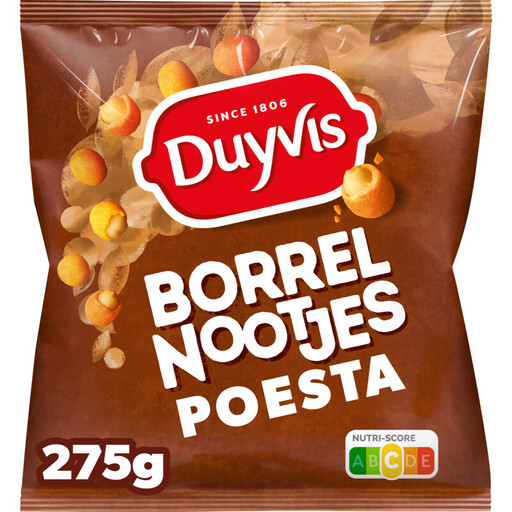 Image unavailable
A seasoned savoury coated nut option for anyone who wants to measure out this classic party snack themselves; the pack contains 275 g.
Contains peanuts, milk and wheat. Check the allergen information if you plan to serve this snack to guests.
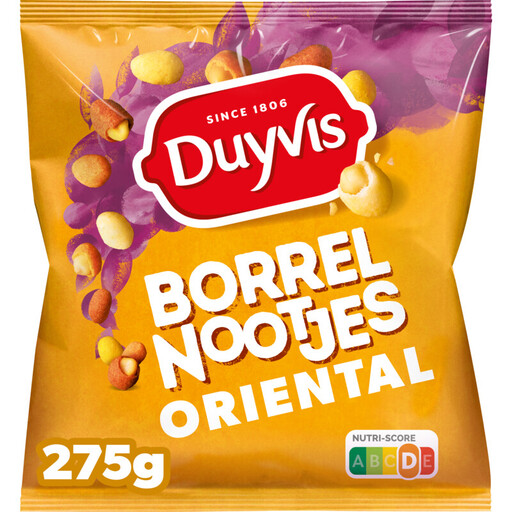 Image unavailable
A seasoned Oriental variant for anyone planning to serve savoury coated nuts at a gathering; the pack contains 275 g.
Contains peanuts, wheat, barley and soya; may contain milk, nuts and mustard. Check the information on the pack you choose.
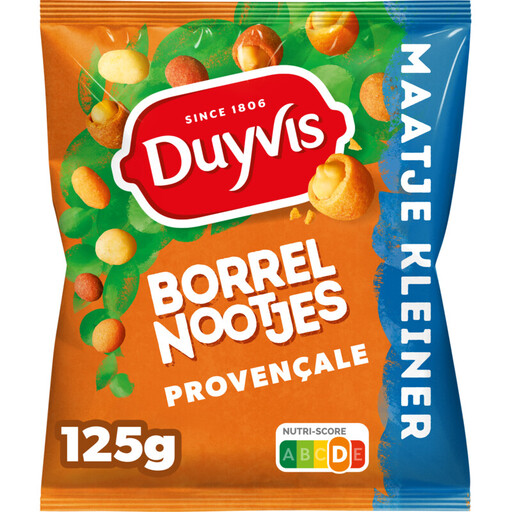 Image unavailable
A Provençale-style savoury coated nut option in a 125 g pack, ideal if you’re planning to buy a smaller bag.
Contains peanuts and wheat; may contain milk, nuts, soya and mustard. Check the allergen information for your guests.
 Image unavailable
A Provençal-style crunchy-coated peanut snack in a 275 g pack for anyone who wants to decide how much to serve.
Contains peanuts and wheat; may contain milk, nuts, soya and mustard. Check the allergen information for your guests.
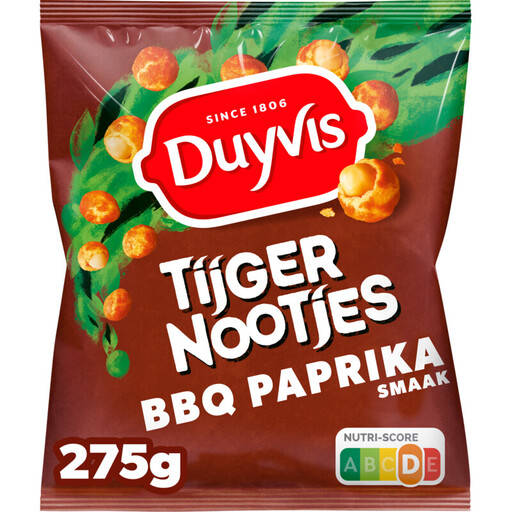 Image unavailable
A seasoned peanut snack with a BBQ paprika flavour, in a 275 g pack for anyone looking for this flavour for their party.
Contains peanuts and wheat; may contain milk, nuts, soya and mustard. Check the allergen information for your guests.
The Netherlands Nutrition Centre advises against giving whole nuts or peanuts to children under 4 because of the risk of choking. Make sure older children sit down while eating, and stay nearby.
No. For solid foods, the European Commission defines ‘low fat’ as no more than 3 g of fat per 100 g. According to Albert Heijn, the historical Duyvis Herbs&Onion pack listed 21 g per 100 g and claimed 30% less fat than a specific average product comparison; that doesn’t make the variant low fat.
No. The 25 g is the amount Jumbo uses to provide the nutritional information. The associated reference intake percentages are based on an average adult and aren’t dietary advice for a child.
Check the ingredients and allergen information on the exact pack, and choose products with your guests’ known allergies in mind. Recipes and product information can change, so check the pack you receive too.
Follow the storage instructions on the pack you’ve chosen. For AH Borrelnoten Cocktail, Albert Heijn advises storing the product in a cool, dark, dry place and sealing the pack securely after use.