
If you’re serving a generous savoury breakfast
If you’re looking for bread with a crust and texture to complement plenty of toppings, compare a rustic baguette, sourdough and hearth loaf for the flavour and slice thickness you prefer.


For a savoury breakfast where flavour and crust come first, consider white sourdough or a rustic hearth loaf. A part-baked baguette is a better choice if you want to prepare it just before serving. Whatever you choose, check the ingredients, allergens and preparation instructions. If everyday nutritional value is your main concern, the Netherlands Nutrition Centre advises replacing white bread with wholemeal or brown bread as often as possible.
If you’re looking for bread with a crust and texture to complement plenty of toppings, compare a rustic baguette, sourdough and hearth loaf for the flavour and slice thickness you prefer.
If you want to time the bread for serving and have an oven or a suitable air fryer, check how long your chosen part-baked bread takes to prepare.
If you want to take allergens, nutritional information or the use of iodised salt into account, read the latest label—even when the bread is described as artisan or organic.
First, decide whether you’re looking for a particular flavour and texture or want to bake the bread just before breakfast. Then compare the label with your preferences for ingredients and nutritional information.
| What to consider | What to check before buying | Who it matters most to |
|---|---|---|
| Flavour and texture | Compare the type of bread, crust and shape with the toppings you plan to serve. Jumbo links the sourdough and long proving time of its rustic range with its flavour and crust. | If I’m serving plenty of savoury toppings, I want to choose a bread whose flavour and texture go well with them; around 42% of consumers prioritise flavour and presentation. |
| When you plan to serve it | For part-baked bread, check the required time and temperature, and whether it’s suitable for your oven or air fryer. | If I want to bake the bread just before brunch, I need to allow for the preparation time in my plans. Around 33% of consumers prioritise when they’ll serve it. |
| Ingredients and nutritional information | Read the latest allergen information and, if relevant, compare fibre and salt per 100 g. If iodine matters to you, check whether baker’s salt or iodised salt is listed. | If I need to take allergens into account or want to know which salt has been used, I read the label before buying; this is a priority for around 25% of consumers. |
Sourdough describes how the bread is made; it doesn’t, by itself, tell you how much fibre white bread contains. For everyday eating, the Netherlands Nutrition Centre advises replacing white bread with wholemeal or brown bread as often as possible.
Choose white sourdough if that’s the flavour you’re after, and compare the nutritional information if fibre is important to you.
According to the Netherlands Nutrition Centre, bakers aren’t required to use baker’s salt. So the type of bread alone won’t tell you which salt has been added.
Check the label for baker’s salt or iodised salt, or ask about it if you’re buying unpackaged bread.
Part-baked bread needs time and a suitable appliance before it’s ready to serve.
Check the instructions for the product you’ve chosen. If baking it doesn’t fit your breakfast plans, consider bread you can serve straight away.
Descriptions such as fresh, rustic or organic don’t replace allergen information. The Netherlands Food and Consumer Product Safety Authority points out that allergens must be listed on the label of prepacked products.
For packaged bread, read the latest ingredients and allergen information. If you’re buying unpackaged bread, ask about allergens before you buy.
Alongside standard white hearth bread, Albert Heijn offers white OerDesem varieties in its AH Liefde & Passie range.
Jumbo describes its rustic sourdough breads, including white durum and white spelt, with an emphasis on proving time and crust.
The Korenlanders range at PLUS includes both white sourdough bread and white part-baked sourdough baguettes.
ALDI stocks Bakkersgoud rustic white bread, among other freshly baked white breads.
Lidl has an in-store range of oven-fresh white bread and bread rolls.
Dirk stocks batard white bread and a white part-baked baguette from 1 de Beste, among other products.
These white baguettes are a good bread choice for a savoury breakfast. Compare the pack size and check whether each product needs baking; the word ‘rustic’ in a product name doesn’t, by itself, indicate a set quality standard.
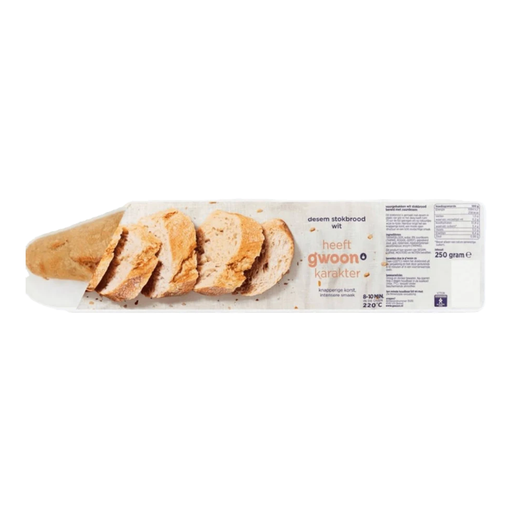 Image unavailable
A white baguette for serving with savoury toppings. Check the packaging to see whether this variety needs baking before serving, and read the latest allergen information.
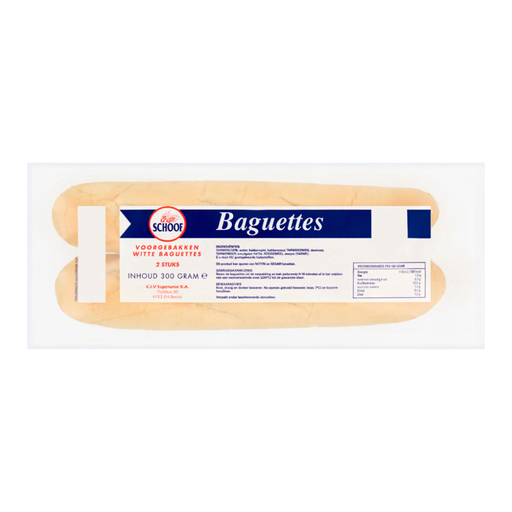 Image unavailable
Two white baguettes for serving when you want to put out several loaves at breakfast. Check the packaging for preparation instructions and the latest allergen information.
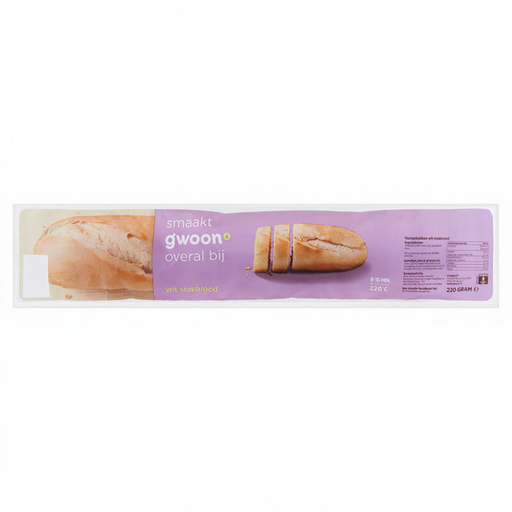 Image unavailable
A white baguette for anyone looking for this style of bread to serve with savoury toppings. Before buying, check the preparation instructions and allergen information on the packaging.
No. According to the Netherlands Nutrition Centre, bakers aren’t required to use baker’s salt. For packaged bread, check whether baker’s salt or iodised salt is listed in the ingredients. If you’re buying unpackaged bread, ask about it.
The word ‘sourdough’ alone doesn’t tell you how much fibre the bread contains. Check the nutritional information to find out. For everyday eating, the Netherlands Nutrition Centre advises replacing white bread with wholemeal or brown bread as often as possible.
Plan the baking around the instructions for your chosen product and when you want to serve it. For example, the white sourdough baguette from PLUS says to bake it in the oven for 8–10 minutes at 220 °C; don’t assume the same setting will work for a different baguette.
For prepacked bread, read the latest ingredients and allergen information. If you’re buying unpackaged bread, ask about allergens before you buy; a name such as rustic or artisan doesn’t tell you what allergens it contains.
When you buy, check the latest label and the information provided with the product. PLUS says that ingredients and nutritional information, among other details, can change, while Lidl notes that its fresh bread range may vary by store.