
If you’re looking for a savoury breakfast base
If you want to combine flakes with savoury ingredients, unsweetened oat or multigrain flakes are a better fit than chocolate flakes. Check the ingredients and sugars per 100 g for grain flakes too.


For a savoury breakfast with less added sugar, unsweetened oat flakes or multigrain flakes are a more natural choice than chocolate flakes. PLUS lists 1 g of sugars and 0 g of added sugars per 100 g for its wholegrain coarse oat flakes; according to their product information, De Ruijter, Albert Heijn and Jumbo chocolate flakes contain 63 to 65 g of sugars per 100 g. If you still want a chocolate flavour, use chocolate flakes as a sweet topping and check the nutritional information and allergens for the variety you choose.
If you want to combine flakes with savoury ingredients, unsweetened oat or multigrain flakes are a better fit than chocolate flakes. Check the ingredients and sugars per 100 g for grain flakes too.
If you’re mainly looking to reduce sugar within the chocolate-flake category, compare varieties per 100 g and consider how much you use. The word ‘dark’ on its own doesn’t tell you how much sugar a product contains.
Milk and soya may be relevant allergens in chocolate flakes, while multigrain flakes can contain various gluten-containing cereals. Check the ingredients, allergen information and any warnings on the packaging of the specific variety.
First decide whether you want to use flakes as a breakfast base or as a sweet topping. Then compare products with the same purpose by their sugars per 100 g and by any ingredients that are relevant to you.
| What to consider | What to check | Who it matters to |
|---|---|---|
| Savoury base | Check whether they’re oat or multigrain flakes, and compare sugars and any listed added sugars per 100 g. | I want to combine flakes with savoury ingredients, without chocolate as the main ingredient. For around 50% of consumers, a savoury base comes first. |
| Keeping the chocolate flavour | Compare chocolate flakes with one another by sugars per 100 g, then consider the portion size. | I want to keep eating chocolate flakes, but be more mindful about how much I use. For around 30% of consumers, keeping the chocolate flavour is the top priority. |
| Ingredients and allergens | Read the current ingredients list, allergen information and warnings on the packaging. | If certain ingredients aren’t suitable for me, I want to know before comparing sugar levels. This check matters most to around 20% of consumers. |
According to their product information, De Ruijter, Albert Heijn and Jumbo dark chocolate flakes contain 63 g, 65 g and 63.7 g of sugars per 100 g respectively. So ‘dark’ is no substitute for checking the sugar content on the label.
Compare dark and other chocolate flakes per 100 g if you’re choosing within this product category. If you’re looking for a savoury base, compare grain flakes instead.
Chocolate flakes are a sweet spread or topping; oat and multigrain flakes can be used as a breakfast base. A similar name doesn’t mean they serve the same purpose.
Before comparing, decide whether you want a base for savoury ingredients or are choosing to add a sweet topping.
‘No added sugar’ doesn’t mean a product contains no sugars. That’s why the Netherlands Nutrition Centre also recommends checking the nutrition table.
Check ‘of which sugars’ per 100 g and read the ingredients list. You can also compare salt and saturated fat if you want to weigh up the products further.
A grain product that’s low in sugars may still contain ingredients that aren’t suitable for someone. Milk and soya information may also be important for chocolate flakes.
If you need to avoid certain allergens, check the packaging of the specific variety first, then compare the remaining products for their nutritional values.
These examples show the differences between specific chocolate flakes and grain flakes; the nutritional values given don’t apply to every product from each brand.
Worth considering if you’re looking for traditional chocolate flakes as a sweet spread.
A supermarket own-brand example to compare with other dark chocolate flakes.
Another supermarket own-brand example in the dark chocolate flakes category.
The products listed show the difference between chocolate flakes as a topping and oat flakes as a breakfast base.
This granola is most relevant if you want to compare breakfast cereals by their sugar content. For a neutral base for a savoury breakfast, the distinction between this and oat or multigrain flakes remains important.
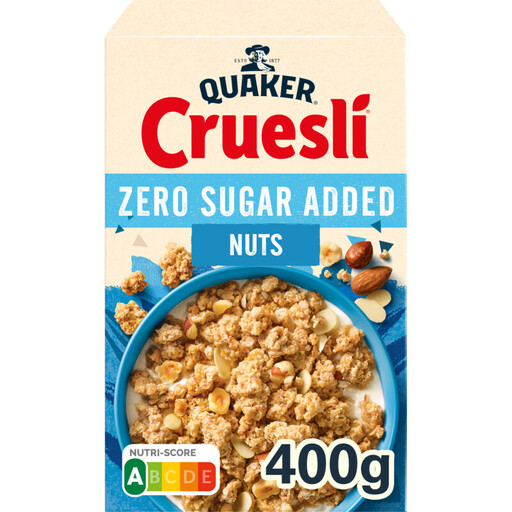 Image unavailable
This nut granola is useful for comparing breakfast cereals, but it isn’t a neutral base of flakes for a savoury breakfast. Check the sugars per 100 g and, if you need to avoid certain allergens, read the latest packaging information.
First compare products with the same purpose by their ‘of which sugars’ value per 100 g. Then look at any listed added sugars, the ingredients and the portion size; a 15 g portion isn’t directly comparable with a 20 g portion.
No, a product with no added sugar can still contain sugars. For example, PLUS lists 0.99 g of sugars per 100 g for Smaakt Seven-Grain Flakes. So remember to check the ‘of which sugars’ line in the nutritional information too.
Chocolate flakes are a sweet topping, not a neutral base for a savoury breakfast. If you still want a sweet-and-savoury combination, decide how much you’ll use and compare the nutritional information for the chocolate flakes you choose.
Read the ingredients and allergen information on the current packaging for the specific product. The Netherlands Food and Consumer Product Safety Authority says allergens must be clearly shown on the labels of prepacked foods; also check for any warnings about possible traces.