
Vandaag of morgen in huis

Kwaliteit gegarandeerd

Welkomstaanbiedingen ontgrendelen: GRATIS bezorging | Tot 80% korting | Gratis 30 dagen JoyPlus-proefperiode
Download de app
A sauté pan with lid is useful for frying, sautéing, stir-frying, braising and stewing. However, a pan that looks good in the product photo may disappoint in practice. A base that is too small, for example, may heat unevenly; a coating may require more care than expected or the lid may not be suitable for oven use.
With this buying guide, you can compare the key features of a deep frying pan, ceramic sauté pan and sauté pan with lid. The selection below is based on verifiable product specifications and clear usage information.
A non-stick sauté pan may have a traditional coating, ceramic layer or hybrid cooking surface. These materials differ in terms of maintenance, heat resistance and compatibility with cooking utensils. So check the following:
A claim such as “healthy” or “non-toxic” is not a general guarantee of quality. According to manufacturers’ own information, for example, some models may have a PFAS-free or ceramic coating. Always check the complete product specification and instructions for use.
An induction sauté pan needs a magnetic base, while oven use mainly depends on the materials used for the pan, handle and lid. Some models are suitable for induction but are not oven-safe. Other pans have a maximum temperature limit or require the glass lid to be removed.
Pay attention to the combination of:
A 28 cm sauté pan generally offers plenty of cooking space, but the usable base may be smaller. This is relevant on induction hobs, as the base should ideally match the cooking zone. A 24 or 25 cm pan is easier to handle and better suited to smaller households. So, alongside the diameter, also check the base diameter, height and capacity.
Aluminium heats up relatively quickly and is often lightweight to use. Cast aluminium can offer a sturdy construction, but the weight varies from model to model. Stainless steel is generally less susceptible to scratches than a soft non-stick coating, but it requires a different cooking technique.
With a ceramic sauté pan, it is important to check whether it is ceramic-coated metal. This is different from a pan made entirely from ceramic. When using coated pans, wooden, silicone or nylon utensils are preferable unless the manufacturer gives different instructions.
A pan with a glass lid allows you to view the dish without lifting the lid. A domed or raised lid can provide extra room for steam and larger ingredients. Check whether the lid has a steam vent and whether it fits securely onto the pan.
“Dishwasher-safe” does not mean that the coating will remain in optimal condition over the long term. Several manufacturers recommend hand washing with a soft sponge and mild washing-up liquid. Allow a hot pan to cool before cleaning it. Also avoid heating the pan empty for extended periods and exposing it to sudden changes in temperature.
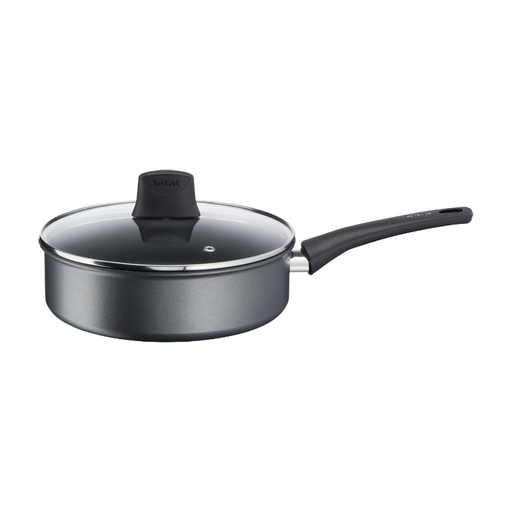
Why it suits this profile: The 24 cm diameter and 1.3 kg weight make this model practical for everyday portions and smaller kitchens. According to the product specification, the pan is suitable for induction, gas, electric, ceramic and halogen cooking.
The product specification states that it has a glass lid, an oven limit of 175 °C and a titanium-reinforced non-stick coating. This makes the key usage limitations clear.
24 cm diameter, glass lid, Thermo-Signal indicator and 2-year manufacturer’s warranty according to the product information.
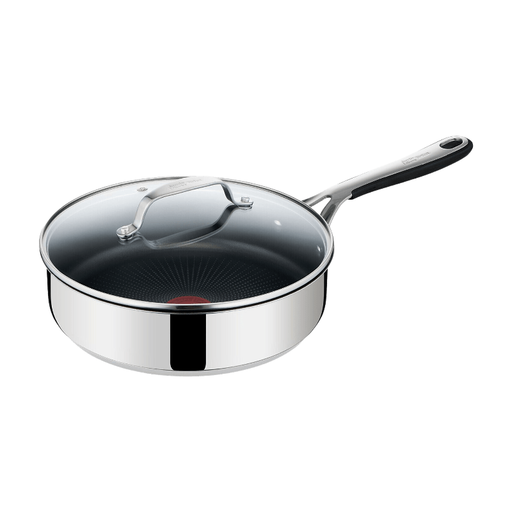
Why it suits this profile: This sauté pan with lid has a capacity of 3.2 litres and is designed for browning, braising and family meals. According to the product description, the pan can be used on all common types of hob.
The specifications state a maximum load of 2 kg, a recommended fill limit of approximately 2.5 litres and oven use subject to the specified conditions. This helps prevent overfilling and spills.
3.2-litre capacity, glass lid, induction compatibility, oven-safe design and dishwasher-safe construction according to the product information.
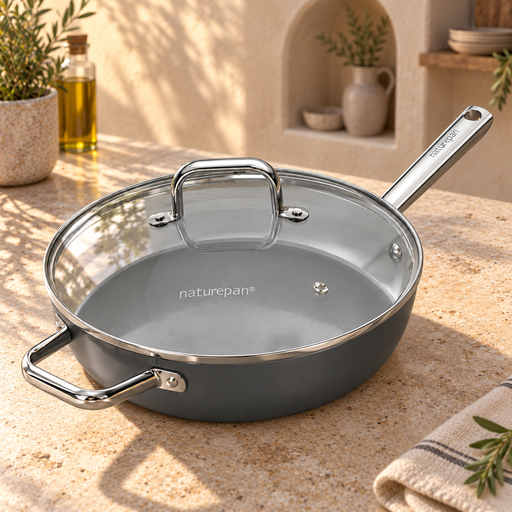
Why it suits this profile: The high sides and 28 cm diameter are practical for casseroles, sauces and one-pot meals for several people.
The product information states an oven limit of 260 °C and compatibility with induction, gas, ceramic and electric cooking, as well as a suitable lid. Do not use the lid in the oven.
28 cm, high sides, ceramic coating according to the manufacturer and dishwasher-safe construction according to the product specification.
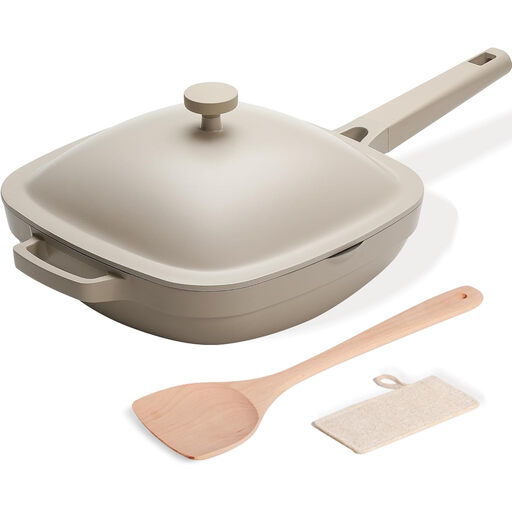
Why it suits this profile: The 3.8 quart capacity, pouring spouts on both sides and included wooden spatula make it suitable for stir-frying, braising and meal prepping.
The product specification clearly states that the pan is not dishwasher-safe or oven-safe. If you are happy to hand wash it and use it on the hob, you know exactly what to expect in advance.
3.8 quart capacity, Ti-Ceramic coating according to the manufacturer, lid and accessories included, suitable for various hobs.
We have compiled a complete, up-to-date list of products that fully meet these strict selection criteria and the applicable European safety regulations.
For two people, 24 or 25 cm is often sufficient. For families and larger portions, a 28 cm sauté pan offers more cooking space. However, check that the base fits the cooking zone on your induction hob.
This varies by model. Some ceramic-coated pans are oven-safe up to a specified temperature, while other models must not be used in the oven at all. Also check whether the lid needs to be removed. Never use a higher temperature than the manufacturer specifies.
Do not leave the pan empty on high heat for extended periods. Use wooden, silicone or nylon spatulas, allow the pan to cool before washing it and avoid abrasive sponges. Even when a pan is dishwasher-safe, hand washing according to the product information can help preserve the coating and appearance for longer.
