
Host with a large oven dish
You want to make one sausage casserole for several guests, so you’re particularly interested in the internal dimensions and the space around the shelves. The Consumers’ Association recommends measuring your own oven dish.


Choose an oven that will fit your own oven dish. A built-in fan oven may suit a suitable housing space and let you cook on several levels, while a freestanding oven is an option if a built-in model isn’t possible. A combi microwave is worth considering if you also regularly want to reheat food; check the internal dimensions and oven functions of each model. The cooking time or a browned top doesn’t prove that raw sausage is cooked through: follow the recipe and check the core temperature if needed.
You want to make one sausage casserole for several guests, so you’re particularly interested in the internal dimensions and the space around the shelves. The Consumers’ Association recommends measuring your own oven dish.
You have room on your worktop but no suitable housing space for a built-in oven. As well as space for your dish, consider where the oven will go and how much clearance it needs for heat to escape, as advised by the Netherlands Fire Service.
You want to cook oven dishes and reheat food regularly. The Consumers’ Association describes a combi microwave as an appliance with both a microwave function and a fan-oven function; assess each function separately to see how well it suits your needs.
Choose this when: you have a suitable housing space and your oven dish fits. A fan oven can be useful if you also want to cook on another level.
Things to consider: check the housing dimensions and ventilation separately; a built-in model may need to be installed.
Choose this when: you don’t have space for a built-in oven but do have a suitable spot on your worktop.
Things to consider: measure the internal space and allow for the clearance needed to let heat escape.
Choose this when: you want to reheat or defrost food regularly as well as bake.
Things to consider: check that the oven settings and shelf space are suitable for your dish; a microwave function doesn’t remove the need to check.
| What to consider | What should you check? | Who should pay extra attention? |
|---|---|---|
| Will your oven dish fit? | Measure your own dish and compare it with the internal dimensions and available shelf heights. The capacity in litres alone doesn’t tell you whether your dish will fit. | If I’m making one large dish for friends, I want to be sure it will physically fit in the oven. That’s why around 36% of consumers put having enough space for their dish at the top of their list of purchasing concerns. |
| Cooking through and oven settings | Check the available oven settings and follow the recipe. The Netherlands Nutrition Centre recommends a minimum temperature of 75 °C for meat; use a meat thermometer in the centre if needed. | If I’m cooking raw sausage, I don’t want to rely only on the timer or a browned top. Around 29% of consumers prioritise being able to check how food is cooked and whether it’s cooked through. |
| Positioning and ventilation | For a built-in oven, check the housing dimensions and installation requirements. For a freestanding model, check that you have enough space and room for heat to escape. | If my kitchen doesn’t have a suitable housing space, a freestanding appliance still needs to sit safely on the worktop. Around 21% of consumers put available space and positioning first. |
| Functions and energy use | Decide whether you’ll actually use a microwave function. Compare energy use per cooking cycle only for appliances and cooking methods where this information applies. | If I also use my oven to reheat food regularly, I want to know which functions I really need. Around 14% of consumers consider versatility and energy use among their main purchasing concerns. |
The stated capacity doesn’t tell you whether your oven dish will fit between the walls and shelves.
Measure the largest dish you plan to use and compare it with the model’s internal dimensions.
If your dish doesn’t fit, you may need a different one.
Models can differ in their oven settings and shelf heights, which affects the dishes and types of cooking they can accommodate.
Check that each model has the settings you need, such as conventional heat, fan cooking and grill, and measure the space available for your dish.
A built-in oven needs to fit its housing space and allow heat to escape; a freestanding appliance also needs to be positioned appropriately.
Check the installation requirements and any installation costs before choosing a model.
A built-in oven may need to be installed; the cost depends on the service you choose.
A grill mainly heats food from above. The colour of the top doesn’t confirm that raw sausage has been heated through sufficiently in the centre.
Follow the cooking instructions and, if needed, check the centre with a meat thermometer. The Netherlands Nutrition Centre recommends a minimum of 75 °C for meat.
Bosch offers built-in ovens, including the HBA534BS3, for kitchens with a suitable housing space.
Inventum offers freestanding fan ovens, including the OV457B, for anyone looking for an alternative to a built-in model.
Samsung offers combi microwaves, including the MC35R8058CG/EN, for anyone who wants to combine oven cooking with reheating.
This selection of Joybuy products includes freestanding ovens and built-in models. Measure your oven dish and check each appliance’s positioning requirements and functions before choosing.
 No image available
The dual zone may be useful if you’re looking for a model with separate cooking zones; check that your oven dish will fit inside.
The product name lists 23 L, 15 programmes, two cooking chambers and an LED touchscreen.
 No image available
A freestanding fan oven to compare if you’re not looking for a built-in model; measure the internal space to make sure your dish will fit.
The product name lists 35 L, a thermometer, a four-level oven rack and an LED display.
 No image available
A freestanding model to consider if you don’t want a built-in oven; check you have enough worktop space and keep the ventilation openings clear.
The product name lists 65 L, 2000 W and a black finish.
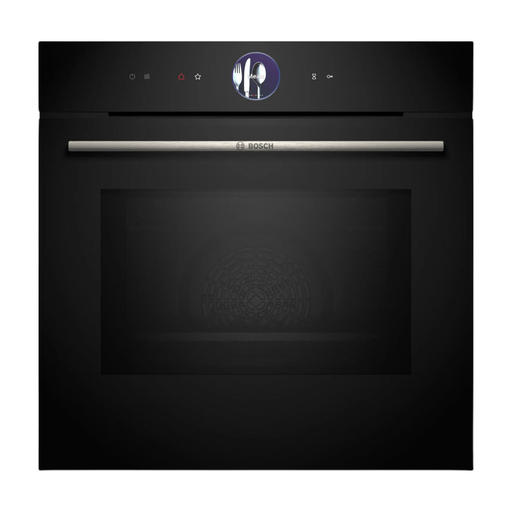 No image available
This may suit you if you’re looking for a built-in model and also want to consider using a microwave; check the housing space and the oven functions you need.
The product name lists 71 L, 3D Hot Air, pyrolytic cleaning and Home Connect.
 No image available
A built-in model to compare if you have a suitable housing space; also measure the space for your dish and check the installation requirements.
The product name lists 71 L, 3D Hot Air and a stainless-steel finish.
The Netherlands Nutrition Centre recommends inserting a meat thermometer into the centre of the meat and advises a minimum temperature of 75 °C. The colour of the top or the cooking time doesn’t replace this check.
Follow the recipe and the oven’s instruction manual. According to the Netherlands Nutrition Centre, some oven dishes can go into the oven without preheating. If you’re cooking raw sausage, check that it’s cooked through too, rather than relying on the cooking time alone.
For a built-in oven, follow the installation instructions and make sure heat can escape. The Netherlands Fire Service also recommends regularly removing dust from the space around built-in appliances.
According to the NVWA, electrical products must carry the CE mark. Check the mark on the individual appliance; the product name alone doesn’t confirm that this check has been carried out.
No. The European Commission lists exceptions to the scope of energy labelling for household ovens, including small and portable ovens. Compare an energy label or energy use per cycle only when that information applies to the type of appliance in question.