
Vandaag of morgen in huis

Kwaliteit gegarandeerd

Welkomstaanbiedingen ontgrendelen: GRATIS bezorging | Tot 80% korting | Gratis 30 dagen JoyPlus-proefperiode
Download de app
A sandwich maker seems simple: put the bread in, close the lid and wait a few minutes. However, models vary considerably in ease of use, capacity and maintenance. A compact toasted sandwich maker is ideal for a quick lunch, while a contact grill or panini grill offers more space and power for vegetables, meat and thicker rolls.
If you only look at wattage or a low price, you may be in for some unpleasant surprises. Below, you’ll discover which features really matter and what type of sandwich maker is right for your household.
Higher power usually means an appliance can heat up more quickly, but it does not tell you everything about the cooking results. The shape of the grill plates, heat distribution and temperature control also play a part. A 700 to 850-watt sandwich maker can be perfectly suitable for standard toasted sandwiches. For thick paninis, meat or several consecutive cooking sessions, a contact grill of 1,000 watts or more is often more practical.
A sandwich maker with a non-stick coating is easier to clean, but the plates are not automatically scratch-resistant. Check whether the plates are removable, whether they are dishwasher-safe and what type of utensils are recommended. Do not use metal forks or knives on the coating. With fixed plates, you will generally need to clean the appliance with a damp cloth once it has cooled down; never immerse the housing in water.
A 3-in-1 sandwich maker with plates for waffles, sandwiches and grilling offers more possibilities, but it also often takes up more storage space. Interchangeable plates need to be stored somewhere, too. If you mainly make two toasted sandwiches at a time, you may get more use from a compact sandwich maker with fixed plates and vertical storage.
For a standard toasted sandwich, models rated at around 700 to 850 W are generally sufficient. An adjustable thermostat is particularly useful if you prepare a variety of ingredients. This allows you to tailor the heat more effectively to bread, paninis or vegetables. Basic sandwich makers usually have automatic temperature control, but often lack a separate temperature setting.
Also consider the difference between a toasted sandwich maker and a contact grill. A toasted sandwich maker usually has shaped plates that cut and seal the bread. A contact grill often has flat or ridged plates and is better suited to paninis and other ingredients.
A sandwich maker for 2 sandwiches is handy for a student, couple or small household. However, check the dimensions of the plates: two small triangular toasted sandwiches are not the same as two large croques. For families, a model for four sandwiches can save time, provided you have enough worktop and storage space.
With a panini grill, the cooking surface is more important than the number of sandwiches. A floating hinge can adjust to the thickness of the roll. Some models also open to 180 degrees, allowing you to use them as a tabletop grill.
Pay attention to these practical points:
Also check whether a CE marking, Dutch-language manual and warranty information are available. In the European Union, consumers are generally entitled to a minimum legal guarantee of two years; additional rights may depend on the circumstances and national legislation.
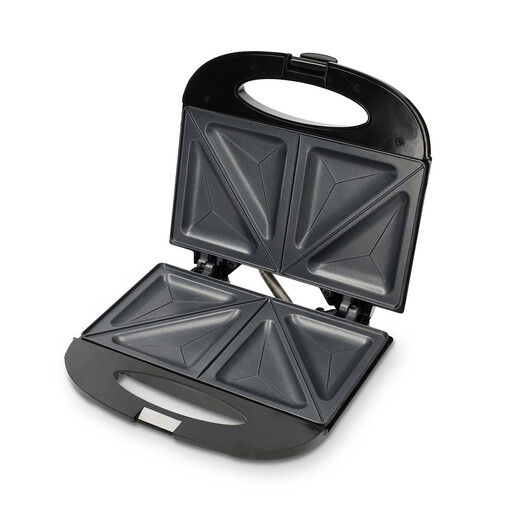
Why it suits this profile: This compact model is designed for classic triangular sandwiches and has automatic temperature control. That makes it suitable for students and households that want to get started without lots of settings.
The specifications state 750 W, a non-stick coating and a fixed sandwich format. You are not paying for features you do not need for simple toasted sandwiches.
750 W, automatic temperature control, cool-touch handle, non-stick plates and vertical storage.

Why it suits this profile: This sandwich toaster is designed for anyone who wants to prepare paninis, vegetables and meat as well as toasted sandwiches. The adjustable thermostat gives you greater control over different cooking tasks.
This model is not judged on power alone: the product information lists a floating hinge, adjustable temperature and a drip tray.
1,800 W, adjustable thermostat, non-stick plates, floating hinge and upright storage.
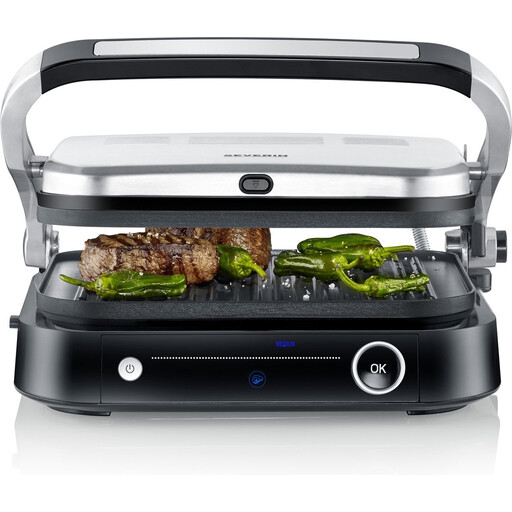
Why it suits this profile: For frequent grilling, this model offers automatic programmes, a manual mode and a maximum temperature of 230 °C. The grill plates are removable.
The removable plates and integrated drip tray address the cleaning issues that can arise with frequent grilling.
2,000 W, seven automatic programmes, manual mode, removable plates and dishwasher-safe grill plates according to the product description.
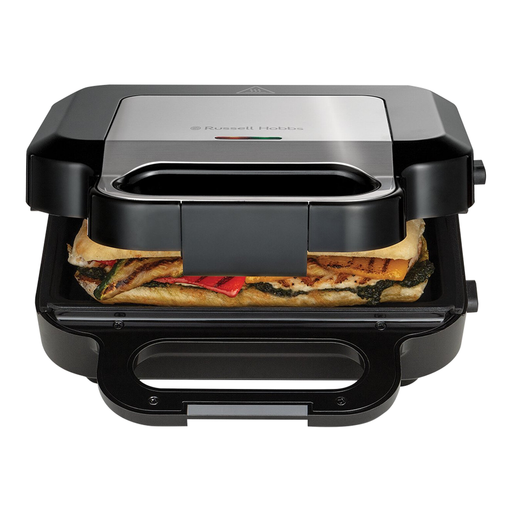
Why it suits this profile: With three sets of interchangeable plates, you can make sandwiches, waffles and grilled dishes. It is ideal for families looking to use one appliance for a range of snack occasions.
The multifunctionality is clearly delivered through six plates, rather than just a general claim about versatility. Do bear the additional storage space in mind.
Three sets of plates, removable plates, dishwasher-safe parts and vertical storage.
We have put together a complete, up-to-date list of products that fully meet these strict selection criteria and the applicable European safety requirements.
For classic toasted sandwiches, around 700 to 850 W is often sufficient. Choose a higher power rating if you also want to grill paninis, vegetables or meat, or if you prepare several batches in quick succession. Always consider the plate size and temperature control alongside the wattage.
Switch off the appliance, unplug it and allow the plates to cool completely. Wipe fixed plates clean with a soft, damp cloth. Removable plates should only go in the dishwasher if the manufacturer states that they are dishwasher-safe. Do not use an abrasive sponge, metal object or large amount of water.
The lifespan depends on use, storage and maintenance. A model with fixed plates has fewer loose parts, while removable plates can make cleaning easier. Follow the instructions, prevent scratches to the coating and store the appliance in a dry place. The legal guarantee for consumers is generally a minimum of two years, but this is separate from the appliance’s actual lifespan.
