
Vandaag of morgen in huis

Kwaliteit gegarandeerd

Welkomstaanbiedingen ontgrendelen: GRATIS bezorging | Tot 80% korting | Gratis 30 dagen JoyPlus-proefperiode
Download de app
A sandwich maker may seem like a straightforward purchase, but the differences between models can be significant. Do you only want to make toasties occasionally, or would you also like to prepare paninis, vegetables, meat and waffles? A compact toastie maker may be enough for one household, while a contact grill offers more space and power.
Marketing copy often focuses on speed, non-stick coatings and multifunctionality. Always check the technical specifications as well. This helps you avoid buying an appliance that is difficult to clean, does not offer enough space or ends up awkwardly stored in the cupboard after use.
A higher wattage usually means that an appliance can use more electrical power while heating up. On its own, it does not indicate how evenly the plates heat up or how large the cooking surface is. A 750-watt sandwich maker can be perfectly suitable for two toasties, while a larger electric grill needs more power for paninis or meat.
As well as the wattage, look at:
A 3-in-1 sandwich maker may sound appealing, but check which plates are actually included. Some models combine a toastie maker with a waffle maker, while others also include grill plates. If the plates are separate or interchangeable, it is important to check whether they are removable and dishwasher-safe.
An appliance with fixed plates is often simpler in design, but offers less variety. If you mainly make toasties, you do not always need to pay extra for additional plates.
According to the product description, a sandwich maker with a non-stick coating is designed to make food easier to remove and reduce cleaning. This does not mean that the plate is maintenance-free. Use wooden, plastic or silicone utensils, and avoid knives, forks and scouring pads.
Also check whether the plates are removable. With fixed plates, you usually need to wait until the appliance has cooled completely before cleaning the surface with a damp cloth. The housing, plug and cable must not be immersed in water.
For one or two people, a compact model is often sufficient. An appliance for two sandwiches is practical for a quick breakfast or light lunch. Do not just look at the number of sandwiches; consider the shape of the plates too. Triangular plates cut and seal the filling all the way around. Flat plates are better suited to paninis, ciabattas and different types of bread.
A contact grill with a floating hinge can adjust to thicker foods. With a model that opens to 180 degrees, you can use both plates as a tabletop grill. However, this requires additional worktop space.
A basic sandwich toaster often uses a fixed temperature and an indicator light. This is straightforward for toasties. An adjustable thermostat gives you more control when you also want to prepare vegetables, meat or different types of bread.
For regular grilling, models from around 1,000 watts are often more practical, but always compare this with the size of the plates. According to the product specifications, the Rommelsbacher ST 1800 has a power rating of 1,800 watts, an adjustable thermostat and a floating hinge. The Philips HD2331/90 uses 750 watts and is specifically designed for classic, triangular toasties.
Look for a cool-touch handle, non-slip feet and a locking mechanism. These features make opening, closing and storing the appliance more convenient, but the plates remain hot during use. An indicator light generally shows whether the appliance is heating up or ready; check the manual to find out exactly what the lights mean.
Vertical storage is useful in a Dutch kitchen with limited cupboard space. Also check the cable length and whether there is a cable storage facility. Under European consumer rules, a statutory guarantee of at least two years generally applies; additional terms may vary by retailer or manufacturer.
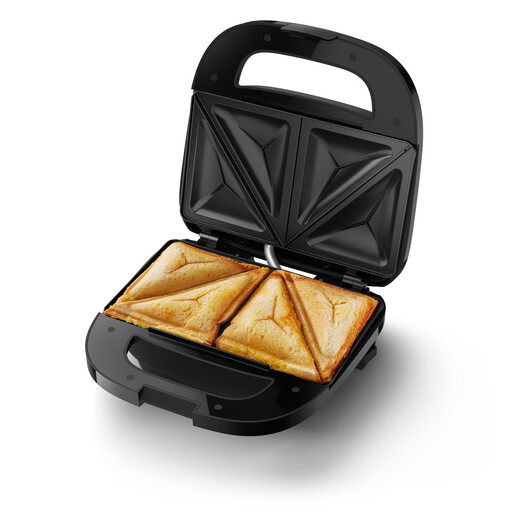
Why it suits this profile: This model is designed for two classic, triangular toasties. It is easy to operate and can be stored vertically.
The product specifications list 750 watts, non-stick plates and Cut & Seal plates. You are not paying for separate grill or waffle plates that you may not use.
Capacity for two sandwiches, 750 watts, non-stick coating and vertical storage.

Why it suits this profile: This is a contact grill for households that want to prepare paninis, vegetables and meat as well as sandwiches.
The specifications mention an adjustable thermostat, a floating hinge and a drip tray. This means the appliance is not limited to fixed triangular toasties.
1,800 watts, adjustable temperature, non-stick plates and upright storage.
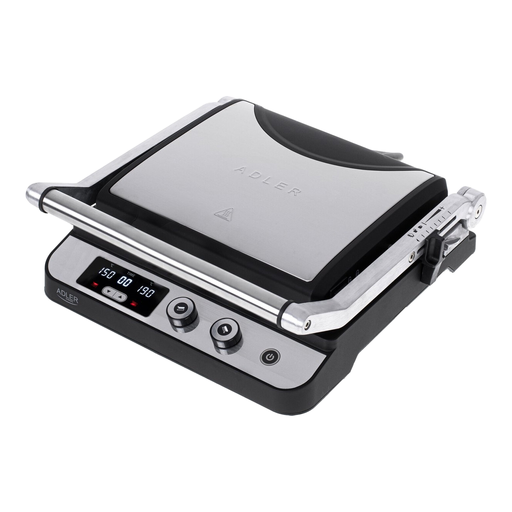
Why it suits this profile: The large grill is designed for those who regularly prepare different ingredients and want to use several cooking methods.
The product information lists two sets of interchangeable plates, a digital timer and separate temperature controls for the upper and lower plates.
Up to 3,000 watts of maximum power, opens out into a tabletop grill, timer from 1 to 99 minutes and dishwasher-safe plates according to the product description.
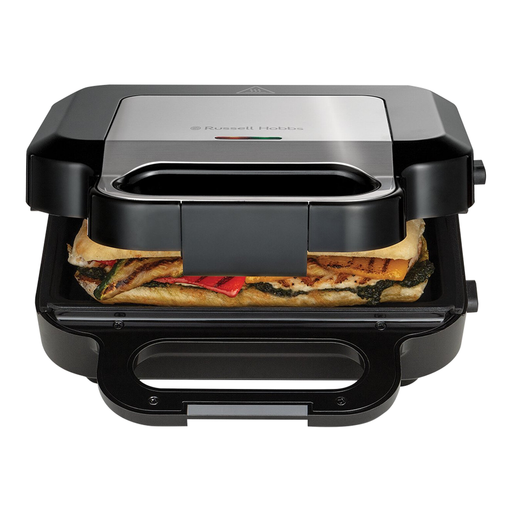
Why it suits this profile: This model combines sandwich plates, waffle plates and grill plates for households that want to use one appliance for several snacks.
According to the product specifications, three sets of removable plates are included. This makes it clear which functions are part of the purchase.
Three plate sets, removable plates, dishwasher-safe parts and vertical storage according to the product description.
We have put together a complete, up-to-date list of products that fully meet these strict selection criteria and the applicable European safety regulations.
Not always. A classic toastie maker often has shaped plates for two triangular sandwiches. A contact grill usually uses flat or ridged plates, making it better suited to paninis, vegetables and meat. Check the shape of the plates and whether the lid can move to accommodate different thicknesses.
First unplug the appliance and allow it to cool completely. Remove loose plates and drip trays if the manual permits this. Wipe fixed plates clean with a soft, slightly damp cloth. Do not use metal objects or abrasive products, and never immerse the housing in water.
Consumption depends on the power rating and how long the appliance is used. A 750-watt model theoretically uses 0.75 kilowatt-hours during one hour, but a sandwich maker is usually switched on for only a few minutes. A more powerful contact grill may heat up faster, but can require more power during use. Consider how often you will cook and which functions you need, rather than looking at the wattage alone.
