
Vandaag of morgen in huis

Kwaliteit gegarandeerd

Welkomstaanbiedingen ontgrendelen: GRATIS bezorging | Tot 80% korting | Gratis 30 dagen JoyPlus-proefperiode
Download de app
A sandwich maker seems like a simple appliance: put the bread in, close the lid and wait for a hot toastie. But models vary considerably in how easy they are to use and clean, and in how versatile they are. A cheap appliance may prove less convenient if you cook every day or have limited storage space.
Look out for these common pitfalls:
A power rating of around 700 to 800 watts suits many compact models for toasties and sandwiches. The Melissa Sandwich Maker, for example, has a 750-watt rating, as does the Philips HD2330/90. The Aigostar Panini Maker has a power rating of 800 watts.
Higher wattage is most useful if you want to cook thicker panini, meat or vegetables. The Melissa Panini/Table Grill, for example, has a 1600-watt rating and an adjustable thermostat. This gives you more control when cooking different ingredients. Bear in mind, though, that a higher wattage can also mean greater energy use if you run the appliance for a long time.
A sandwich toaster with fixed triangular plates is designed for classic toasties. It divides the filling into portions and gives the bread its familiar shape. A sandwich maker with flat or ridged plates is better suited to panini, sandwiches and grilled ingredients.
Check:
On a 3-in-1 sandwich maker, interchangeable plates are handy for waffles, sandwiches and grilled dishes. The Russell Hobbs Creations 3-in-1 comes with three sets of plates, including sandwich, waffle and grill plates. According to the product description, the plates are removable and dishwasher-safe. Always check the manual and product information for the specific model before use.
If you live in student accommodation or have a small kitchen, a compact sandwich maker is often more useful than a large contact grill. A locking mechanism and the option to store it upright can make all the difference when you need to fit it in a cupboard.
A flexible hinge is useful for panini and grilled dishes. The Melissa Panini/Table Grill has what is known as a floating hinge, which, according to the product specifications, adjusts the lid to the thickness of the food. It can also be opened to 180 degrees and used as a table grill.
A removable drip tray helps catch grease and crumbs. Unplug the appliance and wait until the plates have cooled completely before cleaning it. Never immerse the body, plug or cable in water.
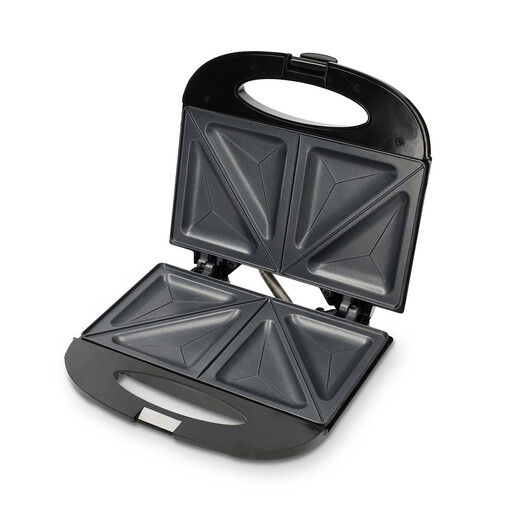
Why it suits this type of user: This model is designed for simple toasties and takes up little space thanks to its compact design. It’s easy to use, with an indicator light and automatic temperature control.
The specifications clearly state that the plates aren’t removable. That means you won’t pay for features you don’t need, but you will have to wipe the plates clean.
750 watts, triangular sandwich plates, non-stick coating, cool-touch handle, and upright or horizontal storage.
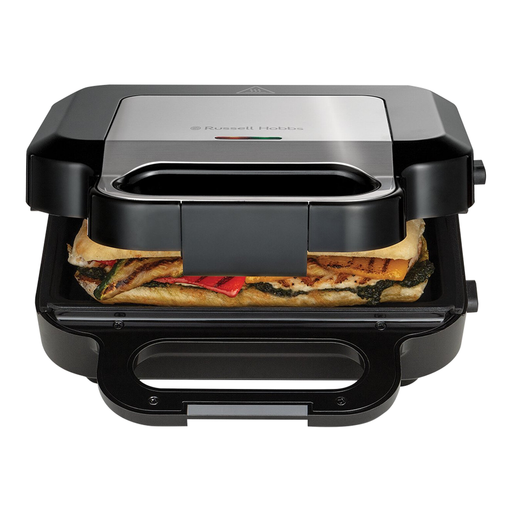
Why it suits this type of user: Households looking for one appliance to use for breakfast, lunch and sweet treats get three interchangeable sets of plates in a single unit.
The product information lists the number of plate sets and confirms that they’re removable and dishwasher-safe. This lets you check in advance whether cleaning will fit into your routine.
Sandwich, waffle and grill plates, removable design, dishwasher-safe plates and upright storage.
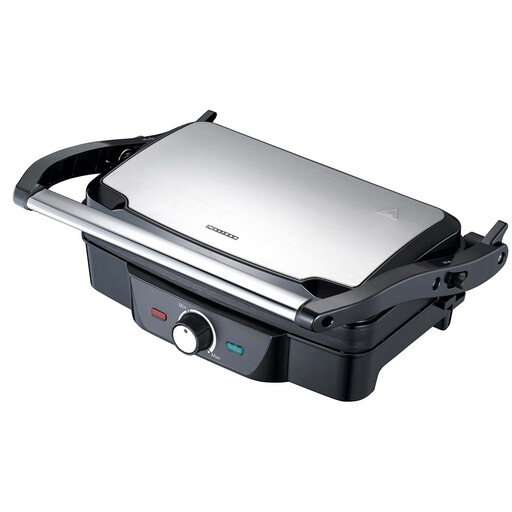
Why it suits this type of user: This is a sensible choice if you want to grill meat, fish, vegetables or larger quantities as well as panini.
Rather than focusing on wattage alone, you also get an adjustable thermostat, a 180-degree hinge and a drip tray for grease.
1600 watts, adjustable temperature, floating hinge, opens flat as a table grill, non-stick plates and removable drip tray.
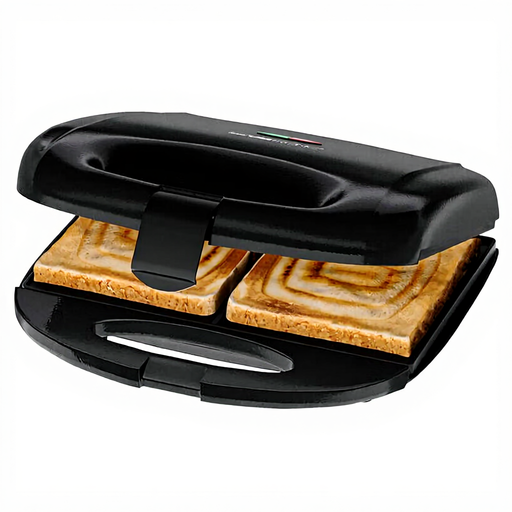
Why it suits this type of user: Its two-slice capacity and compact design make it ideal for a quick meal without taking up too much space on the worktop.
The product description spells out its capacity and safety features: two slices, a locking mechanism and a cool-touch handle.
Compact size, non-stick plates, quick heating, locking mechanism and cool-touch handle.
We’ve put together a complete, up-to-date list of products that meet these strict selection criteria and current European safety regulations.
Not always. A sandwich maker is often designed for sealed sandwiches or toasties, sometimes with triangular plates. A contact grill usually has flat or ridged grill plates and is suitable for panini, meat and vegetables. A multifunctional model can combine both functions.
First, unplug it and let it cool down completely. Remove crumbs with a soft cloth and wipe the non-stick plates with a slightly damp cloth. Don’t use metal utensils or abrasive cleaners. If the plates are removable, check the product information to see whether they’re dishwasher-safe.
Its lifespan depends on the build quality, how well you maintain it and how often you use it. Don’t leave the appliance heating up empty unnecessarily, avoid overfilling sandwiches and take care not to damage the non-stick coating. Also check the statutory guarantee and any additional manufacturer’s warranty. Consumers in Europe are entitled to statutory protection if a product is faulty.
