
Vandaag of morgen in huis

Kwaliteit gegarandeerd

Welkomstaanbiedingen ontgrendelen: GRATIS bezorging | Tot 80% korting | Gratis 30 dagen JoyPlus-proefperiode
Download de app
Fancy Samyang Buldak cheese ramen, but unsure whether to choose a cup, a pack of five or a large box? The packaging looks similar, yet portion size, preparation and cheese blend can vary considerably. This buying guide helps you quickly see which Samyang cheese ramen best suits your occasion and budget.
The creamy cheese flavour can make the sharp sauce taste rounder, but it does not automatically make the noodles mild. With Buldak products, the base remains a spicy chicken and chilli sauce. If you do not usually eat very spicy food, it is therefore better to start with a smaller portion or use only part of the sauce sachet.
A 70 g cup is convenient for one quick meal, while a pack of 5 or a box containing 40 portions may seem better value. Compare the price per portion, net weight and best-before date instead. A larger pack is particularly practical if you eat ramen regularly; otherwise, packs may be left unused.
Many Korean cheese ramen products contain wheat, soya, milk and sometimes sesame or celery. Always check the ingredients list on the packaging you receive, especially if you have an allergy or intolerance. Preparation also varies: some varieties are drained and mixed with sauce, while others are designed for a cup with hot water.
The standard Samyang ramen 140 g pack is intended as a generous individual portion. A multipack of five is suitable for keeping in stock in a student kitchen or household. A box containing 40 packs is more suitable for dedicated fans, sharing or regular bulk buying.
A 70 g cup contains fewer noodles and does not require a saucepan. This makes it useful at the office, in student accommodation or during a short break. Do check that you have access to enough hot water and that the cup is suitable for your chosen preparation method according to the label.
Pay attention to the product name. Samyang Buldak Cheese does not always refer to exactly the same recipe as Quattro Cheese, Cream Cheese or Carbonara. According to the product information, Quattro Cheese includes mozzarella and mixed cheese powders, among other ingredients. Other varieties combine cheese powder with chicken flavouring, cream powder or a creamy sauce.
The description “creamy” says nothing about the nutritional value or salt content. As a guide, some Samyang varieties contain approximately 405 to 430 kcal per 100 g and around 2.6 to 3.6 g of salt per 100 g, depending on the product. Use the current packaging as your guide.
With many spicy chicken cheese ramen products, you first cook the noodles, drain most of the water and then mix in the sauce and powder. The exact amount of water and cooking time varies from product to product. Always follow the instructions on the packaging and heat the product thoroughly.
Check the following when your order arrives:
The packaging of some products may change. The product information therefore states that the design you receive may differ slightly from the image.
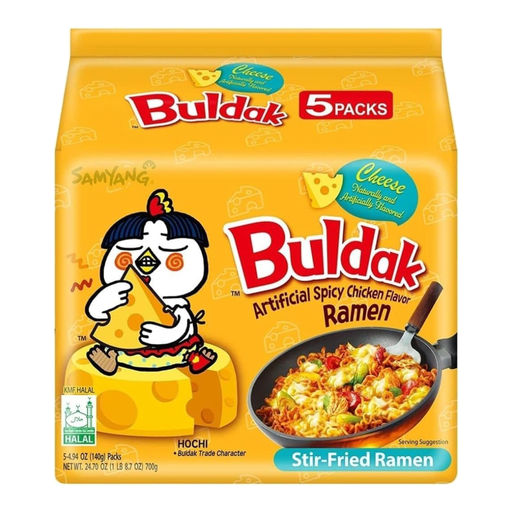
Why it suits this profile: Five individual portions offer an easy introduction to spicy noodles with a creamy cheese flavour, without committing to a large box straight away.
The pack size limits the risk of buying too much stock and makes it easier to assess the flavour and heat level first.
Five individual 140 g packs; ingredients and allergens are listed on the product page.
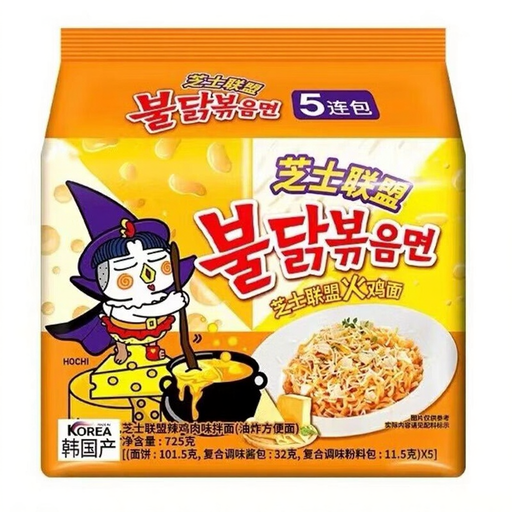
Why it suits this profile: This variety is aimed at shoppers looking for a distinctive cheese blend alongside the spicy base.
The product information details the composition of the cheese powders, so you do not have to rely solely on the word “cheese”.
Five 145 g portions; includes mozzarella and mixed cheese powder, plus nutritional values per 100 g.
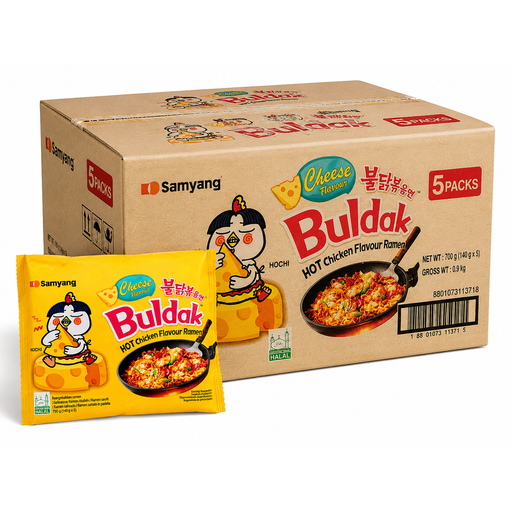
Why it suits this profile: A box of 40 portions is intended for regular eaters, sharing or building up a reliable supply.
The large pack prevents separate impulse purchases, but only makes sense if you will use all 40 portions within the stated shelf life.
Individual 140 g packs; 40 packs per box; nutritional information states approximately 430 kcal and 1,300 mg sodium per 100 g.
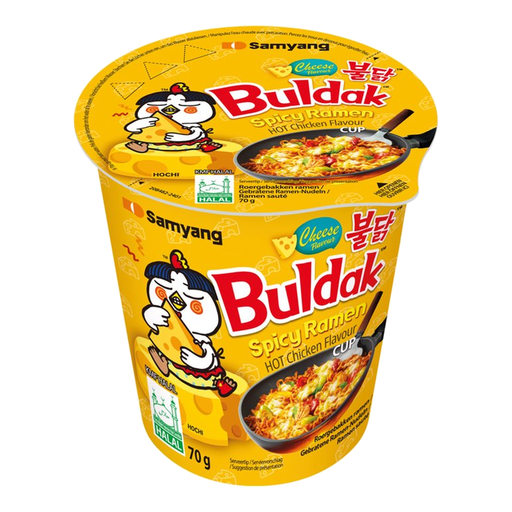
Why it suits this profile: The cup is practical for the office, on the go or in student accommodation where a saucepan is not readily available.
There is no need to buy a large supply or cooking accessories; according to the product description, hot water and the stated waiting time are all you need.
70 g cup format; cheese powder and cream powder; according to the product information, contains wheat, milk and soya.
We have put together a complete, up-to-date list of products that fully meet these strict selection criteria and the applicable European safety regulations.
The cheese and cream components can make the flavour feel milder, but the sauce remains spicy. The precise experience varies by variety and individual. Start with less sauce if you are not yet used to hot Korean instant noodles.
Always check the best-before date on the packaging. Unopened instant ramen should generally be stored in a cool, dry place away from moisture and heat. Do not use a pack if it is damaged.
A cup is smaller and is prepared with hot water. A 140 g pack contains a larger portion and is usually cooked in a saucepan before being mixed with sauce. A cup is practical for a quick snack; for a full meal or keeping in stock, packs are often more suitable.
