
Vandaag of morgen in huis

Kwaliteit gegarandeerd

Welkomstaanbiedingen ontgrendelen: GRATIS bezorging | Tot 80% korting | Gratis 30 dagen JoyPlus-proefperiode
Download de app
Fancy Samyang Buldak ramen, but not sure whether to choose cheese, carbonara, a cup or a large box? The differences are not just about flavour. Portion size, preparation method, allergens and shelf life also determine whether your purchase is right for your needs.
The product information below is based on the listed product specifications. Always check the label when your order arrives, as ingredients, nutritional values and packaging may change.
With Samyang cheese ramen and Buldak carbonara ramen, cheese or milk powders create a creamier flavour profile. According to the product description, this gives the sauce a milder character, but the product remains a spicy Korean instant noodle. If you have little experience with hot food, it may be better to start with a smaller portion or use only some of the sauce.
A box containing 40 portions may seem convenient for households, student accommodation or businesses, but it requires sufficient dry storage space. Check the date on the packaging too. With individual packets, you can use your stock gradually; with a large box, the overall shelf life is more important.
A Samyang multipack containing five portions is often a more manageable choice for home use. A cup is convenient when you do not want to use a pan, colander or extra bowl.
Do not just look for words such as “cheese”, “carbonara” or “double spicy”. Also check:
The origin may differ between some variants. For example, the product information lists South Korea for certain items, while other variants are produced in China. This does not, in itself, tell you everything about the flavour, but it is relevant information when making a purchase.
A 130 to 140-gram packet is intended as an individual portion. A 70 or 80-gram cup is more compact and suitable as a light meal or snack. For a household, a five-pack can be a practical middle ground. For bulk buying, boxes of 40 packets make more sense, provided you use the ramen regularly.
Compare the price per portion rather than just the price per pack. A large box only offers a financial advantage if you use the contents before the stated date.
A cup generally requires hot water and a short waiting time. This is convenient at the office, in student accommodation or when you are out and about. A packet usually needs to be prepared in boiling water and then drained. With many Buldak variants, you then leave a small amount of water in the pan before mixing in the sauce and powder.
Always follow the instructions on the label. The preparation method may vary between variants. For example, the 130-gram carbonara variant states that you should cook the noodles, drain most of the water and briefly mix or heat the sauce.
Many Samyang products contain wheat or gluten, soya and, in cheese or carbonara flavours, milk. Some listings also mention sesame or celery. Check the full ingredients list if you have an allergy or intolerance. Also look at the salt, fat and energy content per 100 grams. In the available product information, the energy content of various variants is around 400 to 430 kcal per 100 grams, but the values differ depending on the recipe and packaging.
Terms such as “chicken flavour” describe a flavour profile. They should not be interpreted as a guarantee of the exact ingredients or suitability for a particular diet. Always check the current label for this information.
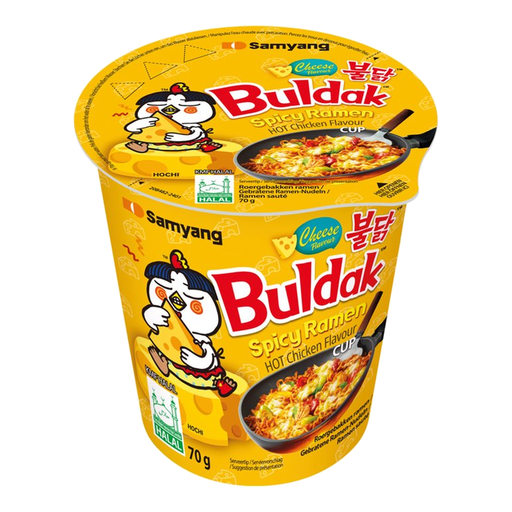
Why it suits this profile: The 70-gram cup is a manageable option if you are trying spicy Samyang ramen for the first time or are looking for a compact snack.
The portion and preparation method are clearly defined: add hot water and follow the instructions on the cup. Do check the listed milk, soya and wheat allergens.
70 g cup; cheese powder and cream powder have been added, according to the product information.
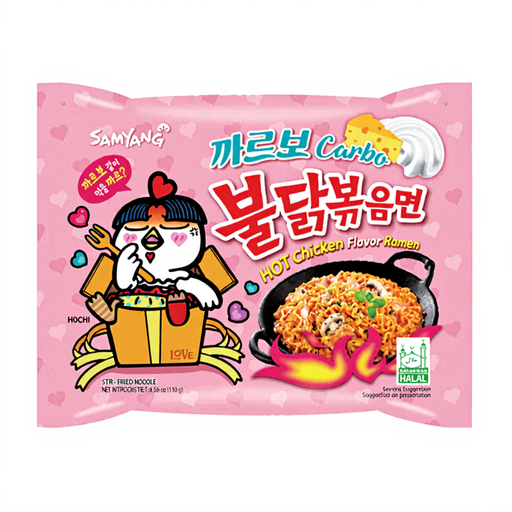
Why it suits this profile: Ideal if you want to combine the signature heat with a creamy carbonara flavour and a substantial noodle texture.
The product information lists separate sauce and powder mixes. This allows you to build up the flavour gradually, although the heat remains.
130 g per portion; according to the ingredients list, the powder includes mozzarella powder and butter powder, among other ingredients.
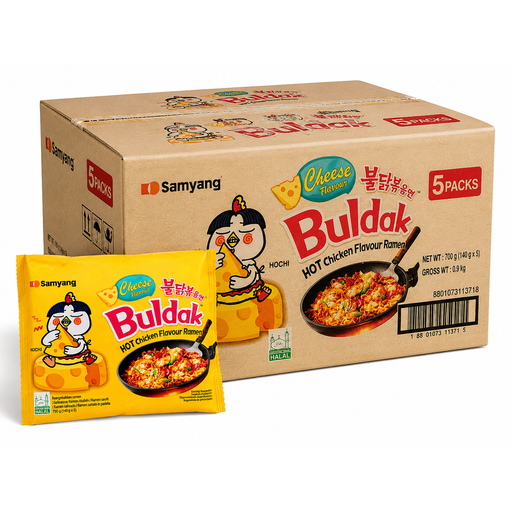
Why it suits this profile: A box containing 40 individual portions is ideal for households, hospitality venues, offices and businesses that regularly buy instant ramen.
The quantity per box is clear in advance: 40 packs of 140 g. This means you can calculate the price per portion and the storage space required beforehand.
40 individual packs; 140 g per portion; cheese variant with sauce and Korean instant noodles.
We have put together a complete, up-to-date list of products that fully meet these strict selection criteria and the applicable European safety regulations.
Follow the preparation instructions on the packaging. With a packet variant, you usually cook the noodles in water, drain them and mix them with the sauce. With a cup, you generally add hot water up to the indicated line. Do not use damaged packaging and heat the product thoroughly according to the label.
Would you like to adjust the heat level? Start by adding some of the sauce and taste it before adding more. You can also add ingredients such as egg, spring onion or vegetables to make the meal more substantial. However, this will change the final flavour and nutritional value.
That depends on your tolerance for spicy food. Cheese and carbonara variants have a creamier flavour profile, but are still sold as spicy noodles. A 70 or 80-gram cup is a practical way to start with a smaller portion.
Always check the best-before date on the packaging and store the noodles in a cool, dry place away from direct sunlight. An opened pack should be sealed properly. With a multipack, it is sensible to use the oldest packets first.
According to the product descriptions, the cheese variant focuses on a savoury, creamy cheese flavour. Buldak carbonara ramen combines the spicy sauce with a carbonara-style powder mix, which various listings state contains milk, mozzarella or butter powder. Check the ingredients and allergens for the specific pack before ordering.
