
Vandaag of morgen in huis

Kwaliteit gegarandeerd

Welkomstaanbiedingen ontgrendelen: GRATIS bezorging | Tot 80% korting | Gratis 30 dagen JoyPlus-proefperiode
Download de app
Fancy Samyang Buldak cheese ramen, but not sure whether to choose a cup, a pack of five or a large multipack? The packaging can look very similar, while the contents, preparation method and portion size vary. Terms such as “cheese”, “cream cheese” and “quattro cheese” don’t necessarily tell you how strong the cheese flavour is or how spicy the noodles will be.
Use this practical buying guide to compare Samyang Buldak cheese ramen, other spicy Korean noodles and multipacks using verifiable product information.
A cup such as Samyang Hot Chicken Ramen Cup Cheese 70 g is designed to be made with hot water. It’s handy at work, during a study session or on the go. A 140 g pack usually needs to be boiled, drained and mixed with the sauce and powder.
So, before you buy, check:
The cheese can round out the flavour of the spicy sauce, but it doesn’t automatically make the noodles mild. These products are described as spicy chicken ramen. The exact experience depends on how much sauce you use.
Want to adjust the flavour yourself? Start with some of the sauce, then add more later. This is especially useful if you’re not sure how you’ll react to these spicy noodles.
Packaging can vary between markets. For example, South Korea is listed as the origin for some versions, while another product listing names China. So, check the current product page and the label on the pack you receive.
Also look for the best-before date, storage instructions and allergens. Product information may change if the manufacturer updates the recipe or packaging.
A 70 g cup is handy for a quick snack. According to the product description, the cup version is made by adding hot water. For several meals, 140 g packs or a multipack may be a better choice.
A pack of five is suitable if you eat cheese ramen occasionally. A box of 40 packs makes most sense for regular eaters, student households or stocking the cupboard. Compare not only the total price, but also the price per portion.
Preparation varies by product:
Always follow the instructions on the packaging. The preparation method affects how much water you use, which in turn affects the final flavour and texture.
Many of these Korean instant ramen products contain wheat or gluten. Depending on the version, they may also contain milk, soya, sesame, celery or egg. Samyang cheese ramen product listings mention wheat, soya and sesame, while the quattro cheese version also lists milk and celery.
If you have an allergy, always check the current label. Also look at the nutritional information per 100 g and per portion. Some listings give different values for different product versions, so the packaging is the best guide.
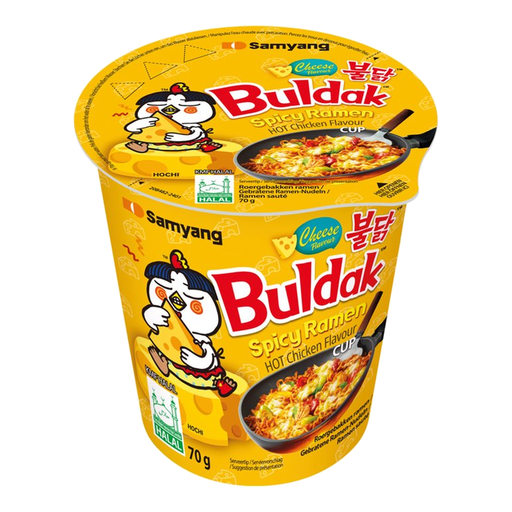
Why it suits this profile: The cup takes little preparation, making it a good way to try Samyang cheese ramen before committing to a large multipack.
The portion size and cup preparation method are clearly stated, so you’re less likely to buy a large pack that you can’t prepare straight away.
70 g per cup, made with hot water, with a combination of spicy chicken sauce and cheese powder according to the product description.
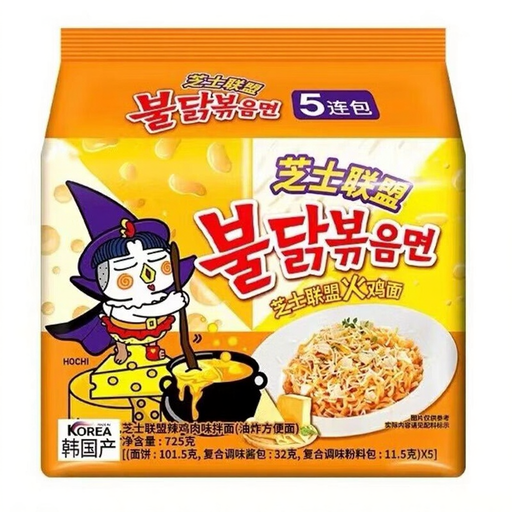
Why it suits this profile: This version is made for fans who want a pronounced cheese flavour alongside the heat, with five portions to keep at home.
The product information specifies a quattro cheese mix and a pack of five portions. Be sure to check the ingredients and allergens on the label you receive.
Five 145 g packs, with cheese in the sauce and powder according to the ingredients list, plus a boiled preparation method for a substantial meal.
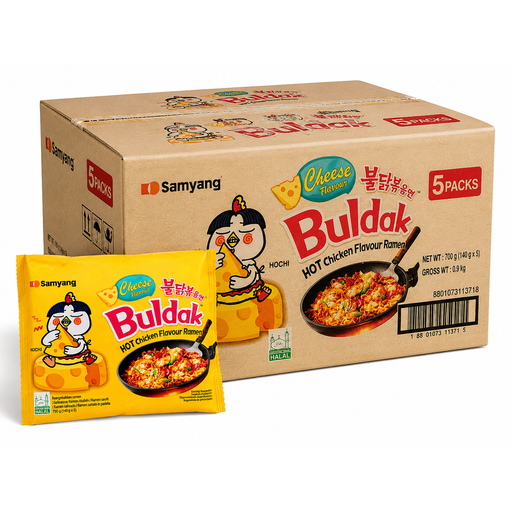
Why it suits this profile: A box of 40 portions is a good fit for households, snack fans and anyone who regularly makes spicy Korean instant ramen.
The quantity is clear upfront: 40 packs of 140 g. This makes it easier to estimate the price per portion and how much stock you’ll need compared with buying packs individually.
40 portions of 140 g, traditional pack preparation and a product listing that describes a spicy chicken sauce with a cheese flavour.
We’ve put together a complete, up-to-date list of products that meet these strict selection criteria and the applicable European safety regulations.
If a product contains milk, soya, sesame or gluten, take extra care to check the ingredients list. Even well-known brands can use different recipes for different versions.
The products are described as spicy chicken ramen with a cheese or cream cheese flavour. The cheese can make the flavour creamier, but the base is still spicy. Perceived heat varies from person to person and also depends on how much sauce you use.
Check the best-before date on the packaging. Store unopened noodles according to the product instructions, in a cool, dry place away from moisture and direct sunlight. Once opened, it’s best to prepare the contents straight away.
Compare the packaging type, net quantity, preparation method, ingredients, allergens and price per portion. Choose a cup for convenience, a pack of five for regular use or a large multipack if you eat the noodles often.
