
Vandaag of morgen in huis

Kwaliteit gegarandeerd

Welkomstaanbiedingen ontgrendelen: GRATIS bezorging | Tot 80% korting | Gratis 30 dagen JoyPlus-proefperiode
Download de app
If you are looking for Salomon walking shoes, you will quickly come across terms such as GTX, Contagrip, Advanced Chassis and Quicklace. These technologies can be useful, but they do not automatically tell you whether a shoe is right for your walk. A lightweight trail shoe performs differently from a high-cut trekking shoe. Waterproofing, fit and outsole profile also deserve careful consideration before you place your order.
This guide will help you compare Salomon hiking shoes based on how you use them, the terrain and the weather conditions.
Salomon GTX shoes and Salomon Gore-Tex walking shoes have a membrane that, according to the product information, provides protection against rain and moisture. This does not mean that your feet will stay dry in every situation. Water can enter through the collar, for example, while a warm, waterproof lining may feel less comfortable during intense trail running.
Choose GORE-TEX particularly for wet grass, rain, mud and changeable weather. For warm, dry walks, a more breathable model without a membrane may be more practical.
Deep lugs are useful on soft mud and loose woodland paths. On tarmac or hard paving, however, they may feel less smooth and wear out more quickly. An outsole designed for shoes for walking on rugged terrain is therefore not automatically suitable for everyday use in the city.
Pay attention to the type of rubber and the tread pattern. Contagrip outsoles are available in several different versions. Always check the product description rather than relying on the brand name alone.
A walking shoe that fits snugly at home may feel too tight during a long descent. Your feet can swell, and thick socks take up extra room. Too much space, on the other hand, can cause your feet to slide and lead to blisters.
Measure both feet at the end of the day. Allow for your walking socks and, with a mid- or high-cut model, also check the space around the ankle. Available sizes vary by model, such as 41 1/3, 42 2/3 or 44.
A GORE-TEX membrane indicates a waterproof construction in many Salomon waterproof shoes, according to the stated product information. Also check:
Do not use a washing machine, bleach or tumble dryer if the product instructions advise against it. Heat can damage materials and membranes. Allow your shoes to dry naturally, away from a radiator.
For muddy paths and technical trails, deep, well-defined lugs are generally more functional than a flat profile. According to the product information, the Salomon Speedcross 6 GTX has an aggressive Contagrip outsole for soft, loose and technical terrain. This makes this type of shoe interesting for trail running, but not necessarily for long stretches of tarmac.
For mixed routes, models such as the Salomon Ultra Flow GTX are designed to transition between road and trail. The product description mentions a mixed Contagrip outsole and a higher cushioned midsole.
A low-cut shoe generally offers greater freedom of movement. A mid- or high-cut model covers more of the ankle and can provide a greater sense of security on uneven paths. This is not a substitute for a good fit or correct walking technique.
Look out for systems such as:
If you carry a lot of equipment or walk multi-day routes, a higher, more supportive shoe may be beneficial. For light day walks, a low-cut model may be more comfortable and agile.
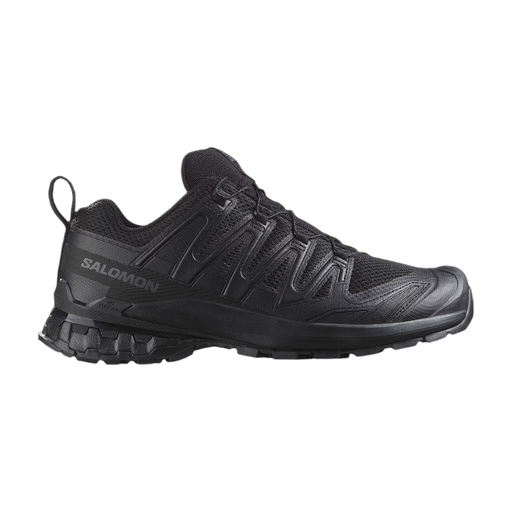
Why it suits this profile: A versatile choice for day walks, light hikes and recreational trail running on mixed terrain.
The product information lists both a GORE-TEX membrane and stability provided by 3D Advanced Chassis. However, check whether the low-cut fit offers enough ankle coverage for your route.
GORE-TEX, Contagrip outsole, Quicklace system and reinforced toe and heel areas according to the product description.
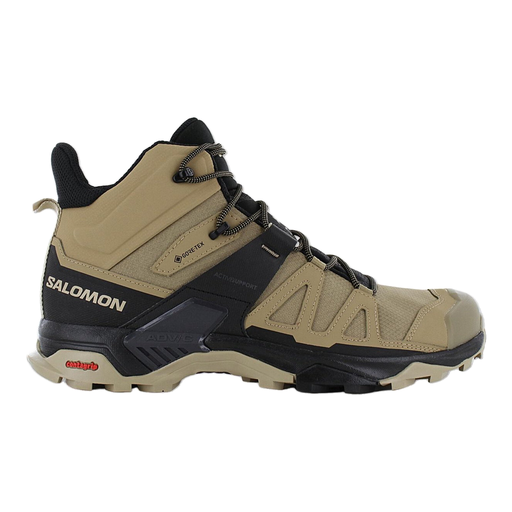
Why it suits this profile: Suitable for walkers looking for a mid-cut shoe for longer hikes, trekking and uneven terrain.
The higher construction means you do not have to rely solely on a low-cut trail shoe when greater ankle coverage is preferred. Check the size while wearing walking socks.
Mid-height design, GORE-TEX, Contagrip MA and EnergyCell midsole according to the product information.
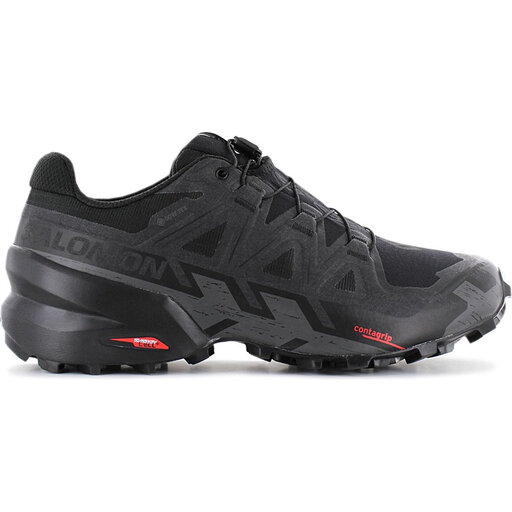
Why it suits this profile: Designed for trail runners and users who mainly walk on soft, muddy or technical paths.
The deep tread is more specialised for soft terrain than a flat walking-shoe outsole. If you walk on a lot of tarmac, a mixed outsole may be a better option.
GORE-TEX, aggressive Contagrip outsole, Sensifit and Quicklace according to the product description.
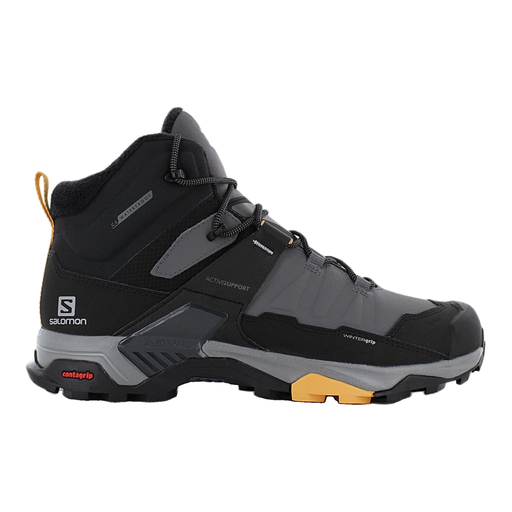
Why it suits this profile: For walkers looking for warmth, protection and grip during cold walks and winter conditions.
The Thinsulate lining and Winter Contagrip outsole are specifically listed for cold and slippery conditions. Do not use this model as a lightweight summer shoe.
Thinsulate insulation, waterproof construction, ADV-C Chassis and Winter Contagrip according to the product information.
We have put together a complete, up-to-date list of products that fully meet these strict selection criteria and the applicable European safety regulations.
They can be, depending on the model. A low-cut GTX shoe with a mixed outsole is better suited to commuting and light walks than a trail model with deep lugs. Also consider breathability and the additional weight of a waterproof membrane.
Their lifespan depends on walking distance, body weight, terrain, maintenance and storage. Pay particular attention to the tread, seams and cushioning. After use, clean off mud with a soft brush and lukewarm water. Allow the shoes to dry at room temperature and avoid direct heat.
Salomon offers models and size ranges for men’s walking shoes and women’s walking shoes. The right choice depends not only on the label, but above all on length, width, heel hold and toe room. Compare the size chart for the specific model and try the shoes on with the socks you wear when walking.
