
Vandaag of morgen in huis

Kwaliteit gegarandeerd

Welkomstaanbiedingen ontgrendelen: GRATIS bezorging | Tot 80% korting | Gratis 30 dagen JoyPlus-proefperiode
Download de app
A pair of Salomon walking boots could be suitable for woodland walks, hilly terrain or trail running. But it’s easy to pay too much for features you don’t need. If you focus mainly on appearance or a familiar model name, you could end up with a stiff fit, insufficient grip or soaking wet socks.
The main pitfalls are:
When choosing waterproof walking boots and GORE-TEX walking boots, start by checking the membrane, then look at the rest of the construction. According to Salomon’s product information, the X Ultra 4 Mid GTX, X Ultra 360 Mid GTX and Ultra Flow GTX feature a GORE-TEX membrane. It’s designed to act as a barrier against moisture, while the upper remains breathable, according to the product description.
Check the collar, tongue and seams too. Water can get in over the top if you walk through long grass or deep puddles. A low-cut model generally offers less protection than mid-cut walking boots. After a wet walk, let your boots dry at room temperature and avoid direct heat, such as a radiator. Heat can damage the materials and glue.
A rubber sole with a clearly defined tread is useful on wet woodland paths, gravel and uneven terrain. The models mentioned use a Contagrip sole. According to Salomon’s product information, the X Ultra 4 Mid GTX features Contagrip MA, while the X Ultra 360 Mid GTX uses All Terrain Contagrip.
These are verifiable product features, but “good grip” still depends on the surface, wear and your technique. You don’t need an extremely deep tread for paved cycle paths. For mud, loose stones and wet roots, a tread with sufficient depth is more practical. Check product photos and specifications rather than relying on a marketing term alone.
A mid-cut model covers more of your ankle than low-cut hiking shoes. This can be useful when carrying a rucksack over uneven terrain. According to the product information, the X Ultra 4 Mid GTX and X Ultra 360 Mid GTX are mid-cut models. The X Ultra 4 Mid GTX combines this design with an EnergyCell midsole, while the X Ultra 360 Mid GTX uses an EVA midsole, according to its description.
When choosing Salomon men’s walking boots, length isn’t the only thing that matters. Check that:
A boot that feels comfortable straight away isn’t always right for a long walk. Try walking around indoors first and check the returns policy before wearing the boots outside.
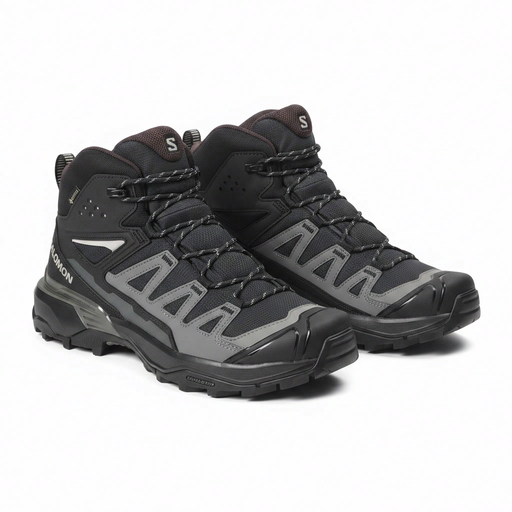
Why it suits this profile: A practical choice for regular walkers who don’t go on long mountain treks exclusively. The combination of a mid-cut design, GORE-TEX membrane and Contagrip sole is well suited to changeable British weather and mixed terrain.
The product description mentions not just water protection, but also reinforcement at the toe and heel. That means your choice relies less on a single marketing claim.
GORE-TEX, a mid-cut fit, All Terrain Contagrip and a relatively lightweight construction, according to the product specifications.
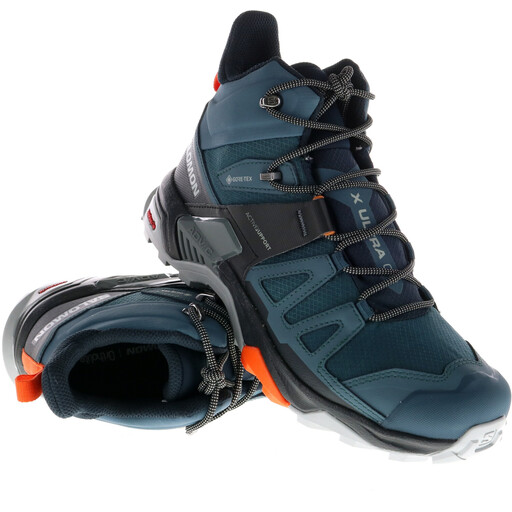
Why it suits this profile: Designed for walkers who regularly tackle more challenging paths, longer routes and uneven terrain. According to the product information, the model combines a mid-cut design with EnergyCell cushioning and Contagrip MA.
The choice is based on several specifications: GORE-TEX, EnergyCell, a mid-cut design and Contagrip MA. So you don’t have to rely on the appearance or model name alone.
Water-resistant GORE-TEX membrane, EnergyCell EVA midsole, mid-cut construction and Contagrip MA rubber, according to the product description.
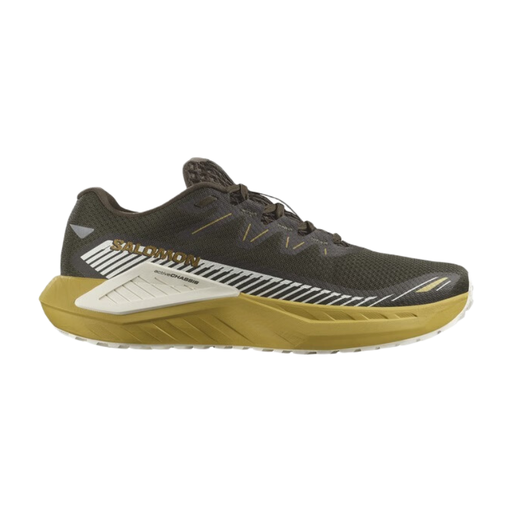
Why it suits this profile: Designed for people who combine walking with trail running or longer stretches on gravel and mixed terrain. This is a low-cut shoe, not a mid-cut walking boot, so freedom of movement is a priority.
The product information positions this model for gravel, trail running and walking. This makes it clearer which surfaces and activities it’s designed for than with a general-purpose outdoor shoe.
Active Chassis, Energy Foam and All Terrain Contagrip are listed in the product description; the mesh upper is designed to offer breathability.
Always check the available EU size on the product page. Salomon also offers half sizes, such as 45 1/3 and 47 1/3. These can be useful if a whole size feels too tight or too roomy. Ideally, try the boots on with your walking socks and allow extra room in front of your toes.
Remove mud with a soft brush and follow the care label. Several product descriptions recommend hand washing, not bleaching and air-drying. Lifespan depends on mileage, terrain, body weight, walking style and maintenance. Replace your boots when the tread is visibly worn smooth, the midsole has permanently compressed or the seams start to come apart.
If you want a shoe for switching between roads and trails, the Salomon Ultra Flow GTX may be a more appealing option than a sturdy hiking boot. If you’re looking for something lightweight, you could also browse lightweight men’s walking boots.
We’ve put together a complete, up-to-date list of products that meet these strict selection criteria and comply with the applicable European safety regulations.
According to the product information, models with a GORE-TEX membrane are designed to help protect against moisture. No shoe stays dry in every situation: water can get in through the collar, tongue or damaged seams. Proper care and the right socks are still important.
There’s no set lifespan. Intensive use on stones and tarmac causes more wear than walking on soft woodland paths. Check the tread, cushioning and seams regularly. As wear becomes more noticeable, grip and comfort decrease, regardless of the original specifications.
Choose mid-cut if extra ankle coverage and protection from dirt or wet grass are important to you. Low-cut models, such as some trail running shoes, generally offer greater freedom of movement and weigh less. The right choice depends on the terrain, the weight of your rucksack and your personal fit.
