
Vandaag of morgen in huis

Kwaliteit gegarandeerd

Welkomstaanbiedingen ontgrendelen: GRATIS bezorging | Tot 80% korting | Gratis 30 dagen JoyPlus-proefperiode
Download de app
Wet woodland paths, muddy hills and slippery winter routes call for different shoes than a walk along paved roads. Yet many Salomon shoes appear suitable for everything at first glance. This can lead to the wrong purchase: a trail running shoe that is too rigid for everyday walking, or a lightweight hiking shoe that does not provide enough support on technical terrain.
This guide helps you compare Salomon hiking and trail running shoes based on waterproofing, grip, stability, comfort and fit. The recommendations are based on verifiable product details, such as the type of membrane, sole construction, ankle height and available sizing.
Salomon GORE-TEX shoes are designed to keep moisture out, according to the product information for the relevant models. However, water can still enter through the opening around the ankle. Performance can also be reduced if the membrane, seams or upper material become damaged.
So do not just look for the words GORE-TEX. Also check:
Deep lugs are useful in mud, loose sand and soft woodland soil. On tarmac, they may feel less comfortable and wear down more quickly. A trail running sole is therefore not automatically the logical choice for commuting or long walks on paved paths.
If you mainly walk on routes in the Netherlands, it is better to consider the balance between grip and walking comfort. For hills, rocks and mud, shoes with good grip and a clearly defined lug pattern are more relevant.
A model may be technically suitable but still feel uncomfortable. A toe box that is too narrow causes pressure over long distances, while a heel that is too roomy can lead to blisters and slipping. Wear the socks you use for walking or trail running when trying shoes on.
For wider feet, the Salomon X Ultra 4 Mid Wide GTX is specifically described as a wide-fit version. Always check the current size chart and measure your foot length, especially if you are between sizes.
A GORE-TEX membrane features in several models, including the Speedcross 6 GTX, XA Pro 3D v9 GTX, X Ward Leather Mid GTX and X Ultra series. According to the product information, this membrane is designed to protect against rain and wet conditions.
Waterproof hiking shoes are particularly practical if you often walk in the rain, wet grass or mud. For warm summer days, a non-waterproof mesh shoe may feel more breathable. Think about how often you actually walk in wet conditions.
Contagrip soles are mentioned in the product descriptions of various Salomon models. Pay particular attention to the intended use:
Low-cut trail running shoes provide greater freedom of movement. Mid-cut models generally offer more coverage around the ankle. The product information for the Speedcross Peak GTX, X Ward Leather Mid GTX and X Ultra Mid models mentions a mid-height ankle or additional ankle support.
For long walks with a rucksack, a stable construction, sufficient cushioning and a protected toe box are important. For fast trail running, lower weight, a flexible roll-through and a secure heel fit often matter more. No model can replace a good fit or a gradual build-up of exertion.
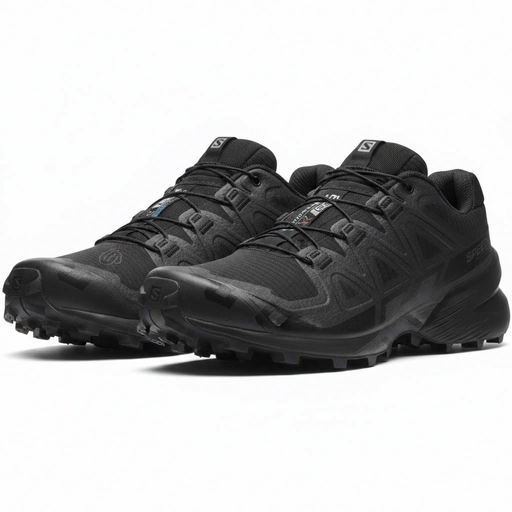
Why it suits this profile: A low-cut trail running shoe for those discovering unpaved paths and looking for a pronounced tread without a GORE-TEX membrane.
The product information mentions an aggressive Contagrip tread and a lightweight construction. This makes its intended use clearer: soft and technical trails, rather than extended periods on tarmac.
Synthetic mesh, EVA midsole, SensiFit system and a rubber sole with deep lugs.
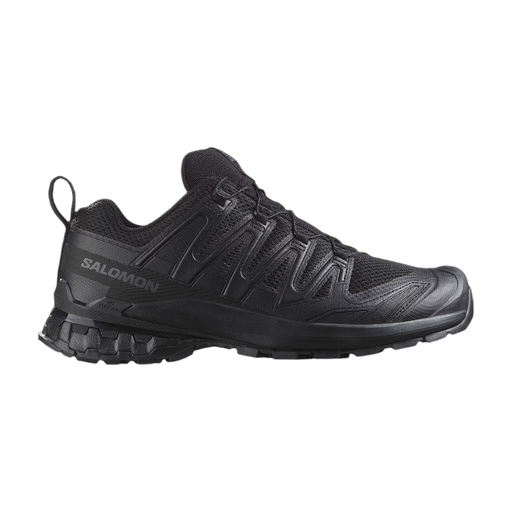
Why it suits this profile: For walkers and trail runners who want to combine water protection with stability on uneven routes.
The product information specifies both GORE-TEX and a 3D Advanced Chassis. You can therefore assess water protection and stability separately.
GORE-TEX membrane, Contagrip sole, reinforced toe and heel and Quicklace system.
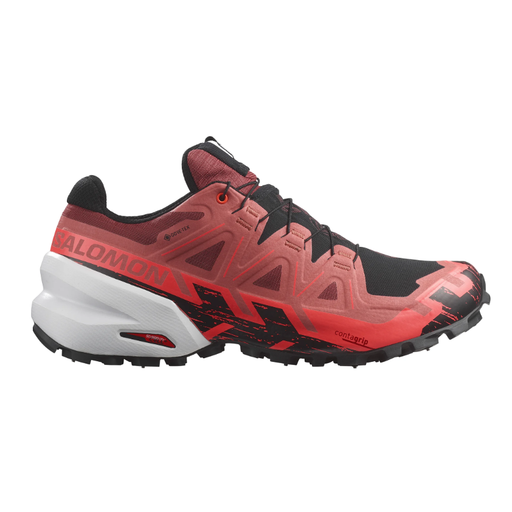
Why it suits this profile: For winter trail runners who train on snow and ice and need a specialised sole for the job.
The 12 tungsten-steel spikes make the intended use clear. Do not choose this model for everyday tarmac; it is designed for winter routes with snow or ice.
Full GORE-TEX protection according to the product information and an outsole with 12 metal spikes.

Why it suits this profile: For men looking for trekking shoes with a mid-height ankle, GORE-TEX and additional room in the toe box.
The Wide version prevents you from choosing a standard model that feels too tight on longer walks. The mid-height design also provides more coverage around the ankle.
Wide fit, GORE-TEX membrane, ADV-C sole plate and Contagrip outsole according to the product description.
We have put together a complete, up-to-date list of products that fully meet these strict selection criteria and the applicable European safety regulations.
Measure both feet at the end of the day, when they often take up slightly more space. When choosing hiking shoes, allow for thicker socks and check that your toes do not touch the front of the shoe when walking downhill. For trail running, the heel should remain securely in place without feeling tight.
Remove mud after use with a soft brush and allow the shoes to dry at room temperature. Avoid radiators, tumble dryers and direct sunlight. For leather models, such as the X Ward Leather Mid GTX or Nike Manoa, use only a product suitable for nubuck or leather. Always follow the specific care label; some models must not be machine-washed.
That depends on the tread pattern and construction. A model with a mixed-terrain tread, such as the Ultra Flow GTX, can support the transition between roads and trails according to the product information. A shoe with deep trail lugs is a more logical choice for woodland paths and mud than for everyday tarmac.
Their lifespan depends on your body weight, running style, terrain, care routine and frequency of use. Regularly check the lugs, seams, heel and cushioning. Reduced grip, cracks or a compressed midsole are signs that it may be time to consider a new pair. There is no fixed lifespan that applies to every use.
Not always. Low-cut shoes offer greater freedom of movement and are suitable for gentle walks or trail running. A mid-cut model may be more practical on uneven ground, during longer outings or if you prefer additional coverage around the ankle. Fit and stability remain more important than the height of the ankle alone.
