
Vandaag of morgen in huis

Kwaliteit gegarandeerd

Welkomstaanbiedingen ontgrendelen: GRATIS bezorging | Tot 80% korting | Gratis 30 dagen JoyPlus-proefperiode
Download de app
Wet woodland paths, muddy slopes and slippery rocks demand more from your shoes than a sturdy appearance. When looking for Salomon GTX shoes, many people focus mainly on the brand and the words GORE-TEX. That can lead to a poor purchase. A waterproof trail shoe for a fast run needs different features from a stable walking shoe for a long hike.
As a Joybuy Product Recommendation Officer, I filter product information based on practical features. Below, you’ll discover which specifications to check, which common pitfalls are often overlooked and which type of shoe suits your needs.
A GORE-TEX membrane is designed to keep water out while allowing water vapour to escape. That does not mean your feet will stay dry in every situation. Water can enter through the collar, for example when you step into a deep puddle. Moisture can also build up from inside during intense running.
So don’t just check whether a shoe has GORE-TEX. Also consider:
Deep lugs are useful for shoes for muddy trails, soft woodland ground and loose surfaces. On tarmac, they can feel less comfortable and wear down more quickly. A sole designed for technical trails is therefore not automatically suitable for everyday walking or mixed routes.
Look at the type of rubber and the lug pattern. Salomon uses Contagrip rubber on many models; the product description identifies this as the sole material, offering grip on various surfaces. However, the exact experience depends on the terrain, your speed, your weight and the level of wear.
A close-fitting shoe can provide a stable feel during trail running. That does not mean this fit is suitable for every foot. During longer walks in particular, your toes may not have enough room, making descents uncomfortable.
When trying shoes on, check that you have:
For wider feet, a model with “Wide” in the name may be more practical, such as the Salomon X Ultra 4 Mid Wide GTX.
With waterproof trail shoes and GORE-TEX walking shoes, it is the combination of membrane, upper and finish that matters. Synthetic mesh is often lightweight and flexible. Leather or suede can provide more structure and durability, but usually requires more maintenance.
A membrane does not automatically make a shoe cool. The protection can be welcome for relaxed walking, but ventilation may be just as important during intense trail runs. Use the shoe for the purpose it was designed for.
Deep, clearly defined lugs are useful on muddy routes. For rocky or mixed paths, a sole that balances grip and stability is often more versatile. A soft rubber compound can provide plenty of surface contact, while harder rubber is generally designed with durability in mind.
If you’re looking for hiking shoes with grip, you should also consider the sole width and the support beneath the midfoot. A deep tread alone will not stop your foot from rolling on a sloping surface.
Low-cut trail running shoes offer greater freedom of movement. Mid-cut models cover part of the ankle and can feel more comfortable when walking with a rucksack over uneven paths. They do not replace good walking technique or care on slippery ground.
Cushioning is particularly important over longer distances. According to the product description, an EVA or Energy Foam midsole can provide comfort and shock absorption. The ideal amount of cushioning is a personal choice: a soft shoe feels comfortable, while a more responsive model can give you greater contact with the ground.
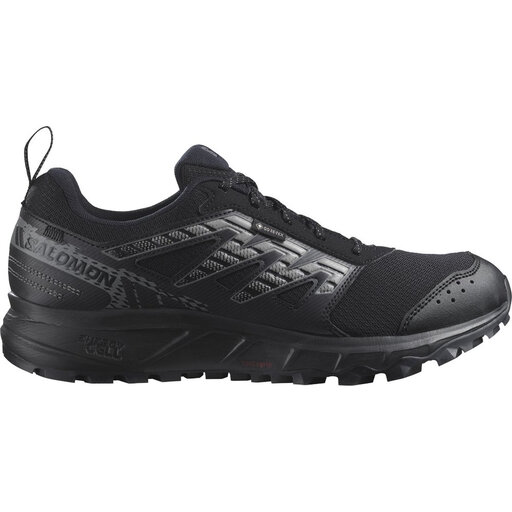
Why it suits this profile: A low-cut model for walkers who want to combine protection from wet weather with comfort for everyday outdoor activities.
The product description clearly mentions a GORE-TEX membrane, Contagrip sole and EVA midsole. This allows you to compare the features instead of judging the shoe by its appearance alone.
GORE-TEX protection, a cushioned midsole and a Contagrip rubber sole for walks across a variety of surfaces.

Why it suits this profile: A logical choice for technical trails and walks where stability, protection and a precise fit are important.
The 3D Advanced Chassis construction and reinforced toe and heel focus on support and protection, rather than just an aggressive sole pattern.
GORE-TEX, Contagrip rubber, Quicklace and 3D Advanced Chassis, according to the product information.
Why it suits this profile: Designed for winter trails, snow and ice, where ordinary waterproof running shoes may not provide enough grip.
The mention of 12 tungsten spikes makes the intended use clear. This prevents you from attempting a slippery winter route in shoes with an ordinary trail sole.
GORE-TEX according to the product description, plus a sole with 12 tungsten spikes for grip on snow and ice.
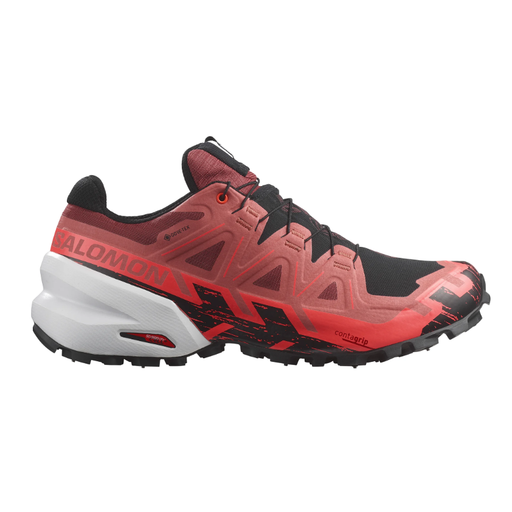
For fast runs on soft or technical terrain, the Salomon Speedcross 6 GTX models are worth considering. The product information mentions an aggressive Contagrip tread, Sensifit and Quicklace. Choose this type of shoe when grip in mud and a close-fitting design matter more than comfort on tarmac.
For longer walks, the Salomon X Ultra GTX range is a more logical choice. The X Ultra 4 Mid Wide GTX has a wider fit, mid-cut design and ADV-C sole plate, according to the product description. The X Ultra 360 Mid GTX also features a mid-cut design, toe and heel reinforcements and Contagrip.
If you’re looking for a leather version, consider the Salomon X Ward Leather Mid GTX. According to the product information, the upper is made from suede leather and textile, with GORE-TEX, reinforced toe and heel sections and a mid-cut design. Bear in mind that leather requires additional care.
Ideally, try shoes on with the socks you’ll wear when walking or running. Walk around indoors for a few minutes and check the toe room and heel lift in particular. With a mid-cut model, your ankle should feel comfortably supported without any pressure points.
After use, allow shoes to air-dry away from radiators and direct sunlight. Remove mud with a soft brush and lukewarm water. Do not machine-wash GORE-TEX models unless the care label explicitly allows it. A clogged sole and damaged upper will reduce practical performance more quickly than normal signs of wear.
Do not replace shoes according to a fixed schedule. Look out for worn-smooth lugs, cracks in the upper, a compressed midsole or a sole that is coming away in places. According to the product information, the statutory warranty is at least two years within the EU; your legal rights may extend further depending on the circumstances and country.
We’ve put together a complete, up-to-date list of products that fully meet these strict selection criteria and the applicable European safety regulations.
That depends on the model. A low-cut shoe such as the Salomon Wander GTX can be practical for walks and outdoor activities. A Speedcross model with deep lugs is more trail-focused and may feel less natural on tarmac. So check the sole pattern and cushioning before choosing a pair for everyday use.
Remove dirt with a soft brush, use lukewarm water and allow the shoes to air-dry slowly. Avoid machine washing, bleach, tumble dryers and direct heat. Always follow the care label for the specific model, especially with shoes featuring a GORE-TEX membrane or leather upper.
Usually not for normal walking paths. Spikes can be useful on ice, hard-packed snow or slippery winter trails. According to the product description, the Salomon Spikecross 6 GTX features 12 tungsten spikes. Do not use this type of shoe as your standard pair on hard floors, as the spikes are less practical there and may wear down more quickly.
