
Vandaag of morgen in huis

Kwaliteit gegarandeerd

Welkomstaanbiedingen ontgrendelen: GRATIS bezorging | Tot 80% korting | Gratis 30 dagen JoyPlus-proefperiode
Download de app
Salmon cat food is popular thanks to its recognisable fish flavour and the wide choice of wet food, dry food and treats. However, a picture of a salmon fillet on the packaging doesn’t automatically tell you how much salmon the product contains, or whether it’s suitable as a daily meal.
The biggest mistakes usually come down to three pitfalls:
Look on the label for “complete pet food” when you intend to give the product as a daily meal. This means that, according to the product information, it is designed to meet the daily nutritional needs of the stated life stage.
Complementary food, on the other hand, states that it should be given alongside the normal meal. For example, INABA Broth Chicken with Salmon Recipe contains 93% moisture and is described as a hydrating treat. Felix Deli Moments Salmon is a complementary snack; the usage information recommends one 10g pouch per day as a treat. So don’t give these products unlimitedly in place of a full meal.
Also check the target audience. For an adult cat, the packaging will usually say “adult” or “for adult cats”. A kitten, senior cat or cat with specific dietary needs may require different guidelines.
The words “with salmon” don’t always indicate the salmon content. So look at the ingredients list and, where available, the specific percentage. For instance, Perfect Fit Adult Salmon states 14% salmon in the ingredients. Sheba Classics Pâté Salmon lists 4% salmon within the ingredients.
Also pay attention to other types of fish. Some varieties are cat food with fish where salmon is combined with tuna, trout or sea fish. This can be interesting for cats that enjoy variety, but less suitable if you’re trying to avoid a particular protein source.
Claims about omega 3, coat or vitality often come from the brand’s product information. According to the manufacturer’s product information, some recipes contain omega 3 or nutrients that are associated with skin, coat or general condition. Don’t treat this as a medical benefit, and if your cat has an allergy or health issue, always consult your vet.
The texture often determines whether a cat will accept the food:
Wet food generally has a high moisture content. Sheba Alu Cat Food Salmon lists 83% moisture, and INABA Broth 93%. This makes portion pouches or small trays practical if your cat has small meals. According to the label instructions, an opened pack should usually be kept refrigerated and used within the stated time.
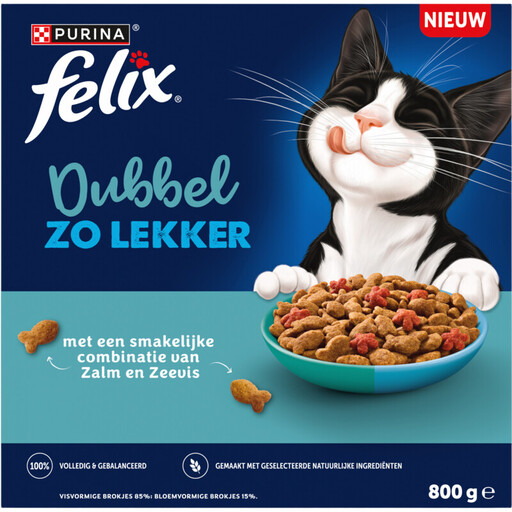
Why this fits the profile: The 800g pack is practical for anyone who buys cat food regularly and wants a complete meal for adult cats.
The product information clearly states that it is a complete food for adult cats. The stated salmon and sea fish content is verifiable, so “with salmon” is not misinterpreted.
800g, 30% protein and 11% fat according to the analytical constituents; no added artificial colours.

Why this fits the profile: The smooth mousse texture is a natural choice for cats that prefer soft wet food over pieces or kibble.
The product information describes it as a complete food for adult cats. The small 85g portion helps reduce the amount of unopened or opened food you need to store.
Mousse texture, complete product and 10.5% protein according to the stated analytical composition.
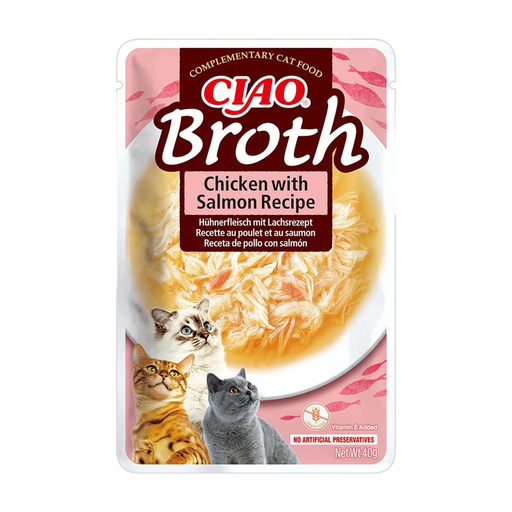
Why this fits the profile: Handy as a complementary broth for cats that show little interest in drinking, or as an extra alongside dry food.
The product is explicitly labelled as a hydrating treat and not as a complete food. This keeps the main meal clearly separate from the supplement.
50g per pack and 93% moisture according to the product data; made with chicken broth, chicken and salmon.
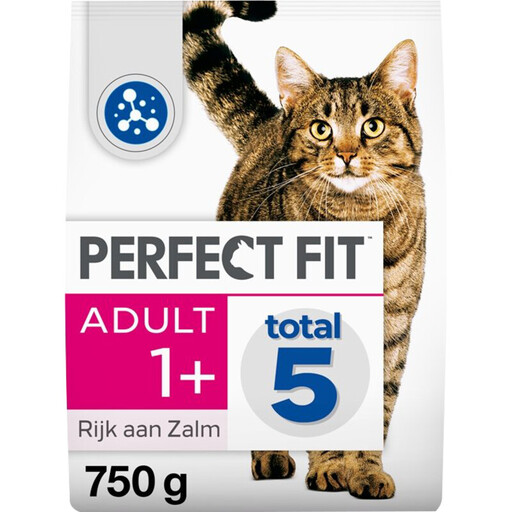
Why this fits the profile: Dry food is easy to measure and suits households that want to combine a fixed daily portion with wet food.
The product information states that it is a complete dry food for adult cats. The feeding guide gives specific amounts for cats weighing 3, 4 and 5 kilograms.
34% protein, 14.5% fat and 14% salmon according to the stated specifications; suitable for cats from 1 year old.
We’ve put together a full, up-to-date list of products that fully meet these strict selection criteria and comply with current European safety regulations.
Not automatically. Check whether the product is a complete food for adult cats and look at the ingredients. Some cats are sensitive to certain protein sources. If your cat has a known allergy, illness or special diet, it’s wise to consult a vet.
That depends on your cat’s preference, your daily routine and the portion distribution you want. Wet food contains relatively high moisture and is often available in small portions. Dry food stays fresh longer after opening and is easy to measure. A combination is possible, as long as you adjust the total amount and feeding instructions.
Always follow the label. As a general rule, opened wet cat food is usually stored sealed in the fridge and used within a maximum of two days, when the packaging states this. Serve wet food at room temperature if possible. Store dry food sealed, cool and dry to better preserve its aroma and quality.
